

What should Dallas homebuyers and homeowners know when a hot, dry Sunday hits the DFW metroplex?
A hot, dry Sunday in Dallas is more than a weather forecast. It is a window into how your property handles Texas summer stress, and it can reveal maintenance issues, curb appeal gaps, and hidden value that listing photos never show.
Why This Matters Right Now in Dallas-Fort Worth
Right now, DFW is experiencing the kind of heat that defines our summers. Temperatures have already hit 106 degrees this season, with heat index values pushing past 112. Since 2000, Dallas-Fort Worth has averaged 23 triple-digit days per year, and the National Weather Service issued heat advisories urging residents to stay hydrated, wear breathable clothing, and take shade breaks throughout the day.
But here is what we want you to understand: this weather is not just a comfort concern. It is a real estate variable. Having closed over 148 transactions across the DFW metroplex and earned recognition as a D Magazine Best Real Estate Agent since 2020, we can tell you that summer heat directly impacts how homes show, how quickly properties sell, and what buyers notice during walkthroughs. With the DFW market sitting at roughly 5.2 months of supply and homes averaging 57 to 105 days on market depending on the county, presentation matters more today than it has in years. And hot, dry Sundays put that presentation to the test.
How Dallas Sellers Can Protect Curb Appeal in Extreme Heat
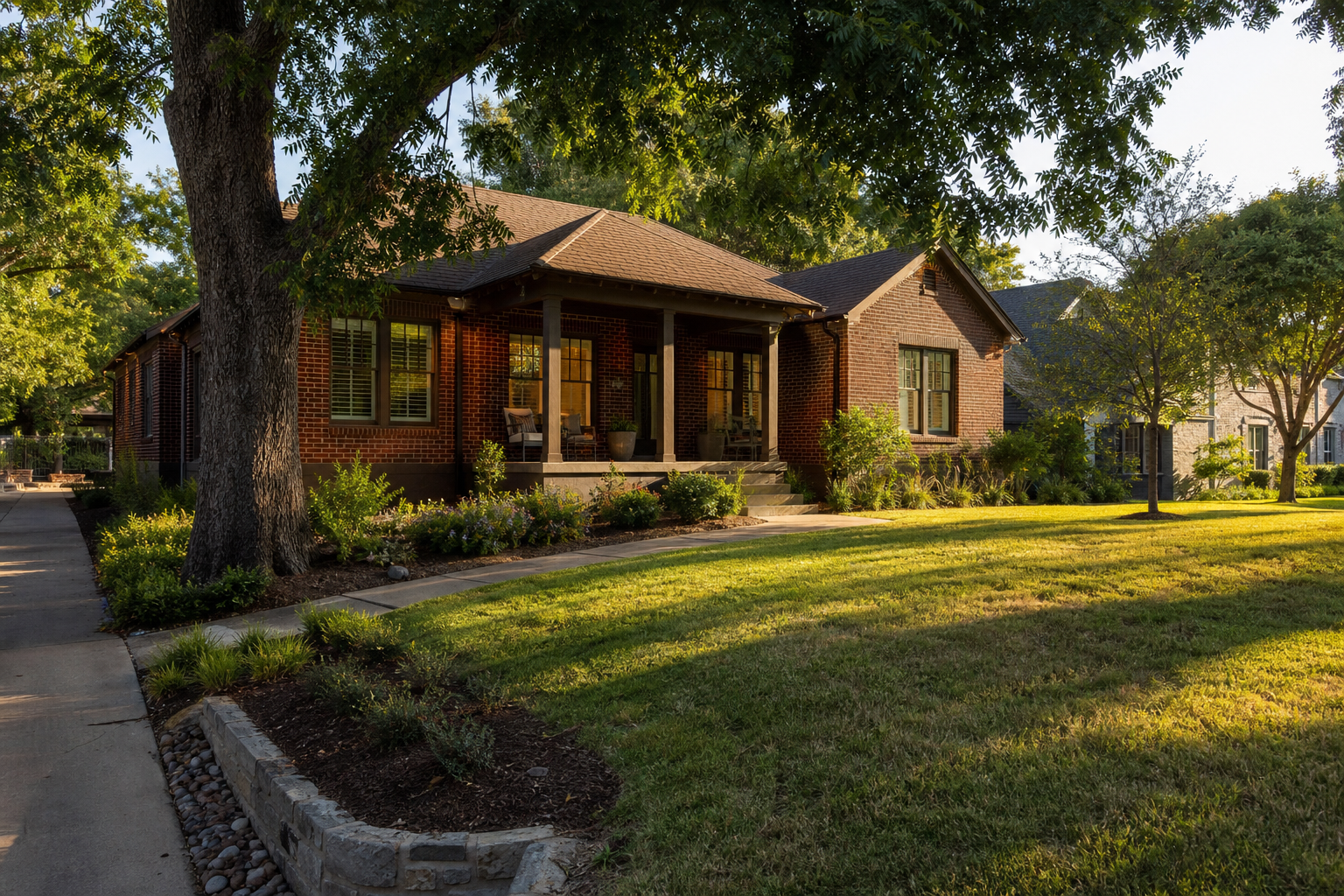
If you are selling your home in Dallas this summer, a hot, dry Sunday is your stress test. Lawns, landscaping, flower beds, and outdoor living spaces show signs of summer fatigue fast. What looked lush on Monday can look crispy by Saturday if you have not stayed ahead of watering schedules and basic yard maintenance.
Here is what we tell our clients who are preparing for showings in neighborhoods like Bishop Arts, where renovated bungalows along Zang Boulevard and Davis Street compete for buyer attention in a market where 47.3% of Dallas sellers reduced their list price in February 2026:
- Water early. The Dallas Arboretum recommends watering plants in the early morning when temperatures are coolest. This applies to your lawn, flower beds, and container plants around the porch and patio.
- Refresh mulch. A fresh layer of mulch in garden beds retains moisture and gives the landscaping a polished, well-maintained appearance even in 100-degree heat.
- Clean the exterior. Dust, pollen, and grime accumulate quickly during dry stretches. A quick power wash of the driveway, front walkway, and patio furniture makes a noticeable difference.
- Run the AC before the showing. Set your thermostat to 76 or 77 degrees at least two hours before buyers arrive. When someone walks in from 102-degree heat, a cool, comfortable interior creates an immediate emotional reaction.
One seller we worked with in East Dallas had their home sitting on the market for three weeks during a July hot streak. After we recommended a Saturday morning deep clean of the yard, fresh seasonal flowers in the front beds, and a lower thermostat setting for Sunday open houses, they received two showing requests the following weekend and went under contract within 10 days. The house had not changed. The presentation had.
What Dallas Homebuyers Can Learn from Touring Homes on a Hot, Dry Day
Here is something most people do not realize: a scorching, dry Sunday is actually one of the best times to evaluate a home. Sunny, dry weather strips away the forgiveness that overcast skies and recent rain provide. You see things clearly that you would otherwise miss.
Exterior Details That Tell a Story
When you are walking a property in the Bishop Arts District or any Dallas neighborhood during peak summer, pay close attention to:
- Landscaping health. If the lawn is brown and the flower beds are bare in early July, that tells you either the irrigation system is not functioning properly or the homeowner has not invested in maintaining the yard. Both are worth investigating.
- Drainage areas. Look at where the yard slopes. Dry conditions can expose grading issues that would otherwise be hidden by standing water. You want to see intentional drainage away from the foundation.
- Fencing and exterior materials. Wood fences, decks, and exterior trim take a beating from sustained heat. Warping, cracking, and peeling paint are signs of deferred maintenance.
- Shaded outdoor spaces. Mature tree canopy is not just a nice feature in Dallas. It is a functional advantage. Properties along Kidd Springs Road in Oak Cliff and the older residential blocks off Colorado Boulevard stay measurably cooler, and the difference is obvious when you are standing outside at 2 PM in July.
We recently worked with a couple relocating to Dallas from the Pacific Northwest. They were shocked by the heat during their first round of home tours, but we walked them through exactly what to evaluate on each property visit. By the third showing, they were pointing out irrigation gaps and tree canopy differences on their own. That awareness helped them choose a home in East Dallas with a mature pecan tree canopy that keeps their backyard comfortable well into the afternoon.
Energy Efficiency and Summer Costs Every Dallas Homeowner Should Understand
So what does a hot, dry Sunday actually cost you? More than you might think if your home is not equipped to handle it.
Summer electric bills in Dallas can easily exceed $300 per month in older homes without updated insulation, efficient HVAC systems, or smart thermostats. Here are practical steps we recommend to every homeowner and every buyer evaluating a property:
- Set your thermostat to 78 degrees or higher when you are home, and 4 degrees higher when you leave for more than four hours
- Use blinds or curtains to block direct sunlight, especially on south and west-facing windows
- Set ceiling fans to spin counterclockwise during summer months for a wind-chill effect
- Avoid running large appliances (oven, dishwasher, dryer) during peak afternoon heat; shift these to early morning or evening
For buyers, energy-efficient features like updated HVAC units, dual-pane windows, and solar panels are not luxury items in DFW. They are practical necessities that directly impact your monthly cost of living. When you are evaluating homes near the DFW median of $415,000, ask your agent to pull the seller’s average utility costs. It is one of the smartest questions you can ask.
Summer Maintenance Checklist for Dallas Homeowners
If you are already settled in your Dallas home, a hot, dry Sunday is the perfect trigger to get ahead of summer maintenance before small issues become expensive repairs.
- Check your irrigation system. Many older homes in neighborhoods like Bishop Arts have aging in-ground sprinkler systems that may not distribute water efficiently. A quick zone-by-zone inspection can reveal broken heads, clogged nozzles, or coverage gaps.
- Inspect outdoor plants and beds. Heat-stressed plants are vulnerable to disease. Remove dead growth, add compost, and consider drought-tolerant replacements for anything that struggles every summer.
- Monitor the condition of your foundation. Dallas soil is notorious for expanding and contracting with moisture changes. During dry stretches, keep foundation watering consistent to prevent shifting.
- Protect pets and family. The USDA advises that dogs should not be left outside above 85 degrees for more than four hours. The CDC recommends adults drink between 9 and 13 cups of water daily, and significantly more during exercise in high heat.
What Relocating Buyers Need to Know About Dallas Summers
If you are moving to DFW from out of state, here is the honest truth: the summers are hot. Dallas-Fort Worth sits in a humid subtropical climate zone, meaning temperatures regularly exceed 100 degrees from late June through August. The urban heat island effect, caused by the large amount of paved surfaces in Dallas and Fort Worth, pushes temperatures in city neighborhoods even higher than suburban and rural areas.
But here is the bigger picture. Living in DFW means understanding how your local climate interacts with your home. From hot summer afternoons to occasional severe storms and rare winter weather events, choosing a home is not only about the floor plan. It is about understanding the property, its surroundings, and what it takes to maintain it year-round. With 84 five-star reviews and 6 years specializing in relocation clients, we walk buyers through exactly these details on every single home tour.
DFW continues to attract more than 100,000 relocators annually, drawn by a strong job market (unemployment is roughly 2.5%), no state income tax, and a median household income near $92,000. Over 25,000 new households are projected to form in DFW in 2026 alone. You will not be the only one making this move, and you will not regret it. But you will want guidance from someone who knows these neighborhoods block by block.
Frequently Asked Questions
How hot does Dallas get in the summer?
Dallas regularly reaches triple-digit temperatures from late June through August. Since 2000, DFW has averaged 23 days per year at or above 100 degrees. In summer 2026, temperatures have already hit 106 with a heat index of 112. If you are buying or owning a home here, plan for sustained heat and factor it into your maintenance and energy budgets.
Does hot weather affect home showings in Dallas?
Absolutely. Buyers may avoid mid-afternoon showings, and curb appeal suffers when lawns and landscaping are stressed. Sellers who keep their AC running, water their yards early, and schedule showings for morning or evening hours tend to get better feedback and faster offers during summer months.
What should I look for when touring a Dallas home in July?
Pay attention to the condition of the lawn, landscaping, fencing, and drainage. Check whether the property has mature tree coverage for shade. Notice how quickly the interior cools when you walk in. These summer-specific details reveal how well a home handles the Texas climate.
How do I keep my Dallas lawn alive in extreme heat?
Water early in the morning before temperatures rise. Avoid overwatering, which promotes fungal growth. Refresh mulch in garden beds to retain moisture. Consider drought-tolerant grass varieties like Bermuda or Buffalo grass, which are better suited to DFW’s climate.
What is the current Dallas housing market like in 2026?
The DFW median single-family home price is $415,000, with inventory up 9 to 20% year-over-year. Homes in Dallas County average 57 days on market. With roughly 5.2 months of supply, the market is balanced, giving buyers more negotiating room than in previous years.
Should I worry about foundation issues during dry spells in Dallas?
Yes. Dallas sits on expansive clay soil that contracts during prolonged dry periods and expands when moisture returns. Consistent foundation watering during hot, dry stretches helps prevent shifting that can lead to cracks and structural damage.
How much are summer electric bills in Dallas?
Summer electric bills in older Dallas homes can exceed $300 per month. Homes with updated HVAC systems, smart thermostats, and good insulation typically see significantly lower costs. Always ask for the seller’s average utility costs when evaluating a home.
Are there cooling centers in Dallas during extreme heat?
Yes. Any City of Dallas public facility, including recreation centers and libraries, serves as a cooling center. Residents can also apply at designated locations for free portable cooling units during heat emergencies.
What neighborhoods in Dallas have the best tree canopy for shade?
East Dallas neighborhoods, parts of Oak Cliff near Kidd Springs Park, and established areas along Colorado Boulevard and Kidd Springs Road are known for mature tree canopy. Shaded lots keep outdoor spaces usable during summer and can even reduce energy costs.
Is summer a good time to buy a home in Dallas?
Summer can be an excellent time to buy because you see properties in their most demanding conditions. Hot, dry weather exposes maintenance issues that would be hidden in cooler months. Combined with increased inventory and more flexible sellers, summer offers a strategic window for informed buyers.
The Bottom Line
A hot, dry Sunday in Dallas is not just a reason to find the nearest pool. It is a real-time test of how homes in this market perform under pressure, and it gives buyers and sellers actionable information that no listing photo can provide. Whether you are prepping your East Dallas home for a weekend showing, touring properties in Bishop Arts, or relocating to the metroplex for the first time, understanding how DFW weather interacts with real estate is one of the smartest advantages you can have.
We are Jamie Simpson and the Unlocking DFW Realty team, and we have built our reputation on helping clients look beyond the listing and understand the details that truly matter. If you are buying or selling in Dallas-Fort Worth, reach out to us at 214-509-8094. We would love to help you make your next move with confidence, rain or shine.

Leave a Reply