

Is 2026 a good time to sell my home in Bishop Arts Dallas before the neighborhood gets too saturated with new condo inventory?
Yes, and the window is narrowing. With over 900 new multifamily and condo units in the Bishop Arts pipeline, selling your single-family home now positions you ahead of a supply wave that could dilute buyer attention and compress resale pricing.
Why Selling Your Bishop Arts Home in 2026 Demands Urgent Attention
If you own a home in Bishop Arts, you have watched this neighborhood transform from a quiet pocket of Oak Cliff into one of Dallas’s most sought-after urban enclaves. That transformation has been extraordinary for your equity. Price-per-square-foot in the Bishop Arts core and adjacent Winnetka Heights now regularly ranges from $250 to $350, well above the Dallas metro median of approximately $180 to $200 per square foot.
But here is the tension we are watching closely: the development pipeline around N. Bishop Ave. and W. Davis St. is loaded. The JLL-marketed Bishop Arts Portfolio alone totals 638 multifamily units across five assets, supplemented by over 40,000 square feet of retail. Add the Art House project on N. Beckley Avenue with 70 residential units, Alamo Manhattan’s 210-unit complex at Zang Boulevard and Seventh Street, a new five-story apartment building cleared for 715 W. Davis St., and an 18-unit townhouse development, and you are looking at a fundamentally different competitive landscape for housing in this compact neighborhood.
So what does that actually mean for you as a homeowner? Let us walk through it.
The Bishop Arts Condo Pipeline and What It Means for Your Home’s Value
You need to understand the difference between what is happening to your neighborhood’s *desirability* and what is happening to its *supply dynamics.* Both are real. Both affect your bottom line. But they pull in different directions.
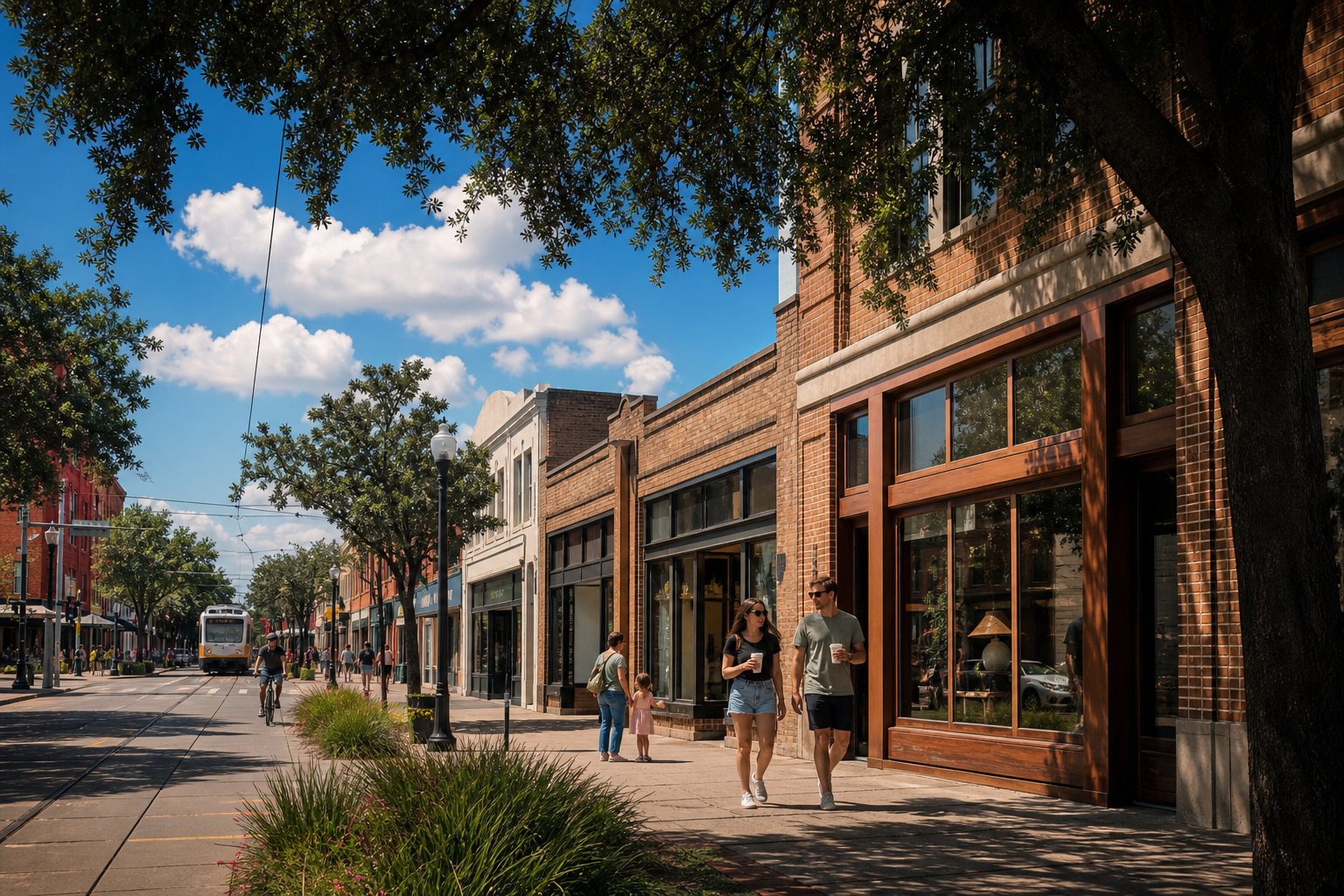
The demand side remains strong. Bishop Arts scores a Walk Score of 86 and sits roughly three miles from downtown Dallas, with the Dallas Streetcar running across the Houston Street Viaduct directly into the district. The DART rail connection at Methodist/Jefferson Station sustains foot traffic that supports both residential demand and commercial lease rates. When institutional capital like 90Ten acquires commercial properties at 301-321 N. Bishop Ave., it signals long-term confidence in the corridor.
But the supply side is shifting fast. Those 900-plus new units are not theoretical. Many are already under construction or recently completed (the JLL portfolio assets were built between 2018 and 2026 and carry a 94% occupancy rate). Every new unit gives prospective buyers another option that is not your single-family home.
Here is the practical impact: when a young professional relocating to Dallas can choose between your updated Craftsman bungalow listed at $515,000 and a brand-new condo with modern amenities for significantly less, you are competing for a shrinking slice of the buyer pool. Having closed over 148 transactions across the Dallas-Fort Worth real estate market, we have seen this pattern play out in other neighborhoods that experienced rapid densification. The single-family homes that sold before the supply wave arrived consistently captured stronger offers than those that waited.
How the Broader Dallas Market Shapes Your Bishop Arts Selling Decision
You cannot evaluate your Bishop Arts sale in isolation. The DFW-wide market context matters, and in 2026, it is sending mixed but important signals.
The median listing price across Dallas-Fort Worth sits at approximately $405,000, reflecting a year-over-year decline of about 2.5%. Dallas is experiencing a year-over-year home price decline of 3.35%, placing it near the bottom of national rankings alongside Tampa, Austin, and Orlando. Homes across the metroplex are spending about 72 days on market, up 4.3% year over year.
That sounds concerning, but here is the nuance. Bishop Arts is outperforming the broader metro. The median sale price in the neighborhood sits at approximately $515,000, with year-over-year appreciation of approximately 11%. That premium exists because of the walkability, the restaurant and retail corridor along Bishop Avenue and W. Davis Street, and the proximity to Kidd Springs Park, Stevens Park Golf Course, the Kessler Theater, and the Texas Theatre.
The question is whether that premium holds once 900-plus new units hit the market in a softening DFW environment. Combined, 58% of housing experts expect markets currently experiencing negative appreciation, including Dallas, to return to positive growth by end of 2027. But that recovery may not arrive before the supply wave does. With 6 years of experience navigating these cycles and recognition as a D Magazine Best Real Estate Agent since 2020, we can tell you that timing matters enormously in neighborhoods undergoing rapid development.
What We Tell Bishop Arts Homeowners About Pricing in a Shifting Market
Here is something we see regularly across Bishop Arts and Lower Greenville: sellers who price based on what their neighbor’s house sold for 18 months ago end up sitting on the market and chasing prices down. The sellers who are struggling in 2026 are those who priced at peak 2022 expectations and are now watching their listing get cut.
Your Bishop Arts home’s value depends heavily on what segment you are in:
- Entry-level older Craftsman homes: approximately $290K to $400K
- Mid-range updated bungalows: approximately $450K to $600K
- New construction infill: $800K to $900K and above
In Lower Greenville (ZIP 75206), the contrast is instructive. The median sale price sits at roughly $735,000 with year-over-year appreciation of about 12.2%. But the median sale-to-list-price ratio has dropped to 95.33%, down 6.8 points compared to last year. Zero percent of homes sold above list price, down 55.6 points year over year. And 50% of homes listed dropped in price.
What does that tell you? Even in neighborhoods where prices are technically rising, buyers are negotiating harder. They have leverage. DFW currently shows one of the largest imbalances of sellers to buyers in the country, with total metroplex listings reaching approximately 29,600 active residential listings.
Your pricing strategy for a successful home sale needs to reflect today’s market, not last year’s comps. Price it right from day one, and make sure the home shows beautifully. That is not just general advice. It is the difference between selling in three weeks and sitting for three months.
Why Your Single-Family Bishop Arts Home Still Has an Advantage (For Now)
Before you panic about the condo pipeline, consider what makes your home different from everything being built around it. You own something that developers cannot replicate: a 1920s or 1930s Craftsman bungalow on a tree-lined street within walking distance of the Bishop Arts commercial corridor. Restored Craftsman stock dominates the activity in this market, and that architectural character commands a premium that new construction condos simply do not carry.
Your home likely sits on a lot with a yard. It probably has architectural details, mature landscaping, and a relationship to the streetscape that gives it a sense of place. The families who send their kids to Booker T. Washington High School for the Performing and Visual Arts through Dallas ISD’s magnet program, the couples who walk to Kidd Springs Park on Sunday mornings, the professionals who take the Streetcar downtown: these buyers want character, not just square footage.
But that advantage has a shelf life. As the neighborhood densifies and more inventory options become available, even the most charming Craftsman faces diluted buyer attention. With 84 five-star reviews from past clients and a MetroTex 40 Under 40 recognition, we have helped enough Bishop Arts homeowners navigate these transitions to know that the sellers who act while demand still outpaces supply consistently walk away with stronger outcomes.
Comparing Bishop Arts and Lower Greenville for Sellers Weighing Their Options
If you own property in both neighborhoods we specialize in, the dynamics are different enough to warrant separate strategies. Lower Greenville’s total homes for sale increased 37% compared to last year, with 14 new listings in the last 30 days alone, up 40% year over year. The median days on market jumped to 73 days.
The retail corridor along Greenville Avenue is also experiencing turnover. The 2025-2026 commercial lease cliff pushed out several longtime anchors as five-year leases signed during the pandemic recovery came up for renewal at sharply higher rents. Even a Michelin-recognized restaurant on the strip closed earlier this year.
Bishop Arts, by contrast, is seeing institutional investment *into* the commercial corridor, not departure from it. 90Ten’s acquisition of properties on N. Bishop Ave. reinforces the retail ecosystem that makes your residential property valuable. That distinction matters when you are deciding whether to sell now or wait.
Pros and Cons of Selling Your Bishop Arts Home Now vs. Waiting
Understanding the trade-offs can help you make a more confident decision. Here is how the two paths stack up in the current Bishop Arts market.
Pros of Selling Now in 2026:
- Bishop Arts is still outperforming the broader DFW market with approximately 11% year-over-year appreciation
- You list before the full weight of 900-plus new units competes for buyer attention
- Institutional investment in the commercial corridor is still reinforcing your home’s premium
- Buyers motivated by walkability and character are actively in the market right now
- You avoid the risk of waiting for a recovery that may not arrive until late 2027
Cons of Selling Now in 2026:
- The broader DFW market gives buyers more negotiating leverage than in prior years
- Homes are spending an average of 72 days on market across the metroplex, requiring patience
- Pricing errors are more costly now — overpriced listings are sitting and cutting
- Interest rates remain above 6%, limiting the pool of qualified buyers
- If you have not yet maximized renovation value, rushing to market could leave equity on the table
The takeaway is not that waiting is always wrong. It is that the window where Bishop Arts single-family homes carry a clear premium over incoming condo supply is measurably narrowing, and the sellers who recognize that early tend to walk away with better outcomes.
Frequently Asked Questions
How many new condo and apartment units are being built near Bishop Arts in 2026?
The current pipeline includes the JLL Bishop Arts Portfolio with 638 multifamily units, the Art House project with 70 units on N. Beckley Avenue, Alamo Manhattan’s 210-unit complex at Zang Boulevard and Seventh Street, a five-story apartment complex at 715 W. Davis St., and an 18-unit townhouse development. Combined, this represents a significant supply wave for a compact neighborhood.
What is the median home price in Bishop Arts District right now?
As of early 2026, the median sale price in Bishop Arts is approximately $515,000, with year-over-year appreciation of approximately 11%. Price-per-square-foot in the Bishop Arts core and adjacent Winnetka Heights ranges from $250 to $350, well above the Dallas metro median of approximately $180 to $200 per square foot.
How long are homes taking to sell in Dallas-Fort Worth in 2026?
Across the DFW Metroplex, homes are spending about 72 days on market, up 4.3% year over year. In Lower Greenville specifically, the median days on market reached 73 days. Properly priced and well-presented homes in desirable neighborhoods tend to move faster than these averages suggest.
Is the Dallas housing market a buyer’s market or seller’s market in 2026?
The DFW market has transitioned from a frenzied seller’s market to a more balanced, slower environment. Dallas currently shows one of the largest imbalances of sellers to buyers in the country, giving buyers more leverage in negotiations than they have had in years.
Will Bishop Arts home values keep going up with all the new development?
Bishop Arts has shown approximately 11% year-over-year appreciation in early 2026. However, 58% of housing experts expect markets experiencing negative appreciation, including Dallas overall, to return to positive growth by end of 2027. The neighborhood’s premium is tied to its walkability and character, but supply increases could moderate price gains.
What is the Walk Score for Bishop Arts District?
Bishop Arts District scores a Walk Score of 86, which places it firmly in the “very walkable” category. The DART rail connection at Methodist/Jefferson Station and the Dallas Streetcar provide direct transit access to downtown Dallas, making it one of the most transit-connected neighborhoods in the city.
How does Lower Greenville’s market compare to Bishop Arts for sellers?
Lower Greenville’s median sale price in ZIP 75206 sits at roughly $735,000 with about 12.2% year-over-year appreciation. However, the median sale-to-list-price ratio dropped to 95.33%, zero percent of homes sold above list price, and 50% of listings dropped their price. Inventory there is up 37% compared to last year.
What schools serve the Bishop Arts neighborhood?
Bishop Arts is served by Dallas ISD. The primary feeder schools include Hogg Elementary (rated 4/10), Greiner Middle School (3/10), and Sunset High School (3/10). Many families opt for the prestigious Booker T. Washington High School for the Performing and Visual Arts, a nationally ranked magnet accessible via school choice application.
Should I renovate my Bishop Arts home before selling in 2026?
In the current market, presentation matters more than ever. The sellers who are struggling are those who priced at peak expectations without investing in how their home shows. Focus on the features that differentiate your single-family home from new condo development: the architectural character, the yard, the streetscape presence. We recommend strategic updates rather than full renovations.
What does 90Ten’s investment in Bishop Arts mean for homeowners?
Dallas-based retail real estate firm 90Ten recently acquired commercial properties at 301-321 N. Bishop Ave. Their managing partner described Bishop Arts as having “exceptional real estate, strong local operators, and best-in-class brands that create lasting value.” For homeowners, institutional investment in the commercial corridor reinforces the walkable amenities that support residential property values.
The Bottom Line on Selling Your Bishop Arts Home in 2026
You are sitting in one of Dallas’s most desirable neighborhoods, and your equity reflects years of Bishop Arts’s transformation from an overlooked corner of Oak Cliff to a walkable, amenity-rich destination. That story is not over. But the chapter is changing.
With over 900 new multifamily units in the pipeline, a DFW-wide market that is giving buyers more leverage, and homes across the metroplex spending 72 days on market, the window to sell your Bishop Arts single-family home at a premium, before the supply wave fully arrives, is open right now. It will not stay open indefinitely.
We have spent 6 years helping homeowners across Bishop Arts and Lower Greenville navigate exactly these types of Dallas market transitions. If you are ready to evaluate your options, the team at Unlocking DFW Realty is here to give you a clear, data-driven picture of what your home is worth today and what the smartest path forward looks like. You can reach us at (214) 509-8094 or visit us at Unlocking DFW Realty, 2400 North Henderson Ave Ste. B #1124, Dallas, TX 75206. You can also connect with us directly through unlocking-dfw.com to schedule a no-obligation seller consultation specific to your Bishop Arts property.

Leave a Reply