

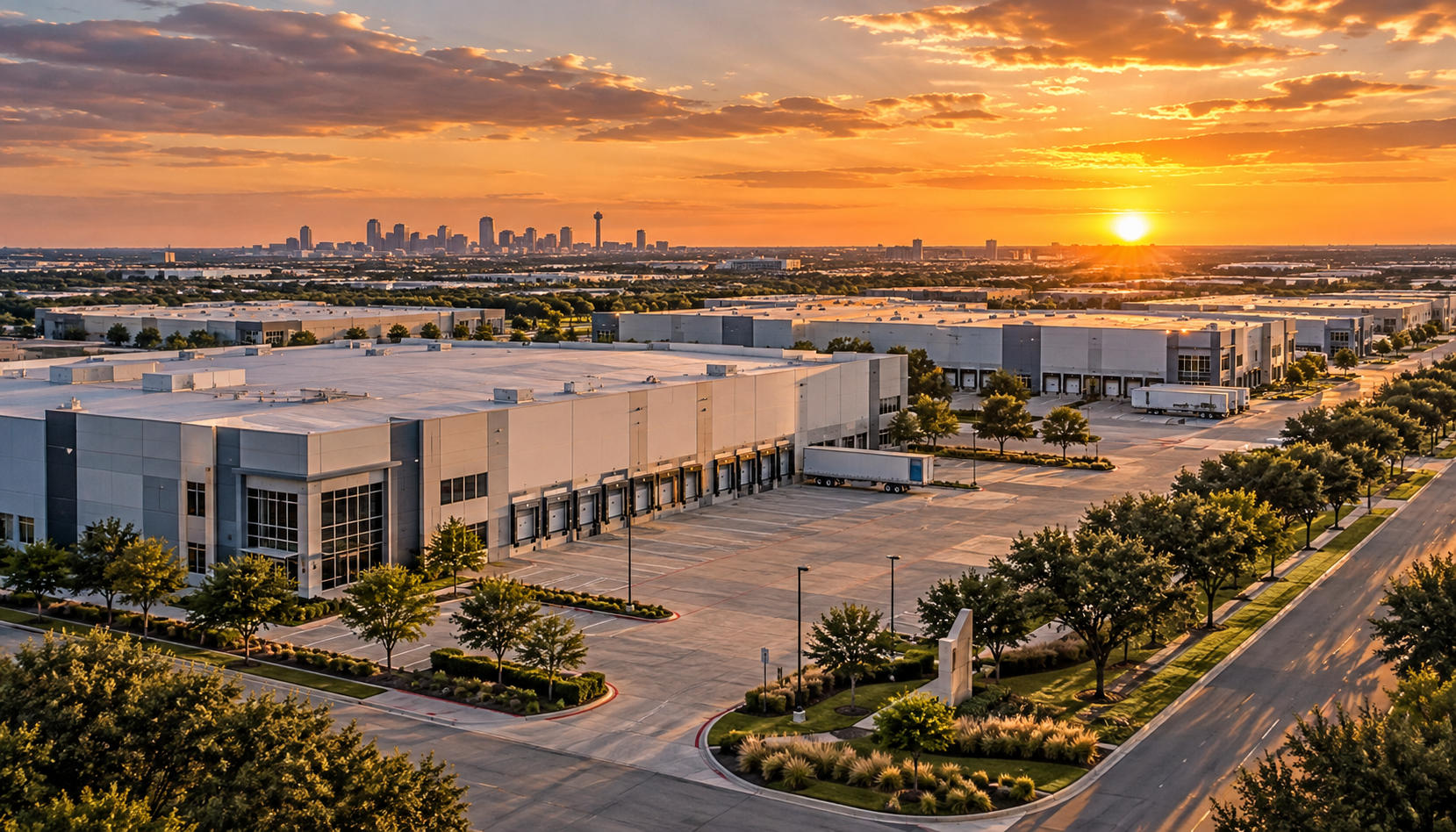
Is leasing versus acquiring industrial space in the Aspire-Lakewood Holdings context of DFW in 2026 the smarter move given current vacancy rates and construction pipeline pressure?
For most occupiers and investors in 2026, leasing offers superior flexibility and negotiating leverage while DFW’s industrial supply pipeline continues to deliver space faster than tenants absorb it. However, acquisition may be the stronger long-term play if your time horizon stretches seven to ten years and your capital position can absorb current pricing before the supply-demand imbalance corrects.
Why This Matters Right Now in Dallas-Fort Worth
Here is something we think deserves more attention in the DFW real estate conversation: a corporate name change that signals real, physical infrastructure demand in our market.
When Aspire Biopharma Holdings rebranded to Aspire-Lakewood Holdings after completing its acquisition of Dura Control Systems, the story was not just about a ticker symbol update. Dura operates 11 manufacturing facilities worldwide, holds a significant global patent portfolio, and generated approximately $209.5 million in 2025 revenue.
Manufacturing companies need places to operate. That means factories, warehouses, production space, and distribution facilities. For you as a commercial real estate professional or industrial investor watching the Dallas-Fort Worth Metroplex, this corporate transformation is a leading indicator worth tracking, even though no specific new facility announcements have been made.
Meanwhile, DFW recorded 29.9 million square feet of industrial net absorption in April 2026, leading all U.S. metros, according to NAR’s May 2026 Commercial Real Estate Market Insights. So the question of whether to lease or acquire industrial space right now sits at the intersection of massive local demand and a supply pipeline that is still delivering heavily.
How DFW’s Industrial Vacancy and Absorption Shape Your 2026 Decision
You cannot make a smart lease-versus-acquire decision without understanding the supply-demand dynamics driving the Dallas-Fort Worth industrial market right now.
As of April 2026, the national industrial vacancy rate has climbed to 7.6%, per NAR’s February 2026 Commercial Real Estate Market Insights. Nationally, industrial deliveries are running at roughly double the pace of leasing activity. That kind of supply pressure generally favors tenants and occupiers who are negotiating new deals.
But here is where DFW stands apart. With 29.9 million square feet of net absorption in April 2026 alone (the highest of any U.S. metro, per the same NAR data), Dallas-Fort Worth is absorbing new supply at a rate that most markets simply cannot match. The NAR CRE Demand Index places DFW at 111 to 112 through Q2 2026, consistently above the national average of 100. That score reflects durable underlying demand from manufacturing, transportation, and warehousing employment.
What does that actually mean for your decision? It means you are operating in a market where tenants still hold negotiating leverage on lease terms thanks to the supply wave, but the absorption engine underneath is powerful enough that this window may not stay open indefinitely. If you are evaluating a lease, 2026 is a strong year to lock in favorable concessions. If you are considering an acquisition, you are looking at a market with structural demand that should support asset values once the delivery pipeline normalizes.
With over 148 closed transactions and 6 years of experience navigating the DFW real estate market, we at Unlocking DFW Realty have watched this industrial cycle evolve firsthand. What we tell our clients is straightforward: the data favors tenants right now, but the long-term trajectory favors owners.
Why Aspire-Lakewood Holdings Matters to DFW Industrial Real Estate Investors
You might wonder why a holding company’s corporate restructuring should factor into your real estate analysis. The answer comes down to physical footprint.
Aspire-Lakewood Holdings’ acquisition of Dura Control Systems is a manufacturing M&A story with direct real estate implications. Dura’s 11 global manufacturing facilities represent a significant operational footprint. As Aspire-Lakewood Holdings integrates Dura’s operations under a new holding-company structure following its acquisition of Dura Control Systems, decisions about facility consolidation, production capacity, logistics needs, and potential expansion will all touch the industrial real estate market.
For investors and Dallas real estate agents tracking manufacturing growth, the relevant question is not whether the company changed its name. The question is: what happens to the company’s physical footprint as it becomes a larger and more diversified industrial business?
What to Watch as an Industrial Investor
- Facility utilization changes. Manufacturing acquisitions frequently lead to consolidation or relocation of production capacity. If Aspire-Lakewood Holdings evaluates its combined facility portfolio, DFW’s strong absorption and demand profile position it as a market worth watching if the company evaluates its facility footprint, though no expansion has been announced.
- Employment and logistics needs. A growing manufacturing business creates demand not just for production space but for supporting infrastructure, including warehousing, distribution, and workforce housing.
- No specific DFW expansion has been announced. We want to be clear about this. Investors should not assume immediate local property demand based solely on the acquisition. But the corporate transformation is worth monitoring as a signal of potential future activity.
This is exactly the type of story that DFW real estate professionals should be watching. Manufacturing growth is ultimately a real estate story because production needs places to happen. And in a market that already leads the nation in industrial absorption, any additional demand driver matters.
The Lease Case: Why Flexibility Wins for Many DFW Occupiers in 2026
If you are a company still integrating a major acquisition, or an investor evaluating tenant-occupied industrial assets, leasing in the current environment offers several distinct advantages.
Negotiating Leverage Is on Your Side
With national deliveries running at roughly double the pace of leasing activity as of April 2026 (per NAR data), landlords across the country are competing harder for tenants. In practical terms, that translates into longer free-rent periods, more generous tenant improvement allowances, and flexible renewal options. DFW’s strong absorption partially offsets this dynamic, but enough new supply is hitting the market that tenants can still negotiate from strength.
Capital Preservation During Uncertainty
Leasing preserves capital for core operations. For a company like Aspire-Lakewood Holdings, which is actively integrating a $209.5 million revenue business (Dura’s 2025 figure, per the company), deploying capital toward real estate acquisition competes directly with operational needs like production integration, workforce development, and supply chain optimization.
Right-Sizing Flexibility
A manufacturing company’s space requirements can change significantly during the first 18 to 36 months following a major acquisition. Leasing allows you to right-size your footprint as operational priorities become clearer, rather than committing to a fixed asset that may not match your needs once integration is complete.
National rent growth of just 1.3% as of April 2026, per NAR data, means the cost of waiting is relatively low. Your lease renewal or new lease negotiation in 2026 is unlikely to come with dramatic escalations, giving you time to evaluate whether acquisition makes sense once your operational picture stabilizes.
The Acquisition Case: Why Long-Term DFW Investors Should Pay Attention
Now here is the other side of the coin. If your investment horizon stretches seven to ten years and your capital position supports it, there is a compelling argument for acquiring industrial space in Dallas-Fort Worth in 2026.
DFW’s Demand Profile Is Structurally Strong
The NAR CRE Demand Index score of 111 to 112 for DFW in Q2 2026 reflects a market with demand drivers that go well beyond any single company or cycle. Manufacturing, transportation, and warehousing employment continue to fuel absorption. For a long-term owner, these fundamentals matter far more than the current delivery cycle.
The Supply Wave Creates a Potential Entry Point
When deliveries exceed leasing and vacancy rises, pricing softens. For a buyer, that can represent a strategic entry point. Once the supply-demand imbalance corrects (and the national trajectory suggests it is narrowing), asset values in high-absorption markets like DFW should benefit.
Building Equity vs. Paying Rent
Every lease payment is an operating expense. Every mortgage payment on an owned industrial asset builds equity in a market with structural demand. Over a decade, the long-term effect of ownership in a market with structural demand can be significant.
What we consistently see working with investors across the Dallas-Fort Worth Metroplex is that timing matters less than conviction. If you believe in DFW’s industrial fundamentals (and the data supports that belief), acquiring during a period of supply pressure can look very smart five years from now. That said, anyone considering acquisition in 2026 should stress-test their assumptions against the possibility that deliveries remain elevated longer than expected.
As a Real Estate Negotiation Expert (RENE) and a team recognized by D Magazine as one of Dallas’s Top Real Estate Teams, we bring the kind of analytical rigor that commercial and industrial real estate decisions demand, backed by 84 five-star client reviews and consistent recognition as a D Magazine Best Real Estate Agent since 2020.
How to Frame Your Lease-vs.-Acquire Decision in Dallas-Fort Worth
The right answer for you depends on three variables: your time horizon, your capital position, and your operational certainty. Here is how we recommend thinking through each one.
Time Horizon
- Under 5 years: Leasing almost certainly makes more sense. The supply pipeline has not fully corrected, and you avoid the risk of holding an asset that may take time to appreciate.
- 5 to 7 years: This is the gray zone. Leasing still offers flexibility, but acquisition begins to make more financial sense if DFW’s absorption trajectory holds.
- 7 to 10+ years: Acquisition becomes the stronger play. DFW’s structural demand drivers, reflected in that above-average CRE Demand Index score, support long-term asset appreciation.
Capital Position
- Capital-constrained or mid-acquisition integration: Lease. Preserve liquidity for operations.
- Well-capitalized with excess deployment capacity: Acquisition offers equity building in a high-demand market at a moment when pricing may be softer than normal.
Operational Certainty
- Footprint likely to change within 3 years: Lease for flexibility.
- Stable operational footprint with known space requirements: Acquisition eliminates future lease risk and locks in occupancy costs.
The mistake we watch investors make in the north Texas real estate market is treating this as a binary choice. Many sophisticated occupiers and investors blend the two approaches: leasing space for near-term operational flexibility while acquiring strategic assets in locations with the strongest long-term demand fundamentals.
Frequently Asked Questions
Is DFW’s industrial market a tenant’s market or a landlord’s market in 2026?
As of April 2026, DFW remains largely tenant-favorable for negotiations because national industrial deliveries are running at roughly double the pace of leasing activity, per NAR data. However, DFW’s 29.9 million square feet of net absorption, the highest of any U.S. metro, means landlords are in a stronger position here than in many other markets. You should expect concessions, but do not assume distressed pricing.
What is Aspire-Lakewood Holdings and why does it matter to industrial real estate?
Aspire-Lakewood Holdings is a holding company formerly known as Aspire Biopharma Holdings. It recently completed its acquisition of Dura Control Systems, a global manufacturer operating 11 facilities worldwide with more than 310 patents. The company is not a geographic submarket. Its relevance to industrial real estate lies in the manufacturing infrastructure demand that a growing industrial business creates.
What is the current industrial vacancy rate nationally?
The national industrial vacancy rate stood at 7.6% as of April 2026, according to NAR’s Commercial Real Estate Market Insights. This figure reflects a market where new supply deliveries are running at roughly double the pace of leasing activity, whether from elevated construction, softer demand, or both.
How does DFW’s industrial absorption compare to other metros?
DFW recorded 29.9 million square feet of industrial net absorption in April 2026, leading all U.S. metros, per NAR and CoStar data. This demonstrates that despite national supply pressure, Dallas-Fort Worth occupiers are actively taking space at the highest rate in the country.
What is the NAR CRE Demand Index telling us about DFW?
The NAR CRE Demand Index scores DFW at 111 to 112 through Q2 2026, per NAR’s economists. A score above 100 indicates above-average demand drivers across commercial property types broadly — the index is a composite across office, industrial, retail, and multifamily — with DFW’s manufacturing, transportation, and warehousing employment among the contributing factors.
Should I lease or buy industrial space if my company just completed an acquisition?
If you are in the early stages of integrating a major acquisition, leasing generally makes more sense. Your space requirements may shift as you consolidate operations, and leasing preserves capital for core business integration. The current supply environment also gives tenants strong negotiating leverage on lease terms in 2026.
How fast is industrial rent growing in DFW?
National industrial rent growth was 1.3% as of April 2026, per NAR data. While DFW-specific rent growth may vary by submarket, the national trend suggests modest escalation, which benefits tenants considering new leases or renewals.
What does Dura Control Systems’ revenue tell us about potential real estate demand?
Dura generated approximately $209.5 million in 2025 revenue. A business of that scale requires significant physical infrastructure, including production space, warehousing, and distribution facilities, though no specific DFW expansion has been announced.
Is the supply-demand imbalance in industrial real estate correcting?
The imbalance is narrowing nationally, with absorption up 30% year-over-year through the rolling 12 months ending April 2026, reaching 122.7 million square feet, per NAR data. However, deliveries still exceed leasing activity, suggesting the correction is underway but not complete.
How do manufacturing M&A deals affect local industrial real estate markets?
Manufacturing acquisitions like Aspire-Lakewood Holdings’ purchase of Dura Control Systems can create demand for factories, warehouses, production space, and distribution facilities. For commercial real estate professionals and Dallas-Fort Worth realtors watching the market, these deals are worth monitoring for facility consolidation decisions, capacity changes, and potential new-market entry.
The Bottom Line
The lease-versus-acquire question in DFW’s industrial market comes down to your specific time horizon, capital position, and operational certainty. In 2026, the supply pipeline still favors tenants with negotiating leverage, making leasing attractive for occupiers who need flexibility. But DFW’s nation-leading absorption of 29.9 million square feet and its above-average CRE Demand Index score suggest that long-term acquirers positioning themselves well for real estate market conditions may benefit significantly in the years ahead.
The Aspire-Lakewood Holdings story reinforces a broader theme we track closely: manufacturing growth creates real, physical real estate demand, and DFW is uniquely positioned to capture that demand.
If you are evaluating industrial lease or acquisition opportunities anywhere in the Dallas-Fort Worth Metroplex, we would welcome the conversation. At Unlocking DFW Realty, Jamie Simpson and our team bring 148 closed transactions, 84 five-star reviews, and deep DFW market knowledge to every client relationship. Reach us at 214-509-8094 or visit us at 2400 North Henderson Ave, Suite B, Dallas, TX 75206. Whether you are a first-time industrial investor or a seasoned commercial operator, we are here to help you make a smart, data-grounded decision.

Leave a Reply