


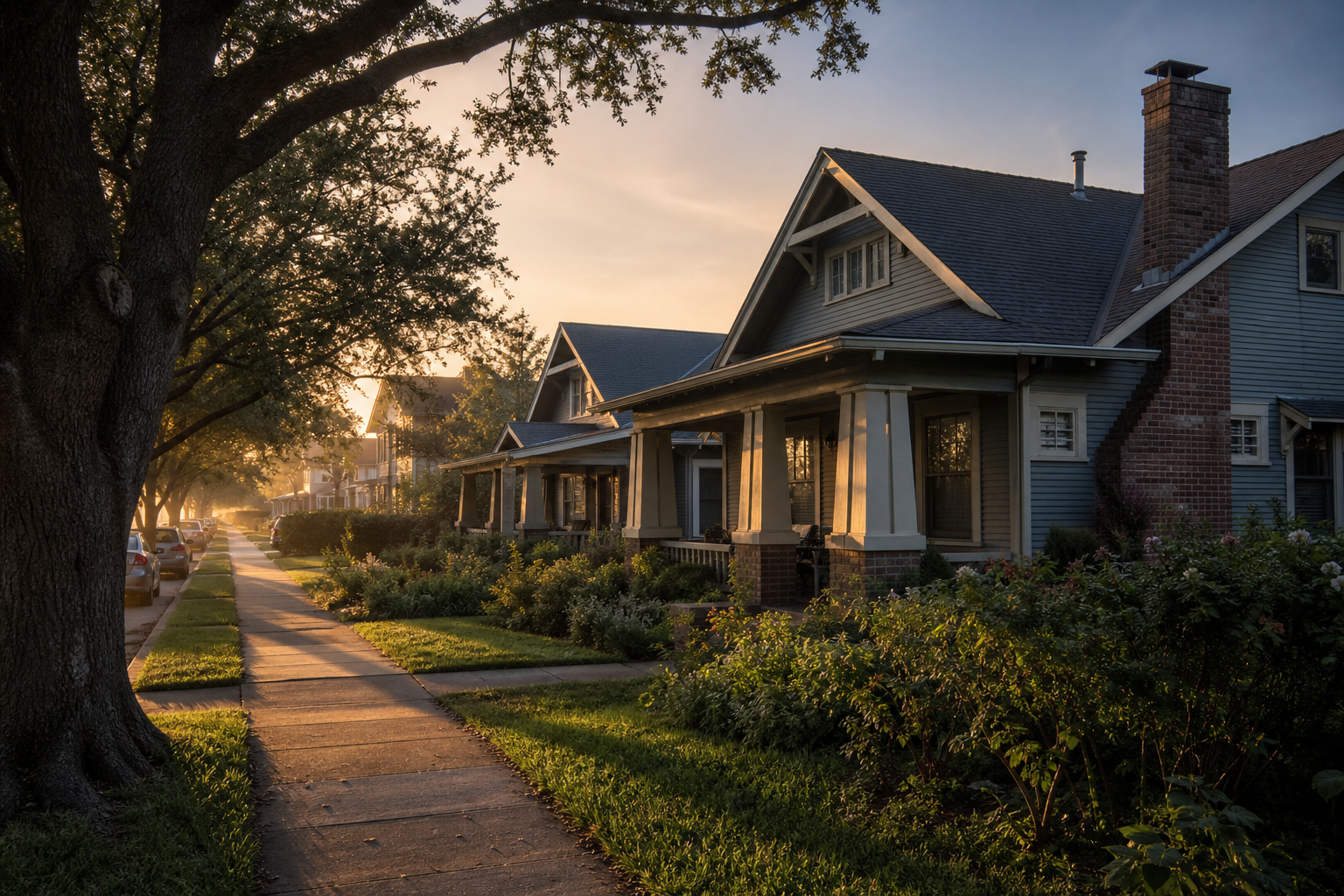
Is it safe to buy a home near the Lower Greenville and Belmont Avenue area of East Dallas in 2026, and how has the neighborhood changed over the last few years?
The short answer: East Dallas’s Lower Greenville and Belmont Avenue corridor has seen sustained reinvestment, and citywide violent crime trends in Dallas are declining in 2026. But safety is personal, and your best move is a due-diligence process, not a headline.
Why This Matters Right Now in East Dallas
If you have been following the news, you may have seen coverage of a shooting incident near East R.L. Thornton Freeway and Jim Miller Road. Events like this naturally raise questions for anyone house-hunting in East Dallas, and those questions are completely valid.
What we tell our clients is that neighborhood safety is always part of the home-buying conversation, especially in areas where convenience stores, major roads, and commercial corridors are woven into the fabric of daily life. That is the reality of urban neighborhoods like Lower Greenville and Belmont Avenue.
But here is the important context: that investigation is still ongoing, and it would be premature to use a single incident to characterize an entire neighborhood. Dallas Police Department preliminary data, as of August 15, 2026, shows year-to-date violent crime totals running below the same period in 2025 across multiple patrol divisions, according to DPD’s Call, Crime, and Arrest Dashboard. That broader trend matters more than any one headline.
So how do you actually evaluate whether this part of East Dallas is right for you? Let’s walk through it.
How East Dallas Crime Trends Look in 2026
You deserve real data, not opinions. Here is what the numbers actually show.
According to the DPD Call, Crime, and Arrest Dashboard as of August 15, 2026, robbery is down roughly 50.72% year to date and assault is down approximately 14.87% year to date in at least one patrol division compared to the same period in 2025. These are preliminary NIBRS counts subject to reclassification and are not final UCR figures, but the directional trend is meaningful: violent crime in Dallas is moving in the right direction.
The East Dallas corridor, including ZIP 75206, falls within DPD’s Northeast Division. The citywide trend data above reflects multiple patrol divisions and cannot be broken out by division from publicly available figures — but you can look up the specific reporting area or police beat for any property address you are considering. The department publishes a daily-updated dashboard, a weekly Compstat report broken down by division and reporting area, a searchable crime map, and a council-district report, all free and publicly accessible through DPD’s crime-reports hub.
What does this mean for you practically? It means you do not have to rely on anyone’s opinion about whether an area “feels” safe. You can pull the actual incident data for the blocks surrounding a home you are considering and compare it to other neighborhoods on your list. Having closed 148 transactions across the DFW market over 6 years, we can tell you that the buyers who feel most confident about their decision are the ones who do this kind of homework before making an offer.
What the Data Cannot Tell You
Numbers give you patterns, but they do not capture everything. A block with low reported incidents might still feel uncomfortable to you at certain hours. A block with a slightly higher count might feel perfectly vibrant and well-lit because of active restaurants and foot traffic. That is why visiting the neighborhood at different times of day is just as important as reading the Compstat report.
How Lower Greenville and Belmont Avenue Have Changed Over the Last Few Years
If you are new to Dallas or relocating from out of state, you should know that the Lower Greenville corridor is one of East Dallas’s most active urban-infill submarkets. The area is characterized by a mix of 1920s and 1940s bungalows alongside newer townhomes, and a dense restaurant-and-retail corridor that has attracted sustained investment over the past decade.
The Belmont Hotel area anchors a walkable node near the Belmont Avenue intersection that draws both residents and visitors. Based on the reinvestment activity visible along this corridor over the past decade, the directional trend has been positive — though buyers should verify current conditions with their own research.
What we consistently see in this part of East Dallas is that renovation activity, new construction, and restaurant openings have reshaped the corridor’s identity. The corridor has attracted walkable dining, specialty retail, and residential projects designed for buyers who want an urban lifestyle without leaving Dallas proper.
Does that reinvestment eliminate every safety consideration? No. Dense commercial corridors bring foot traffic, nightlife activity, and the kind of mixed-use energy that is both the appeal and the trade-off of urban living. The question for you is whether that trade-off aligns with your lifestyle.
Why Reinvestment Trends Matter for Your Purchase Decision
Long-term neighborhood trajectory is one of the factors that separates a smart purchase from a reactive one. A neighborhood that has seen sustained reinvestment activity over time is worth evaluating carefully for long-term trajectory — though buyers should verify current conditions with their own eyes and research. For buyers evaluating Lower Greenville and Belmont Avenue in 2026, the trajectory has been consistently positive. But you should verify that with your own eyes and your own research, not just take our word for it.
Your Due Diligence Checklist for East Dallas Neighborhood Safety
A Realtor’s role is not to tell you whether an area is “safe” or “unsafe” based on one headline. It is to help you understand the full neighborhood picture so you can decide whether it fits your comfort level and lifestyle.
Here is the due-diligence checklist we walk our clients through:
- Search the DPD crime map by specific address. DPD’s crime-reports hub lets you enter any street address and see reported incidents within a radius. Do this for every property you are seriously considering.
- Review the weekly Compstat report for the relevant reporting area. This gives you a division-level breakdown so you can compare your target area to others.
- Visit the block at multiple times of day and evening. A street that feels quiet at 10 a.m. on a Tuesday might have a completely different character at 11 p.m. on a Saturday, especially near a commercial corridor like Lower Greenville.
- Note the mix of commercial uses within a two-block radius. Convenience stores, bars, and late-night establishments create a different dynamic than coffee shops and boutiques. Neither is inherently “bad,” but you should know what you are buying into.
- Speak with neighbors and local business owners. The people who live and work in the area every day can tell you things that no data set captures, from parking challenges to community watch participation to how responsive city services have been.
This checklist works whether you are looking at Lower Greenville, the Belmont Avenue corridor, or any other part of East Dallas. The principle is the same: look at the broader pattern, not just one event.
What Proximity to Major Roads and Commercial Corridors Means for East Dallas Buyers
Lower Greenville and Belmont Avenue sit in an area where major roads, commercial activity, and residential streets overlap. East R.L. Thornton Freeway (I-30) and Jim Miller Road are part of the surrounding environment, and that proximity is something you should weigh thoughtfully.
Major roads and commercial corridors bring convenience and walkability, factors that buyers and investors often weigh when evaluating urban properties. They also bring higher traffic volumes, more transient foot traffic, and the types of incidents that can occur near high-activity intersections — Buyers should review the DPD crime map for the specific address to assess the surrounding pattern. This is not unique to East Dallas. It is a pattern you will find in urban neighborhoods across Dallas and every major metro.
What we tell buyers is to look beyond the property itself. The house might be beautifully renovated, perfectly priced, and exactly what you want, but if the surrounding environment does not align with your daily comfort level, you will feel that tension every time you walk outside. That is why we encourage you to evaluate the neighborhood as seriously as you evaluate the home.
As a Real Estate Negotiation Expert (RENE) and certified New Home Sales Agent, we have guided buyers through exactly this kind of evaluation across East Dallas neighborhoods. Rated 5 out of 5 stars with 84 client reviews, our team at Unlocking DFW has built a process around helping buyers understand the full picture, not just the MLS listing.
How to Decide if Lower Greenville and Belmont Avenue Fit Your Lifestyle
This is the part of the conversation where the decision becomes personal. We can share data, walk you through due diligence, and tell you what we have observed across 148 transactions, but ultimately you are the one who has to live there.
Here are the questions we recommend you ask yourself:
- Are you comfortable with urban energy? Lower Greenville is a restaurant-and-entertainment corridor. That means activity, noise on weekends, and the trade-offs that come with walkable nightlife.
- Does the reinvestment trajectory match your timeline? If you are buying for the long term, the sustained investment in this corridor over the past decade is worth factoring into your thinking. If you are looking for a short hold, your calculus may be different.
- Have you done the due diligence yourself? Not read about it. Actually done it. Pulled the crime map, walked the blocks at night, talked to neighbors. If you have not, you are not ready to make an informed decision.
- Does the specific block work, not just the neighborhood? Two blocks in the same neighborhood can feel entirely different. The home next to a quiet park operates differently from the home backing up to a commercial loading zone.
Being named a D Magazine Best Real Estate Agent since 2020 and a MetroTex 40 Under 40 honoree has come from doing this work with buyers year after year in East Dallas. Our approach has always been to empower clients with the tools and context to decide for themselves rather than offering vague reassurance.
Frequently Asked Questions
Is Lower Greenville in East Dallas a dangerous neighborhood in 2026?
Dallas Police Department data as of August 15, 2026 shows violent crime trending down citywide compared to 2025, with robbery down roughly 50.72% and assault down approximately 14.87% year to date in at least one division, per the DPD Call, Crime, and Arrest Dashboard. These are preliminary NIBRS counts. No single area label of “dangerous” or “safe” captures the full picture, and you should review the DPD crime map for any specific address.
How can I check crime data for a specific address near Belmont Avenue in East Dallas?
DPD publishes a free, publicly accessible crime-reports hub with a daily-updated dashboard, weekly Compstat reports by division, a searchable crime map, and council-district reports. You can enter any address and review incidents in the surrounding area. We encourage every buyer to use this tool.
Has the Lower Greenville area changed a lot in recent years?
Yes. Lower Greenville has experienced sustained restaurant, retail, and residential reinvestment over the past decade. The corridor now features a dense mix of dining, retail, and residential options alongside its original stock of 1920s and 1940s bungalows. The Belmont Hotel area anchors a walkable node that draws both residents and visitors.
Should one shooting incident near East Dallas change my home search?
One incident, especially one with an ongoing investigation, does not characterize an entire neighborhood. The more useful approach is to look at the broader pattern of incidents in an area, the types of businesses nearby, and what the neighborhood feels like at different times of day. That is the due diligence that leads to confident decisions.
What patrol division covers Lower Greenville and Belmont Avenue?
The East Dallas corridor including ZIP 75206 falls within DPD’s Northeast Division. You can look up the specific reporting area or police beat for any address through DPD’s crime-reports hub to see division-level and reporting-area data for that specific location.
Is it worth visiting a neighborhood at night before buying in East Dallas?
Absolutely. A street near a commercial corridor like Lower Greenville will have a different character at different times. We recommend visiting any prospective block during the day, in the evening, and on weekends to understand the full range of activity and energy.
What types of commercial businesses should I pay attention to near a potential home?
Note the mix within a two-block radius. Restaurants, coffee shops, and boutiques create a different dynamic than late-night bars, convenience stores, or high-traffic gas stations. Neither is inherently problematic, but you should understand what surrounds your potential home.
Are homes near Lower Greenville a good long-term investment?
The sustained reinvestment trend along the Lower Greenville corridor over the past decade is a factor worth considering for long-term buyers, alongside your specific block, purchase price, and timeline. However, we always recommend evaluating your specific block, your purchase price, and your timeline rather than relying solely on neighborhood-level trends. We are happy to walk you through the specifics.
How do major roads like I-30 affect home buying decisions in East Dallas?
Proximity to major roads like East R.L. Thornton Freeway brings both convenience and trade-offs, including traffic noise, higher transient foot traffic, and the types of incidents that can occur near high-activity intersections — Buyers should review the DPD crime map for the specific address to assess the surrounding pattern. You should weigh these factors against the access and connectivity those roads provide.
What should a relocation buyer know about East Dallas before making an offer?
If you are relocating to Dallas, start by understanding that East Dallas is one of the city’s most active urban-infill submarkets with a mix of historic homes and new construction. Use DPD’s publicly available crime data to compare areas, visit your target neighborhood in person at multiple times, and work with a local Realtor who knows the block-by-block differences.
The Bottom Line
Safety is a valid and important part of the home-buying conversation, and you should never feel hesitant about asking hard questions. The Lower Greenville and Belmont Avenue corridor in East Dallas has seen sustained reinvestment, and citywide violent crime data from DPD as of August 2026 shows trends moving in the right direction. But no headline, no data dashboard, and no Realtor can make the decision for you.
What we can do is give you the tools, the context, and the honest perspective to make that decision with confidence. That is what our team at Unlocking DFW Realty has done across 148 transactions and what our 84 five-star reviews reflect.
If you are evaluating homes near Lower Greenville, Belmont Avenue, or anywhere in East Dallas real estate, reach out to us at 214-509-8094. We will walk the blocks with you, help you pull the data, and make sure you see the full picture before you commit.

Leave a Reply