What does neighborhood development actually mean for your home buying decision in Dallas, and how should you evaluate it?
Neighborhood development in Dallas goes far beyond new houses. It includes commercial projects, community amenities, infrastructure upgrades and transit improvements, and you need to know how to separate completed investment from future promises before making a buying decision.
TLDR: Neighborhood development in Dallas is a multi-year process that includes far more than new homes — think transit nodes, community services, infrastructure upgrades and layered financing. The MLK Wellness Center in South Dallas is a case study in how development really works: it took nearly five years instead of 18 months, cost $400,000 more than projected and involved five distinct funding sources. With 4.8 months of inventory and homes averaging 92 days on market in Q1 2026, Dallas buyers now have the time to research neighborhoods properly. Use that time to separate completed projects from proposals before you buy.
Why This Matters Right Now in Dallas
If you are shopping for a home in Dallas right now, you are hearing a lot about “development” and “growth” in certain corridors and neighborhoods. But what does that actually mean for your purchase?
Here is the reality we see every day at Unlocking DFW Realty: development is not a single event. It is a process that unfolds over years, sometimes with significant delays and cost increases along the way. The recently opened MLK Wellness Center on Martin Luther King Jr. Boulevard in South Dallas is a perfect example. What was expected to be an 18-month project took nearly five years to complete, according to Dallas Free Press reporting from September 2026.
The broader DFW market is also giving you something valuable right now: time. With 4.8 months of inventory and homes averaging 92 days on market in Q1 2026, per the Texas REALTORS Q1 2026 Quarterly Housing Report, you have more breathing room to research neighborhoods thoroughly than buyers have had in recent years. That makes understanding development more important and more feasible than ever.
How the MLK Wellness Center Teaches Dallas Buyers About Real Development
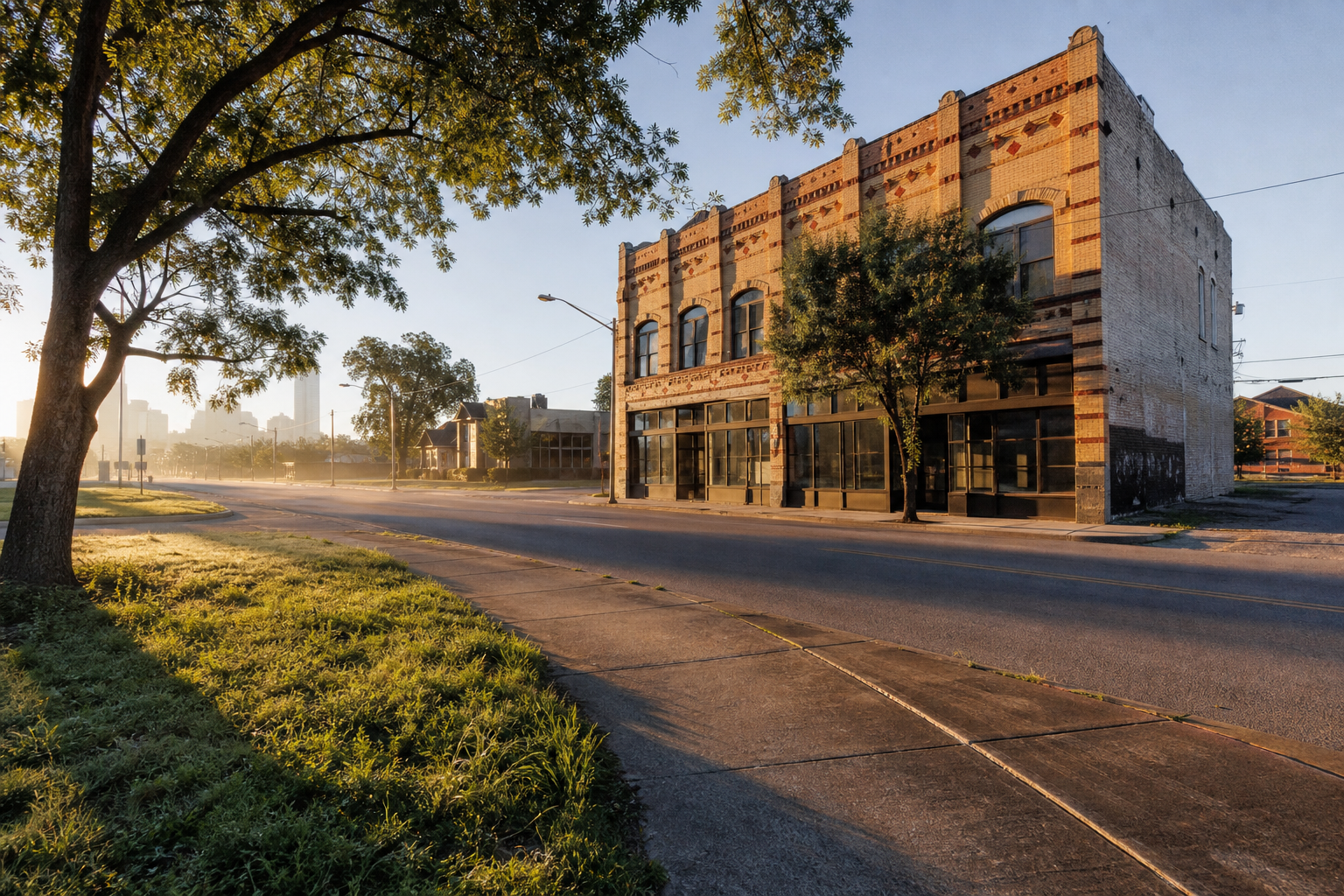
One of the most instructive development stories in Dallas right now is the MLK Wellness Center, located on Martin Luther King Jr. Boulevard in South Dallas, directly across from James Madison High School. This is not a residential project. It is a community-serving commercial space that now houses Kingdom Café, G3 health club, Gifted Souls mental-health nonprofit (which provides addiction counseling, daily meals and housing connections), and Legacy Builders Youth Camp (offering financial literacy, entrepreneurship, commercial real estate and career programming), according to the Dallas Free Press report from September 2026.
What we always tell our clients at Unlocking DFW is this: when you evaluate a neighborhood, do not just look at rooftops. Look at what services and amenities are arriving. A café, a health club, mental-health services and youth programming in a single building represent a very different kind of investment than a new subdivision. Both matter, but they matter in different ways.
The building itself was formerly the home of the Dallas Weekly since 1990 and was purchased by developer Ferrell Fellows in late 2021, according to the same reporting. That kind of adaptive reuse — where an existing structure gets a new purpose — is one pattern worth watching for as you evaluate neighborhoods.
What “Development” Includes Beyond New Homes in Dallas
When you hear that a Dallas neighborhood is “developing,” here is what you should actually be investigating:
- Commercial spaces and services like the MLK Wellness Center’s café, health club and nonprofit tenants
- Infrastructure improvements such as utility upgrades, new roads or sewer-line replacements
- Transit access, including DART rail stations and bus connectivity
- Public investment through city loans, grants and tax increment financing districts
- Community programming like the youth entrepreneurship camp at the MLK Wellness Center
- Housing development, both new construction and renovation of existing properties
Each of these tells you something different about where a neighborhood is headed. Our team, with over 148 closed transactions and six years of experience working across Dallas neighborhoods, has seen firsthand how each type of development signals different things to different buyers.
Why Dallas Infrastructure Problems Can Delay Development for Years
If there is one lesson every Dallas home buyer should take from the MLK Wellness Center story, it is this: infrastructure in older neighborhoods is unpredictable, and it can dramatically change both the cost and timeline of any development project.
According to the Dallas Free Press reporting from September 2026, developer Ferrell Fellows encountered more than 100-year-old sewer lines, inaccurate utility maps and electrical capacity issues that required new Oncor utility poles. The project’s cost climbed from approximately $1.2 million to nearly $1.6 million. The original 18-month timeline stretched to nearly five years.
So what does this mean for you as a buyer researching a developing Dallas neighborhood? Ask these questions:
- Has the project completed an infrastructure assessment? Aging sewer lines, outdated electrical systems and inaccurate utility maps are common in older Dallas neighborhoods. If a developer has not yet discovered what is underground, the timeline you are hearing may be optimistic.
- What permitting stage is the project in? Dallas permitting can be complex and subject to disruption, as infrastructure surprises like those encountered during the MLK Wellness Center project illustrate.
- Are construction costs locked in? Rising materials costs can push projects over budget, potentially changing what gets built or whether it gets built at all.
What we emphasize with our relocation clients especially is that infrastructure age is not visible from the street. You cannot drive through a neighborhood and know that the sewer lines are over a century old. That kind of due diligence takes real research.
How to Tell Whether Dallas Neighborhood Development Is Real or Just Planned
This is one of the most important distinctions you can make as a buyer, and it is an area where we see people get tripped up regularly. There is a significant difference between what has been built, what is under construction and what has only been proposed.
The MLK Wellness Center is now open. It is a completed, operating facility. But the broader MLK Corridor redevelopment referenced in the same Dallas Free Press reporting includes a mix of completed, ongoing and planned activity. Nearby plans include changes around the MLK DART Station. The Grand Park South TIF District, identified in DART’s MLK Jr. Station area fact sheet, represents an active incentive mechanism for the station area. Community development efforts involving housing and entrepreneurship are also referenced.
A Framework for Evaluating Dallas Development Projects
Here is the framework we recommend to our buyers:
- Completed projects are verifiable. You can visit them, confirm they are operating and assess their impact on the neighborhood right now. The MLK Wellness Center falls into this category.
- Under-construction projects have secured financing, pulled permits and broken ground. They carry risk (cost overruns, delays, infrastructure surprises), but they are past the planning stage.
- Approved or planned projects have some form of official approval but have not started. They are more likely to happen than proposals, but timelines can shift dramatically.
- Proposed projects are ideas. They may have community support, a developer’s interest or a city study behind them, but they have not been approved. Many proposed projects never materialize.
When you are weighing a home purchase in a developing area, give the most weight to completed projects and the least weight to proposals. And be honest with yourself about your timeline. If you need the neighborhood to be a certain way when you move in, focus on what exists today, not on what might exist in three to five years.
What Dallas Development Financing Tells You About Neighborhood Commitment
One of the things that makes the MLK Wellness Center story so instructive for buyers is the transparency around how it was financed. According to the Dallas Free Press, 11 community members contributed $180,000 to the project. Subsequent financing included a $350,000 City of Dallas loan, a $100,000 reimbursable grant through the South Dallas/Fair Park Opportunity Fund, Trinity Capital Bank financing and personal investment from the developer.
Why should you, as a home buyer, care about how a neighborhood project is funded? Because the funding structure tells you something about the depth and durability of the investment.
- **Community investment (like the $180,000 from 11 individuals) reflects direct financial participation by community members in the project’s funding.
- City loans and public grants (like the $350,000 loan and $100,000 South Dallas/Fair Park Opportunity Fund grant) show that public resources have been committed to the project, whether from community development priorities, available program funds, or other factors.
- Bank financing (like Trinity Capital Bank’s involvement) means a financial institution underwrote the project’s risk.
- Personal developer investment shows the developer has skin in the game beyond a fee or commission.
When multiple funding sources converge on a single project, it can indicate that the investment is more committed and durable than one backed by a single source. That said, we always remind our clients: investment does not automatically equal appreciation. The MLK Wellness Center represents documented community investment, but the reporting does not establish that nearby home values will rise because of the center’s opening. Use verified market data as your pricing baseline, and treat development activity as qualitative context.
How Transit Access in Dallas Adds Concrete Value to Your Neighborhood Research
The MLK Jr. DART Rail Green Line Station is located at 1412 S. Trunk Ave., Dallas, TX 75210, south of Fair Park and adjacent to the J.B. Jackson Jr. Transit Center. According to DART, it is served by Green Line trains and bus Routes 13, 23, 104, 216 and GoLink South Dallas on weekdays. That is a meaningful transit node.
Why does this matter for your home search? According to the 2026 Texas Homebuyers and Sellers Report (covering the survey period July 2024 through June 2025), roughly 60% of Texas buyers considered commuting costs very or somewhat important in choosing their home location.
Transit access is not speculative. It is not a plan or a proposal. It is an existing, functioning piece of infrastructure that you can verify by walking to the station and checking the schedule. When we work with relocation clients at Unlocking DFW, we often point out that transit proximity is one of the most concrete, verifiable neighborhood attributes you can evaluate, especially compared to development plans that may or may not materialize.
As a buyer, here is how to use transit in your neighborhood research:
- Ride the line yourself. Take the Green Line or relevant bus route during your actual commute hours.
- Check frequency and reliability. A station exists, but how often do trains run? What is service like on evenings and weekends?
- Consider the radius. How walkable is the area around the station? Is there safe, comfortable pedestrian access?
How the Current Dallas Market Supports Better Neighborhood Research
The DFW housing market in 2026 is giving you something that buyers in prior years did not have: time to research. Here is the current picture, according to the Texas home sales report from Q1 2026:
- Median home price in the DFW MSA: $250,000, up 5.1% year-over-year as of Q1 2026
- Active listings: 12,094, up 7.5% year-over-year as of Q1 2026
- Closed sales: 6,566 in Q1 2026, down less than 2% from Q1 2025
- Average days on market: 92 days as of Q1 2026
- Months of inventory:** 4.8 months as of Q1 2026, up 2.7 months year-over-year
What does this mean practically? With 4.8 months of inventory and homes sitting for an average of 92 days, you are not racing against multiple-offer deadlines the way buyers were in previous years. That breathing room is a genuine advantage when you are trying to evaluate whether a neighborhood’s development trajectory aligns with your needs.
With 84 five-star reviews and recognition as a D Magazine Best Real Estate Agent since 2020, we have guided buyers through both fast and balanced markets. In our experience, the most successful buyers in a market like this are the ones who use the extra time to dig deeper into neighborhood fundamentals rather than just looking at the house itself.
Frequently Asked Questions About Dallas Neighborhood Development
What counts as “neighborhood development” when buying a home in Dallas?
Development includes any investment that changes a neighborhood’s infrastructure, services, amenities or housing stock. That can mean new commercial spaces like the MLK Wellness Center’s café and health club in South Dallas, transit improvements around DART stations, utility upgrades, new housing construction or community programming. When evaluating a Dallas neighborhood, look beyond residential building permits to the full picture of investment activity.
How do we find out what development is planned near a Dallas home we are considering?
Start with the City of Dallas development services website for active permits and applications. Check DART for transit plans. Look for Tax Increment Financing (TIF) district boundaries, like the Grand Park South TIF District near the MLK Jr. DART Station, which indicate areas receiving targeted public investment. You can also attend neighborhood association meetings and review city council agendas for development-related items.
Does neighborhood development in Dallas always increase home values?
Not necessarily. Development activity is one factor among many that can influence property values, but the relationship is not automatic. The MLK Wellness Center represents documented community investment in South Dallas, but the reporting does not establish a direct causal link between the center’s opening and nearby home-price changes. We always recommend using verified MLS data as your pricing baseline rather than assuming development will drive appreciation.
How long do neighborhood development projects in Dallas typically take?
Timelines vary significantly. Larger infrastructure or transit projects can take even longer. When evaluating development timelines, build in a generous cushion.
What infrastructure issues should Dallas home buyers watch for in developing neighborhoods?
Aging sewer lines (sometimes over 100 years old, as discovered during the MLK Wellness Center project), outdated electrical systems, inaccurate utility maps and inadequate capacity for new development can all be present in older Dallas neighborhoods and are worth investigating before relying on a developer’s projected timeline. These issues are not visible from the surface and can dramatically affect both development timelines and costs in the surrounding area.
How does DART access affect Dallas neighborhood development?
DART stations like the MLK Jr. DART Rail Green Line Station at 1412 S. Trunk Ave. represent fixed, verifiable transit infrastructure. The station serves Green Line trains plus bus Routes 13, 23, 104 and 216, along with GoLink South Dallas on weekdays. Transit access is also meaningful to buyers directly, as roughly 60% of Texas buyers considered commuting costs important in choosing their home location, per the 2026 Texas Homebuyers and Sellers Report.
What is happening along the MLK Corridor in South Dallas?
The MLK Wellness Center is now open, providing a café, health club, mental-health services and youth programming on Martin Luther King Jr. Boulevard across from James Madison High School. Broader redevelopment along the corridor includes additional housing and entrepreneurship initiatives, as well as plans related to the MLK DART Station area, according to Dallas Free Press reporting from September 2026. Some activity is completed, while other elements remain in planning stages.
How should first-time Dallas buyers evaluate a developing neighborhood?
Focus on what exists today rather than what has been promised. Visit completed projects, ride transit lines during your actual commute hours, walk the streets at different times of day and check whether announced amenities are actually open and operating. If a neighborhood needs to look a certain way when you move in, make sure you are basing your decision on current conditions, not projected timelines.
What role does community funding play in Dallas neighborhood development?
Community funding can signal grassroots commitment to a neighborhood’s future. The MLK Wellness Center’s initial $180,000 came from 11 community members, according to the Dallas Free Press. When combined with public funding (like the $350,000 City of Dallas loan and $100,000 South Dallas/Fair Park Opportunity Fund grant), bank financing and developer investment, layered funding can indicate that a project has broader backing and may be more durable than one relying on a single source.
Should we buy in a Dallas neighborhood based on future development plans?
We recommend caution. Development plans can change, get delayed or be canceled entirely. The MLK Wellness Center’s five-year journey from expected 18-month timeline to completion illustrates how unpredictable the process can be.

Leave a Reply