What does the surge in industrial and logistics development across the Dallas-Fort Worth Metroplex mean for you as a home buyer or relocating family?
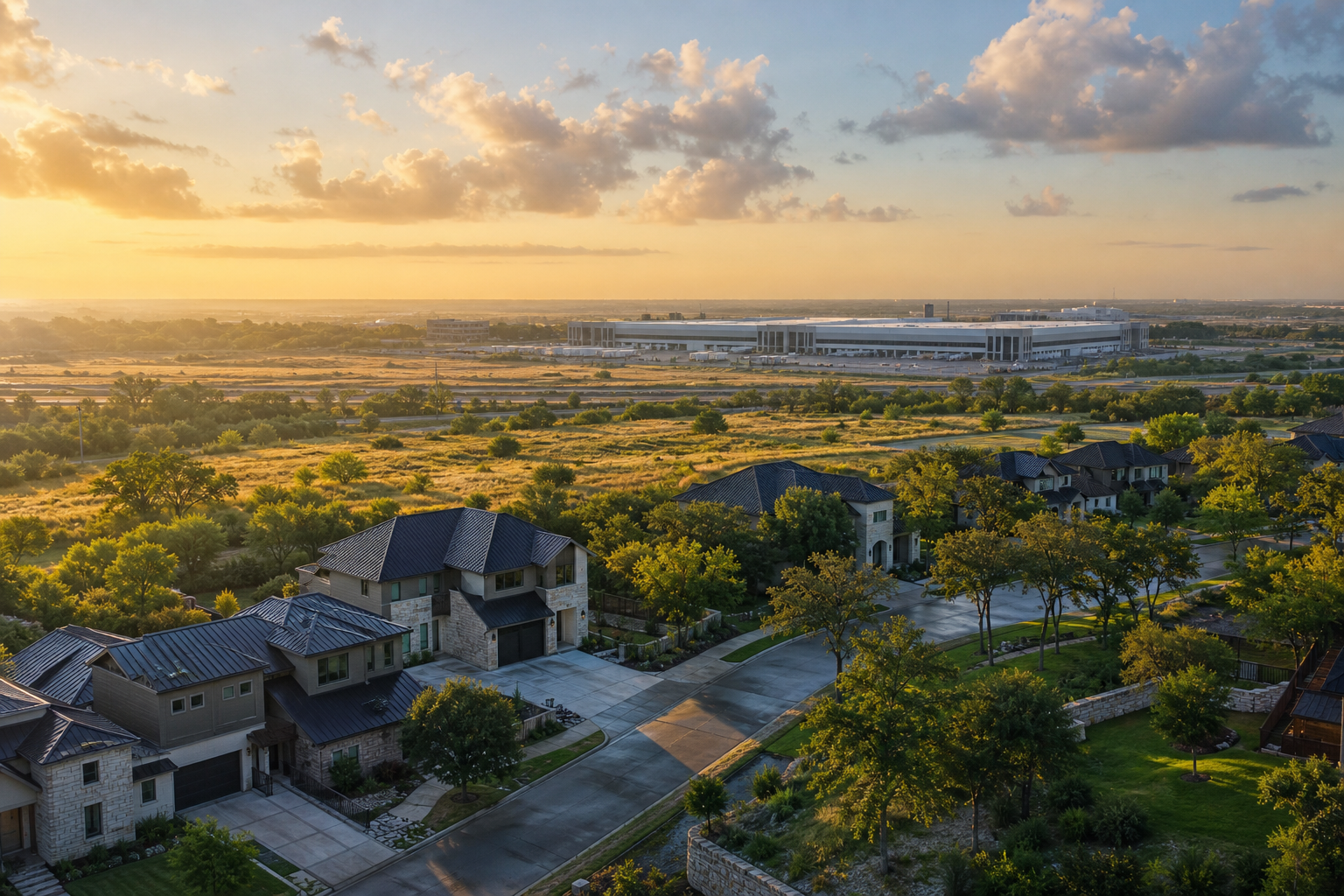
Industrial investment is reshaping the Dallas-Fort Worth Metroplex, and if you are buying a home here, it pays to understand how warehouses, distribution centers, and logistics corridors connect to the neighborhoods you are evaluating. The short answer: industrial growth can bring jobs, infrastructure improvements, and population growth to nearby communities, but the impact on any specific home depends on location, zoning, and proximity.
Why This Matters Right Now in the Dallas-Fort Worth Metroplex
Here is the headline that caught our attention. Dallas-based Stonelake Capital Partners closed its eighth real estate investment fund at $1 billion in September 2026, exceeding its original $900 million target, according to The Real Deal (September 30, 2026). The fund is focused on industrial properties, including warehouses, distribution centers, and logistics developments across 13 markets, and it is already 20 percent committed.
What does a billion-dollar investment fund have to do with your home search in Dallas? Quite a lot, actually.
At Unlocking DFW Realty, we track commercial development alongside residential market trends because the two are deeply connected. When institutional investors deploy capital at this scale, it signals confidence in a region’s economic fundamentals. And when that capital flows into industrial real estate in your metro area, it can shape where jobs concentrate, which roads get improved, and which communities see new housing demand. With 148 closed transactions and six years of guiding buyers through the Dallas Fort Worth Metroplex, we have watched these patterns play out firsthand. Understanding them can give you a real advantage.
How a $1 Billion Industrial Fund Connects to Dallas Fort Worth Real Estate
So, why should you care about a fund that buys warehouses and distribution centers when you are looking at houses? Let us walk through it.
Stonelake Capital Partners is headquartered right here in Dallas. Over the prior year, the firm invested approximately $200 million in 16 logistics properties totaling about 2.3 million square feet, per The Real Deal (September 30, 2026). That is not a projection or a wish list. That is active deployment happening in real time across the region.
The Scale of Institutional Commitment
The new fund is 34 percent larger than Stonelake’s 2023 fund, which closed at $746 million. Over the past five years, the firm has raised $2.3 billion across three opportunity funds. Investors backing these funds include college endowments, foundations, public pension funds, and hospital systems. These are not speculative investors chasing quick returns. They conduct deep due diligence before committing capital, and their continued participation tells us something about DFW’s trajectory.
Beyond Warehouses: Stonelake’s Dallas Footprint
Stonelake is not just an industrial investor. The company leases space at 23Springs on Cedar Springs Road in Uptown Dallas and is constructing a 17-story, 180,000-square-foot office building at 2626 McKinney Avenue, with completion expected in early 2028 and tenants expected near the end of 2028. For buyers evaluating neighborhoods along the McKinney Avenue corridor or in Uptown and Midtown Dallas, this kind of office development can influence where white-collar workers choose to live, and it adds another layer to an already high-demand residential submarket.
What does this actually mean for your daily life as a homeowner? It means the area around you is not static. It is evolving, and the smartest buyers pay attention to what is being built beyond the residential listings.
Where DFW Industrial and Logistics Growth Meets Your Home Search
When we work with buyers relocating to the Dallas Fort Worth Metroplex, one of the first conversations we have is about the relationship between employment centers and housing. Industrial and logistics facilities employ warehouse workers, logistics coordinators, drivers, and operations staff. When large facilities cluster along a corridor, they can anchor residential demand in nearby communities.
What to Consider Along Industrial Corridors
If you are evaluating homes near areas where industrial growth is occurring, here is a practical framework:
- Commute access: Proximity to a distribution center or logistics park can mean a shorter commute for workers employed there, which is a genuine lifestyle benefit
- Infrastructure improvements: Large developments often come with road and highway improvements funded through development agreements, which can benefit surrounding neighborhoods
- Population growth: Industrial employment attracts workers, and those workers need housing, retail, restaurants, and schools, all of which can support a growing community
- Potential trade-offs: Increased truck traffic, noise, and light pollution are real considerations depending on a facility’s design, the road network, and how close your property sits to loading docks and truck routes
In our experience, the right question is not “Is industrial development near my home good or bad?” It is “What does this specific development look like, and how is it positioned relative to where I would be living?”
How to Evaluate a Home Near Industrial or Logistics Development in DFW
This is where the rubber meets the road. You have found a home you love in a growing Dallas Fort Worth Metroplex community, and you notice commercial or industrial development nearby. What should you actually do?
Ask the Right Questions Before Making an Offer
- Land-use designations: Ask your agent about current zoning and any planned changes. A logistics facility two miles away with a zoning buffer between you and it is a very different situation from one going in across the street
- Planned road and highway improvements: Find out whether any road-widening, interchange construction, or new access roads are in the pipeline. These projects can improve your daily commute but may also bring construction disruption in the short term
- Distance and orientation: How far is the property from loading docks, truck staging areas, and major freight routes? A half-mile buffer with residential development in between is often a different experience than a direct line of sight
- Future development pipeline: What else is planned for the surrounding area? A master-planned community near a growing employment corridor may see retail, dining, and amenities follow, but you want confirmation, not assumptions
What we tell our clients is straightforward: do not make decisions based on what a community looks like today. Investigate what is planned. With 84 five-star reviews from past clients, our team has built a reputation for helping buyers look beyond the surface, and that means understanding the full development picture around a property, not just the property itself.
Why Institutional Investment Signals Confidence but Not a Guarantee for DFW Neighborhoods
Here is where we want to be honest with you, because nuance matters.
A $1 billion industrial investment fund is a meaningful signal of institutional confidence in the Dallas Fort Worth Metroplex. But institutional investment in commercial real estate does not automatically translate into residential price appreciation in nearby neighborhoods. The relationship between commercial development and home values depends on several factors:
- Zoning and land-use buffers between industrial and residential areas
- Traffic patterns and whether infrastructure can absorb increased commercial vehicle movement
- The specific submarket and its existing housing supply, demand, and price dynamics
- The quality and type of industrial development, because a modern, well-landscaped logistics campus operates very differently from an older freight yard
As a Real Estate Negotiation Expert (RENE) and certified New Home Sales Agent, one thing we consistently see is buyers confusing proximity to growth with guaranteed appreciation. They are related, but they are not the same thing. We encourage every buyer to evaluate each location on its own merits, using local pricing data rather than regional headlines.
What Relocating Families Should Know About DFW’s Industrial Growth Story
If you are moving to the Dallas Fort Worth Metroplex for work, understanding the region’s industrial and logistics growth is part of choosing the right community for your family. DFW’s growth story is not just about tech campuses and corporate headquarters. It includes a significant logistics and distribution ecosystem that employs large numbers of workers across the region.
Connecting Your Job to Your Home Search
When we help relocating families, we start with where the employment is and work outward to find communities that balance commute, schools, amenities, and budget. Here is how industrial growth fits into that conversation:
- If you are employed in logistics or distribution, living near major corridors can significantly reduce your commute and improve your quality of life
- If your employer is in a different sector, understanding where industrial development is concentrated helps you anticipate traffic patterns, road construction, and which areas are likely to see continued population growth
- If you are evaluating new construction communities in fast-growing suburbs, ask about commercial and industrial development planned for the surrounding area. Master-planned communities often grow alongside commercial development, and knowing what is coming can help you make a more informed purchase
Having been named a D Magazine Best Real Estate Agent since 2020 and part of the Dallas Observer Readers’ Choice Best Real Estate Team, we have guided many relocating families through exactly this kind of analysis. The goal is not just finding a house. It is finding a community that makes sense for your life today and five years from now.
Frequently Asked Questions About DFW Industrial Growth and Home Buying
How does industrial development affect nearby residential property values in DFW?
The impact varies significantly by location. Well-buffered industrial development that brings employment, infrastructure improvements, and population growth can support housing demand in surrounding communities. However, properties in very close proximity to truck routes or loading areas may experience trade-offs related to noise and traffic. The specific zoning, distance, and design of the industrial facility all matter.
Why is the Dallas Fort Worth Metroplex attracting so much industrial investment?
DFW continues to attract logistics and distribution investment, as illustrated by the $1 billion fund raised by Dallas-based Stonelake Capital Partners in September 2026, as reported by The Real Deal. The $1 billion fund raised by Dallas-based Stonelake Capital Partners in September 2026, as reported by The Real Deal, illustrates this continued institutional confidence.
What types of jobs do industrial and logistics facilities create in DFW?
Industrial and logistics facilities generally employ warehouse workers, logistics coordinators, drivers, operations managers, and maintenance staff. Larger facilities may also generate demand for ancillary services like food service, transportation, and administrative support in surrounding communities.
Should I avoid buying a home near an industrial development?
Not necessarily. The key is evaluating the specifics. A modern logistics campus with landscaping and setbacks, positioned half a mile from a residential community with good road infrastructure, is very different from a facility with direct truck access past your front door. We always recommend buyers research the specific development rather than making blanket assumptions.
How can I find out what is being developed near a home I am considering in DFW?
You can review municipal planning and zoning records, check with the city’s economic development office, and ask your real estate agent to investigate pending or approved development applications. In our experience, this step is one of the most valuable things a buyer can do before making an offer.
What is Stonelake Capital Partners and why does their fund matter to DFW buyers?
Stonelake Capital Partners is a Dallas-based real estate investment firm that closed a $1 billion fund in September 2026, focused on industrial properties across 13 markets. The fund has already deployed approximately $200 million into 16 logistics properties totaling about 2.3 million square feet, per The Real Deal. For DFW buyers, this represents continued large-scale investment in the regional economy.
Does industrial development mean more traffic in my DFW neighborhood?
It can, depending on the road network and how close the development is to residential areas. Distribution centers and logistics facilities generate truck traffic, which typically concentrates on major highways and access roads. Buyers should ask about planned road improvements and look at the truck routing plan for any nearby facility before purchasing.
How does the 2626 McKinney Avenue office project affect Uptown Dallas real estate?
Stonelake’s 17-story, 180,000-square-foot office building at 2626 McKinney Avenue, with completion expected in early 2028, may draw additional white-collar workers to the Uptown and Midtown Dallas area. This could support housing demand in the surrounding area, though specific pricing impacts depend on broader market conditions at the time of completion.
What should first-time buyers in DFW know about industrial growth?
First-time buyers evaluating communities in fast-growing suburbs should look beyond the residential development they can see. Ask what commercial, industrial, and retail projects are planned nearby. A community growing alongside a major employment corridor may benefit from sustained demand and amenities, but you want to understand the full picture before committing.
Is a $1 billion real estate fund a guarantee that DFW home prices will rise?
No. Institutional investment in commercial real estate signals confidence in a region’s fundamentals, but it does not guarantee residential price appreciation in any specific neighborhood. The connection between commercial development and home values depends on location, zoning, infrastructure, and market conditions. Buyers and investors should evaluate each situation individually rather than assuming a direct correlation.
The Bottom Line
The Dallas Fort Worth Metroplex is experiencing significant industrial and logistics investment, highlighted by Stonelake Capital Partners’ $1 billion fund closed in September 2026. For you as a home buyer, this growth is part of a larger regional story that touches employment, infrastructure, and community development.
The smart move is not to chase headlines or avoid industrial corridors entirely. It is to understand what is being built, where, and how it connects to the community you are choosing. That takes local knowledge, the right questions, and an agent who understands both sides of the development story.
At Unlocking DFW Realty, we help buyers and relocating families navigate exactly these kinds of decisions every day. With 148 transactions closed, 84 five-star client reviews, and recognition as a D Magazine Best Real Estate Agent and MetroTex 40 Under 40 honoree, we bring the experience and analysis you need to make a confident decision.
Ready to talk through your home search in the Dallas Fort Worth Metroplex? Call us at 214-509-8094, email us through our website at unlocking-dfw.com, or stop by our office at 2400 North Henderson Ave, Dallas, TX 75206. Jamie Simpson and Tiya Nguyen are here to help you cut through the noise, evaluate the full picture, and find a community that works for your life today and well into the future.

Leave a Reply