
How does neighborhood development affect your Fort Worth home search, and what should you evaluate before buying near a major new project?
Neighborhood development in Fort Worth can reshape how you experience a community, from foot traffic and commercial activity to infrastructure and long-term livability, but no single project guarantees a specific outcome for your home’s value.
Why This Matters Right Now in Fort Worth
Fort Worth is in the middle of a significant moment. As of October 7, 2026, demolition of the Southside Community Center on Rosedale Street is underway, clearing the way for the National Juneteenth Museum, a planned 50,000-square-foot cultural institution at East Rosedale Street and New York Avenue in Historic Southside, according to NBC 5 Dallas-Fort Worth. The city has committed up to $15 million toward construction, and approximately 35,000 annual visitors are estimated for the facility.
This milestone coincides with Dr. Opal Lee’s 100th birthday. Her Walk for Freedom campaign and national petition effort helped secure Juneteenth’s recognition as a federal holiday in June 2021. The museum honors that legacy while signaling a broader investment in a neighborhood that has deep roots but decades of challenges.
If you are searching for a home in the Dallas-Fort Worth Metroplex right now, this kind of development story is exactly the type of signal you need to learn how to read. Not as a promise, but as a data point worth investigating alongside everything else that matters in your decision.
How Major Cultural Investments Shape Fort Worth Neighborhoods
So what actually happens when a neighborhood receives a major new cultural institution? It is a fair question, and the honest answer is: it depends on a lot of factors.
A project like the National Juneteenth Museum, sitting approximately two miles south of downtown Fort Worth, can increase foot traffic, attract complementary commercial investment, and raise a neighborhood’s profile. Those are meaningful changes. But we always tell our clients that one project, no matter how significant, is just one piece of a much larger neighborhood puzzle.
What we encourage you to evaluate when you see a major investment like this:
- Project stage. Is it proposed, funded, under construction, or complete? The museum has moved from funded to under construction, which is a stronger signal than a project still in the proposal phase. Announced projects sometimes stall, change scope, or get cancelled before completion.
- Funding source and commitment. The city’s pledge of up to $15 million represents institutional backing, not speculative private funding. That distinction matters.
Here is what we want you to take away: a cultural institution can make a neighborhood more attractive to certain buyers, but it is not a substitute for evaluating whether the neighborhood actually fits your daily life.
Why Fort Worth’s Historic Southside Deserves a Closer Look
Understanding where a neighborhood has been is just as important as understanding where it might be going. And Historic Southside has a story that relocation buyers, in particular, need to know.
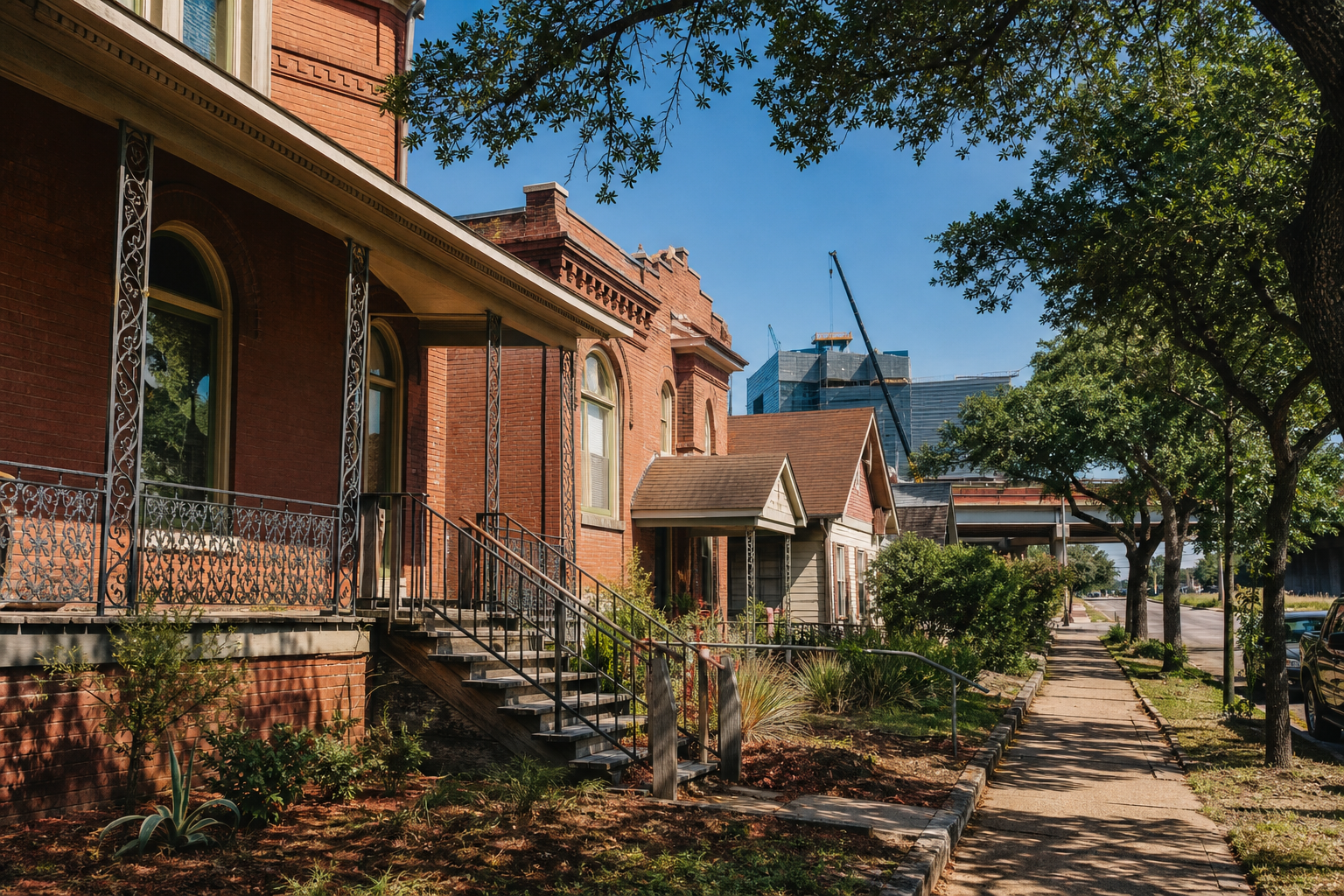
Historic Southside was once a center of Black business and culture in Fort Worth. That changed significantly when Interstate 35W was constructed through the area in the 1960s, physically dividing the community and contributing to decades of economic decline, according to NBC 5 Dallas-Fort Worth. The highway’s impact reshaped the neighborhood’s walkability, commercial corridors, and residential fabric in ways that are still visible today.
What Infrastructure History Tells You About a Neighborhood
This is exactly the kind of context that you will not find on a listing sheet. When we work with relocation clients moving to the Dallas-Fort Worth Metroplex, one of the first things we discuss is how major roads, highways, and planned transit corridors affect a neighborhood’s connectivity and character. I-35W’s impact on Historic Southside is a textbook example of how transportation decisions can shape a community for generations.
If you are evaluating any Fort Worth neighborhood, ask yourself:
- How do major highways or arterial roads divide or connect the area?
- Are there planned transportation improvements that could change commute patterns?
- Does the current infrastructure support the walkability and access to daily errands that matter to your household?
With 6 years of experience and 148 closed transactions across the DFW market, we have seen how infrastructure context can completely change a buyer’s perspective on a neighborhood. What looks like a bargain on paper sometimes comes with commute trade-offs that only a local agent would flag.
What Fort Worth Home Buyers Should Evaluate Beyond the Headlines
Development news is exciting, but it can also lead buyers to make assumptions that outpace reality. Here is a framework we use with our clients to evaluate neighborhoods experiencing investment.
Schools, Commute, and Tax Considerations
A museum or cultural destination can enhance a neighborhood’s appeal, but your daily quality of life depends on factors that are less headline-worthy:
- School district boundaries. Fort Worth school boundaries do not always follow neighborhood lines the way you would expect. Verify your specific address’s assigned schools through the district directly.
- Commute to major Fort Worth employment centers. Historic Southside sits about two miles south of downtown, which is a relatively short distance, but your commute experience depends on your specific employer location and whether you are heading toward the Medical District, the Alliance corridor, or elsewhere in the metro.
- Property tax assessments. Tarrant County Appraisal District governs property tax assessments in this part of Fort Worth. When a neighborhood receives significant new investment, it is worth understanding how the appraisal district’s reassessment cycle could affect your tax bill over time. A tax professional can help you understand the specifics for your situation.
- Homeowners insurance costs. These vary by neighborhood, housing stock age, and proximity to certain infrastructure. Get quotes specific to the properties you are considering.
- Surrounding land uses. What is adjacent to the homes you are evaluating? Zoning maps and city development plans tell you what could be built next door in five years.
The Related Residential Development Angle
The museum is not the only investment connected to this story. NBC 5 Dallas-Fort Worth also references The Opal, an affordable housing project in North Fort Worth named in honor of Dr. Opal Lee. When you see multiple projects connected to a broader community investment theme, that can indicate momentum, but each project should be evaluated independently on its own merits, timeline, and impact on the immediate area around it.
How to Research Fort Worth Neighborhood Development Like a Pro
If you are relocating to Fort Worth or buying your first home here, you need a structured approach to evaluating neighborhoods. Listing photos and price filters only tell part of the story.
Here is what we recommend you research before making an offer in any Fort Worth neighborhood:
- City and county development plans and zoning maps. Fort Worth publishes planning documents that outline where the city expects growth, rezoning, and infrastructure investment. These are public records.
- Planned infrastructure projects. Road widening, transit expansions, utility upgrades, and park improvements all signal where the city is directing resources.
- The stage and funding status of announced developments. As we mentioned earlier, proposed is very different from funded, which is very different from under construction. The National Juneteenth Museum’s progression to active demolition and construction represents a stronger signal than a project that exists only on paper.
- Proximity to employment, healthcare, and transit. Your home’s location relative to where you spend your time daily is often more important than any single amenity nearby.
- The neighborhood’s development trajectory over time. Is the area adding density? Losing commercial tenants? Gaining new restaurants and retail? The direction of change matters as much as the current snapshot.
What I tell our clients is this: a buyer evaluating a home near a destination expected to draw approximately 35,000 visitors annually should think carefully about how that foot traffic could affect parking, street-level retail, and the feel of the residential streets nearby over a 5-to-10-year horizon. That is not a negative; it is simply a factor worth understanding before you commit.
Why the DFW Metroplex Demands a Micro-Market Approach
The Dallas-Fort Worth Metroplex is enormous, and conditions vary dramatically within short distances. To put the metro’s scale in perspective, the DFW market recorded 5,485 homes sold at $1 million or more in the rolling 12 months through October 2025, with a combined volume of $9.7 billion, according to the Texas REALTORS 2025 Million-Dollar Homes Report. The DFW metro accounted for 38 percent of all Texas million-dollar-plus home sales during that period.
What does that have to do with your Fort Worth home search? It illustrates that you are not shopping in one market. You are navigating dozens of distinct micro-markets, each with its own development trajectory, price dynamics, and community character.
Comparing Historic Southside to North Fort Worth, or to the neighborhoods surrounding Sundance Square, or to suburban Tarrant County communities means comparing areas that function almost like different cities. The development signals that matter in one area may be irrelevant in another.
This is exactly why working with an agent who understands these micro-market differences matters. With 84 five-star reviews across major review platforms and recognition as a D Magazine Best Real Estate Agent since 2020, we have built our practice at Unlocking DFW Realty around helping buyers, especially relocation clients, understand these distinctions before they start making offers.
How to Weigh Future Development When Choosing Your Fort Worth Home
Should future development influence where you buy? The short answer is yes, but it should influence your decision, not dictate it. Here is how we suggest you think about it:
- Funded, under-construction projects with institutional backing deserve real weight. The National Juneteenth Museum checks these boxes with up to $15 million in city funding and active construction as of October 2026.
- Proposed-only projects deserve attention but not commitment. Do not buy a home primarily because of a project that has not broken ground, secured funding, or received final approvals.
- Development is one variable in a multi-factor decision. Your ideal neighborhood is the one that fits your commute, your budget, your family’s daily needs, and your long-term goals, not just the one with the most exciting development pipeline.
As a Real Estate Negotiation Expert (RENE) and certified New Home Sales Agent, we see both resale and new construction sides of the Fort Worth market. That dual perspective helps our clients evaluate whether a neighborhood’s development trajectory aligns with their actual needs or just their excitement about what might come next.
Frequently Asked Questions
How does the National Juneteenth Museum affect homes near Historic Southside Fort Worth?
The museum, a 50,000-square-foot cultural institution at East Rosedale Street and New York Avenue, can increase foot traffic, raise the neighborhood’s profile, and attract complementary commercial activity. However, no single project guarantees a specific housing market outcome. You should evaluate the broader neighborhood factors alongside this investment before making a buying decision.
What stage is the National Juneteenth Museum in as of 2026?
As of October 7, 2026, the project has moved from funded to under construction. Demolition of the Southside Community Center on Rosedale Street is underway, according to NBC 5 Dallas-Fort Worth. The city has committed up to $15 million toward construction of the planned facility.
How did I-35W affect Fort Worth’s Historic Southside neighborhood?
The construction of Interstate 35W in the 1960s physically divided the Historic Southside community, which was once a center of Black business and culture in Fort Worth. This infrastructure decision contributed to decades of economic decline in the area, according to NBC 5 Dallas-Fort Worth. It is a clear example of how transportation projects can reshape a neighborhood for generations.
What should Fort Worth relocation buyers look for in a neighborhood?
Research city and county development plans, zoning maps, planned infrastructure projects, school district boundaries, commute times to your employer, property tax rates through the Tarrant County Appraisal District, homeowners insurance costs, and the stage and funding status of any announced nearby development. A listing search alone does not tell you enough.
Does new development always increase home values in Fort Worth?
Not necessarily. A major cultural institution, commercial project, or infrastructure improvement can make an area more attractive to certain buyers, but outcomes depend on many variables including the project’s scale, timeline, surrounding land uses, and broader market conditions. Treat development as one signal among many rather than a guarantee.
How do I find out about planned development near a Fort Worth home?
Start with Fort Worth’s published planning documents and zoning maps, which are public records. You can also check Tarrant County records, attend city council meetings, and review local news coverage. Your real estate agent should also be able to provide context about planned projects in specific neighborhoods.
What is the difference between proposed and funded development in Fort Worth?
A proposed project may have community support and initial plans but no secured funding or construction timeline. A funded project has committed financial backing. An under-construction project, like the National Juneteenth Museum with its $15 million city commitment and active demolition as of October 2026, represents a much stronger signal that the project will reach completion.
How can I evaluate an up-and-coming Fort Worth neighborhood?
Look at multiple factors: infrastructure improvements, cultural and commercial investment, new residential development, transportation connectivity, school quality, property tax trends, and the neighborhood’s history. Do not rely on a single project or headline. A local REALTOR can provide the narrative context that listings and data alone cannot.
Should I buy in a Fort Worth neighborhood based on future development?
Future development should inform your decision but not be the sole reason you buy. Focus first on whether the neighborhood meets your daily needs, including commute, schools, budget, and lifestyle. Then consider how planned projects might enhance or change the area over the next 5 to 10 years.
How do Fort Worth micro-markets differ from each other?
The DFW Metroplex is the largest luxury housing market in Texas by volume, accounting for 38 percent of all Texas million-dollar-plus home sales in the rolling 12 months through October 2025, per the Texas REALTORS 2025 report. That scale means neighborhoods just a few miles apart can have dramatically different price points, development trajectories, housing stock, and community character. Each micro-market requires its own analysis.
The Bottom Line
Neighborhood development in Fort Worth, whether it is a 50,000-square-foot cultural institution in Historic Southside or infrastructure improvements in another part of the metro, is a meaningful factor in your home search. But it is one factor among many. Your job as a buyer is to build a complete picture: commute, schools, taxes, housing stock, infrastructure history, and yes, the development pipeline.
At Unlocking DFW Realty, we help buyers across the Dallas-Fort Worth Metroplex do exactly that. With 148 closed transactions, 84 five-star reviews, and recognition including D Magazine Best Real Estate Agent since 2020, MetroTex 40 Under 40, and Dallas Observer Readers’ Choice Best Real Estate Team, we bring the local expertise that turns a neighborhood search into a confident decision. If you are ready to find the right Fort Worth neighborhood for your next chapter, reach out to us at 214-509-8094 or visit Unlocking DFW Realty at 2400 North Henderson Ave, Suite B, Dallas, TX 75206. We would love to help you navigate what is happening across Fort Worth’s neighborhoods right now.

Leave a Reply