


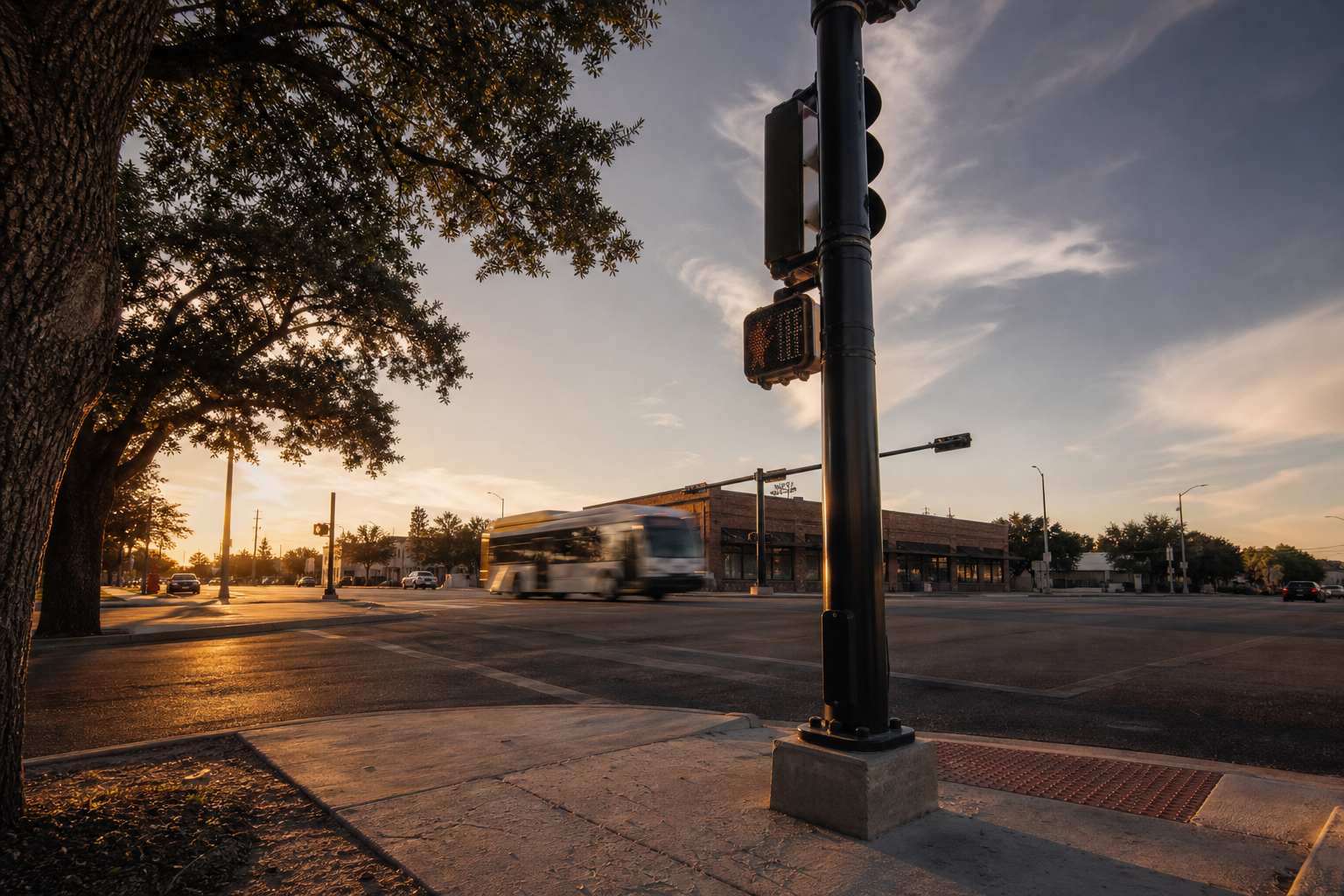
How can Dallas transportation improvements help you evaluate a neighborhood before buying a home?
Active infrastructure investment, like the $12.55 million traffic signal project along DART bus corridors, gives you a practical lens for comparing Dallas neighborhoods based on daily commute quality, pedestrian safety, and transit access, not just the house itself.
Why Dallas Transportation Upgrades Matter for Buyers Right Now
If you are shopping for a home in Dallas in 2026, you have more time to do your homework than buyers have had in years. Statewide Texas inventory sits at approximately 5 months as of Q1 2026, according to Texas REALTORS data, and the average days on market across Texas reached 80 days in Q1 2026, per the same source. That is 6 days longer than the same period in 2025.
What does that extra breathing room actually mean for you? It means you can afford to look beyond the kitchen countertops and evaluate the infrastructure around the home, something we at Unlocking DFW Realty always encourage our buyers to do.
Right now, the City of Dallas has approved $12.55 million to reconstruct 22 traffic signals along major DART bus corridors, as reported by the Dallas Morning News on October 8, 2026. These upgrades are designed to improve traffic flow, pedestrian safety, ADA accessibility, and bus travel times. The signals are expected to be fully operational by mid-2027. For buyers actively comparing neighborhoods, this is the kind of project that can reshape how a corridor feels to live on, even before a single home price changes.
What the Dallas $12.55 Million Signal Project Means for Your Neighborhood Search
Let’s break down what is actually happening. The City of Dallas is replacing 22 traffic signals that were originally built before 1980. Those older signals do not meet current technological, safety, or ADA standards, according to reporting by Hedija Spahalic in the Dallas Morning News.
The new signals will include:
- Audible pedestrian signals for safer crossings
- Countdown crossing technology so you know exactly how much time you have
- Vehicle detection to improve traffic flow at intersections
- Earlier DART bus recognition to reduce bus delays
So why should you, as a home buyer, care about traffic signals? Because these upgrades touch corridors that run through multiple parts of Dallas. The affected intersections are along streets including Jefferson Boulevard, Bishop Avenue, Marsalis Avenue, Malcolm X Boulevard, Fitzhugh Avenue, Gaston Avenue, Pearl Street, Ross Avenue, Mockingbird Lane, Singleton Boulevard, Abrams Road, Park Lane, Camp Wisdom Road, Lake June Road, Peavy Road, Dallas Parkway, and Frankford Road.
That is a wide geographic footprint. If you are looking at homes anywhere near these corridors, we recommend you find out which phase your specific intersection falls under. About one-third of the signals are already complete, another third are close to installation, and the remaining third are still in progress, per the Dallas Morning News reporting. A signal that is already operational is a daily-life benefit today. One that is still in progress is a promise you should verify.
With 6 years of experience and 148 closed transactions across the DFW market, what we tell our clients at Unlocking DFW is simple: infrastructure you can see and use right now carries more weight than infrastructure that is still under construction.
How DART Bus Routes Along Dallas Corridors Factor Into Your Home Buying Decision
Here is something many Dallas buyers overlook: DART access is not just about being near a light rail station. DART operates buses, light rail, commuter rail, streetcar, GoLink on-demand, and paratransit services across Dallas and twelve surrounding suburbs, according to DART’s 2026 system information.
The signal project specifically targets 15 DART bus routes: Routes 1, 3, 9, 15, 20, 25, 28, 30, 41, 45, 47, 57, 108, 232, and 237. If you are a buyer who values transit access, this list should be on your radar.
Specific Routes Worth Knowing
- DART Route 1 (Malcolm X to Maple) runs every 15 minutes during peak and midday hours, according to DART’s published route data. That frequency is among the highest in the DART bus network and makes neighborhoods along Malcolm X Boulevard well-connected.
- DART Route 20 (Northwest Highway) runs every 20 minutes during peak and midday hours, per DART route data, serving a major east-west corridor.
- DART Route 30 (Lake June) serves the Lake June Road corridor in southeastern Dallas.
- DART Route 108 (Camp Wisdom) connects along Camp Wisdom Road in southern Dallas.
- DART Routes 232 (Frankford) and 237 (Preston) cover corridors in North Dallas near Frankford Road and Dallas Parkway.
The Park Lane corridor is especially interesting because it connects bus improvements to an existing DART rail station area, per DART’s February 2, 2026 system map. That kind of bus-to-rail connectivity can meaningfully reduce your commute if you work in downtown Dallas or along the rail line.
What we consistently see at Unlocking DFW is that a buyer who searches only for homes near DART rail stations may overlook neighborhoods with frequent, high-quality bus service. Route 1 running every 15 minutes is a real transportation asset, and now, with upgraded signals designed for earlier bus recognition, that service should become even more reliable.
How to Research Dallas Transportation Before Making an Offer
An MLS listing tells you about the property. It does not tell you about the roads, the pedestrian infrastructure, the transit options, or the construction projects happening around it. That gap is exactly where your neighborhood research needs to go deeper.
Here is a practical checklist we recommend to every buyer:
- Check DART route maps to see which bus and rail routes serve the neighborhood you are considering. DART publishes current route maps and schedules.
- Identify which phase of the signal project applies to your specific intersection. Contact the City of Dallas Transportation and Public Works department for the latest timeline.
- Visit the corridor at different times of day. Morning rush, midday, and evening traffic patterns can tell you things no data set can.
- Ask about planned versus completed improvements. An improvement that is planned or under construction is not yet a daily-life benefit, no matter how exciting the announcement sounds.
- Look beyond the immediate block. A home two streets off a major corridor might benefit from improved traffic flow without sitting directly on a busy road.
The Planned vs. Completed Distinction in Dallas
This is a critical point, and one we always emphasize with first-time buyers and relocating clients. Approximately one-third of the 22 signals are complete, one-third are near installation, and the final third are still in progress, with full operation expected by mid-2027, per the Dallas Morning News reporting from October 8, 2026.
If you are making an offer on a home near Gaston Avenue or Fitzhugh Avenue today, ask which category that specific intersection falls into. A completed signal with countdown crossing technology and audible pedestrian signals is something you can experience on a walkthrough this weekend. A signal that is still in progress is something you will experience next year, and construction activity in the meantime could temporarily affect your commute.
Why Dallas Buyers Should Evaluate Transportation as Part of the Whole Neighborhood Picture
Transportation is one layer of a neighborhood evaluation, not the only layer. We always advise our clients to weigh it alongside schools, walkability, proximity to their employer, grocery access, parks, and overall neighborhood feel.
That said, transportation infrastructure deserves more weight than many buyers give it. Think about it this way: you might spend 30 minutes inside your kitchen each evening, but you could easily spend 45 minutes to an hour commuting each way. The route you take, the intersections you pass through, and the transit options available to you can shape your daily experience more than almost any feature inside the house.
What Transportation Does and Does Not Tell You
We want to be straightforward here, because we believe buyer education is central to what we do at Unlocking DFW. The signal project is too recent and too narrow in scope to serve as a predictor of home price movement. There are far too many other variables that affect property values in any given neighborhood.
What the project does tell you is that the City of Dallas is investing in specific corridors. It tells you that pedestrian safety and ADA accessibility are being prioritized. It tells you that DART bus reliability along those routes should improve. These are quality-of-life considerations that affect how it feels to live in a place, and that is valuable information when you are deciding where to buy.
As a Real Estate Negotiation Expert (RENE) and certified New Home Sales Agent, along with recognition as a D Magazine Best Real Estate Agent since 2020, my approach has always been to help buyers understand the full picture of a location, not just the square footage.
How Relocating Buyers Can Use Dallas Transportation Data to Choose a Neighborhood
If you are moving to Dallas from out of state, you probably do not have a mental map of DART’s network or Dallas’s street grid. That is completely normal, and it is one of the reasons we specialize in helping relocation clients at Unlocking DFW Realty.
Here is what you need to know:
- DART is more than a train. The system includes light rail, commuter rail, streetcar, buses, and GoLink on-demand service. Do not limit your search to neighborhoods near rail stations.
- Bus frequency matters. A route running every 15 minutes, like Route 1 along Malcolm X Boulevard to Maple Avenue, is functionally different from a route running every 45 minutes. Check the schedule before you assume “bus service” means infrequent service.
- The corridors being upgraded span the city. From Frankford Road and Dallas Parkway in the north to Camp Wisdom Road and Lake June Road in the south, the signal project touches multiple parts of Dallas. That means your neighborhood comparison should include corridors you might not have considered yet.
- Dallas’s current market gives you time. With statewide average days on market at 80 days as of Q1 2026, per Texas REALTORS data, you are not racing against the clock. Use that time to visit corridors, ride a bus route, and see how the transportation network actually functions before making an offer.
With 84 five-star reviews from past clients and recognition by the Dallas Observer Readers’ Choice as Best Real Estate Team, we have guided buyers through exactly this kind of neighborhood evaluation many times. The difference between a good location and a great one often comes down to the details that do not show up in listing photos.
Frequently Asked Questions About Dallas Transportation and Home Buying
Does public transportation matter when buying a home in Dallas?
It depends on your lifestyle. If you commute daily, rely on transit, or want the option of a car-light household, DART bus and rail access can significantly affect your daily convenience. Even if you drive, the quality of intersections and traffic flow along your route matters. We recommend evaluating transit as one factor alongside schools, walkability, and proximity to employers.
What are the 22 traffic signals being upgraded in Dallas?
The City of Dallas approved $12.55 million to reconstruct 22 traffic signals along major DART bus corridors, as reported by the Dallas Morning News on October 8, 2026. The signals are located on corridors including Jefferson Boulevard, Gaston Avenue, Mockingbird Lane, Abrams Road, Park Lane, Camp Wisdom Road, Lake June Road, and Frankford Road, among others.
When will the Dallas signal upgrades be finished?
All 22 signals are expected to be fully operational by mid-2027, per the Dallas Morning News reporting. As of October 2026, approximately one-third are complete, one-third are near installation, and one-third are still in progress. Buyers should check the specific status of the intersection nearest to any home they are considering.
Which DART bus routes are affected by the Dallas signal project?
The project covers 15 DART bus routes: Routes 1, 3, 9, 15, 20, 25, 28, 30, 41, 45, 47, 57, 108, 232, and 237. These routes span corridors across northern, eastern, southern, and western Dallas, per the Dallas Morning News reporting from October 8, 2026.
How often does DART Route 1 run in Dallas?
DART Route 1, which runs from Malcolm X Boulevard to Maple Avenue, operates every 15 minutes during peak and midday hours, according to DART’s published route information. That frequency is notable and makes neighborhoods along this corridor more transit-accessible than many buyers realize.
Should I buy a home near a DART station or a DART bus route in Dallas?
Both can offer strong transit access. DART operates buses, light rail, commuter rail, streetcar, and GoLink on-demand across Dallas and twelve suburbs. A bus route with 15-minute frequency, like Route 1, offers meaningful connectivity that buyers should not overlook. We recommend evaluating the specific route’s frequency and reliability rather than assuming rail is always the better option.
Will the Dallas signal upgrades increase home values?
We would not advise making that assumption. The signal project is too recent and too narrow in scope to serve as a standalone predictor of price changes. Many other factors affect home values. What the upgrades do offer is improved daily convenience, pedestrian safety, and transit reliability for residents along the affected corridors.
How do I find out if a Dallas neighborhood has planned transportation improvements?
Contact the City of Dallas Transportation and Public Works department for current project timelines. You can also review DART’s system map, which was updated effective February 2, 2026, to understand bus and rail connectivity. We always recommend visiting a neighborhood at different times of day and talking with a local real estate professional who tracks infrastructure changes.
What should I research about a Dallas neighborhood beyond the MLS listing?
Look at transit access, road conditions, pedestrian infrastructure, planned construction projects, and commute patterns to your workplace. An MLS listing describes the property but does not typically cover the surrounding transportation network, upcoming road projects, or changes to bus service. These factors can shape your day-to-day experience significantly.
How does the Dallas housing market in 2026 give buyers more time to research neighborhoods?
Statewide Texas inventory reached approximately 5 months in Q1 2026, and average days on market hit 80 days during the same period, both per Texas REALTORS data. That is a more balanced market compared to recent years, giving you the time to research DART routes, visit corridors, and evaluate infrastructure before making an offer.
The Bottom Line on Dallas Transportation and Your Home Search
Transportation infrastructure is one of the most practical, underappreciated factors in choosing where to buy a home in Dallas. The City’s $12.55 million investment in 22 traffic signals along DART bus corridors, as reported by the Dallas Morning News on October 8, 2026, gives you a concrete example of how to evaluate a neighborhood beyond what shows up in a listing.
Check which corridors are being upgraded. Find out whether the improvements near your target home are complete or still in progress. Ride the bus route. Walk the intersection. These are the steps that separate a confident purchase from a hopeful one.
At Unlocking DFW Realty, we help buyers do exactly this kind of deep neighborhood research every day. With 148 closed transactions, 84 five-star client reviews, and a team named among D Magazine’s Top Real Estate Teams, we are here to help you find a home that works for your entire life, not just move-in day. Reach us at 214-509-8094 or visit our office at 2400 North Henderson Ave, Suite B, Dallas, TX 75206.

Leave a Reply