


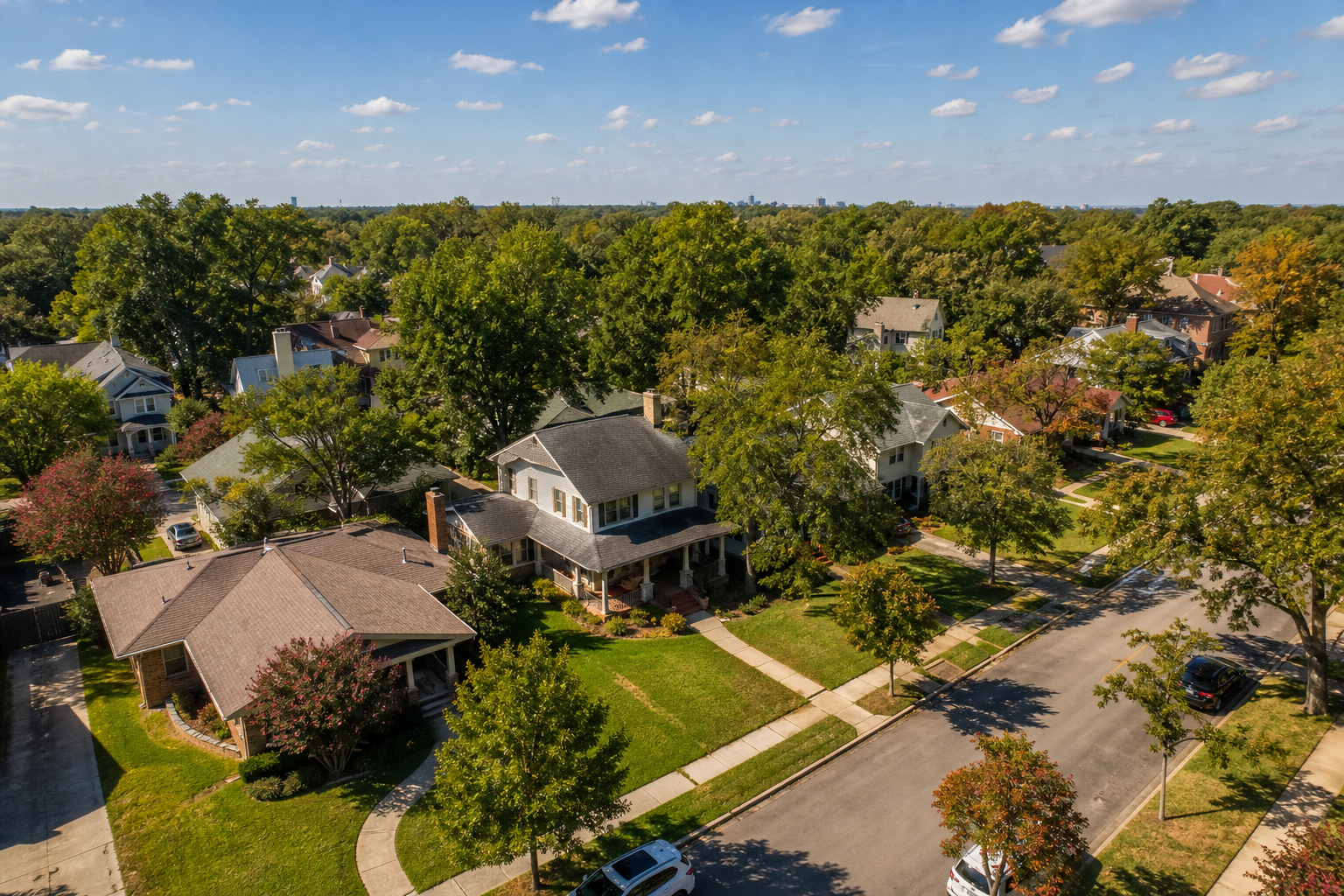
How should families compare school districts and neighborhoods when moving to Dallas with kids?
Start with the exact property address, not the neighborhood name. Use TEA’s School District Locator to identify the likely district, then call the district’s enrollment office to confirm which campus your child would attend.
Why This Matters for Dallas Families Right Now
If you are relocating to Dallas with children, the education landscape is shifting in ways that directly affect your home search. A recent analysis reported by The Dallas Morning News on October 19, 2026, estimates that more than 8,300 students across over 50 North Texas public school districts used Texas Education Freedom Accounts (TEFA) to leave public schools during the 2026-27 school year, with a nonprofit-estimated $68.8 million regional figure that the analysis attributes to state funding, a characterization that program supporters dispute, arguing the Legislature allocated separate funding for TEFA.
What does that actually mean for your family? It means the range of choices families are actively using is broader than many relocating buyers expect, and the old assumption that “buy in a good neighborhood and you’re set” no longer captures the full picture. You now have public schools, charter schools, magnet programs, private schools, and education savings accounts to consider, all while navigating a metro area where a single ZIP code can span multiple districts and attendance zones.
We help families navigate exactly this kind of complexity every day at Unlocking DFW Realty. With over 148 closed transactions and six years of guiding buyers through Dallas neighborhoods, we have seen firsthand how school research shapes, and sometimes completely redirects, a family’s home search.
How Dallas School District Boundaries Actually Work
Here is something that catches nearly every relocating family off guard: school district boundaries and school attendance zones are two different things in Texas. Understanding the difference before you start touring homes will save you real frustration.
District Boundaries vs. Attendance Zones in Dallas
School district boundaries define the geographic limits of each independent school district. Districts must submit this boundary information to TEA under the Texas Education Code. But attendance zones, the smaller geographic areas a district uses to assign children to specific campuses, are a separate layer entirely. TEA does not collect attendance zone information at all. That responsibility falls on each individual district.
So what does this mean for you? If you find a home you love near Lake Highlands or in the M Streets of East Dallas, you cannot assume your child will attend the campus down the street. The campus assignment depends on the attendance zone for your exact address, and that zone may not match what you expected based on the neighborhood name.
The Practical Steps to Verify
Here is the checklist we walk our buyers through:
- Step 1: Use TEA’s School District Locator to identify the likely school district for the property address. This tool provides district accountability ratings and enrollment reports in map and text format.
- Step 2: Visit TXschools.gov’s School Finder to search for schools near a specific address and filter by school characteristics. Texas has roughly 1,207 districts and charters containing nearly 9,000 campuses, per TEA data, so precision matters.
- Step 3: Contact the district’s enrollment office directly with the exact property address to confirm which campus your child would attend. This is the only step that gives you a definitive answer.
One thing we always tell our clients at Unlocking DFW: never rely solely on a listing description or a third-party app for school information. TEA’s own digital boundary maps are approximations for general information purposes only and should not be used to determine school attendance zones or legal boundaries, according to TEA’s stated disclaimer.
Understanding the Texas Education Freedom Accounts and What They Mean for Your Home Search
You have probably seen headlines about school vouchers in Texas. Before you let those headlines steer your home search, let us break down what is actually happening and what it means for you as a buyer.
What the TEFA Numbers Actually Show
The analysis reported by The Dallas Morning News estimates that the $68.8 million figure was calculated using an average of $8,198.69 per departing student, based on statewide weighted daily attendance data from the 2023-24 school year.
Here is the crucial context: supporters of the TEFA program dispute the characterization of these amounts as money taken from public schools. They argue the Legislature allocated separate funding for TEFA, meaning the money comes from a different pot.
Why This Should Not Drive Your Home Decision Alone
What we consistently see with buyers is the temptation to treat a funding headline as a shortcut for evaluating school quality. A district-level funding estimate does not tell you about the teaching staff at your child’s campus, the available programs, or the day-to-day experience your family would have. Texas publishes annual accountability ratings for public school districts and campuses based on student achievement, academic growth, graduation rates, and college, career, and military readiness. Those ratings, which you can find through TEA, provide a more grounded basis for comparing schools than a single funding number.
The TEFA program for 2026-27 offers $10,474 for participating private school students, up to $30,000 for qualifying students with disabilities in participating private schools, and up to $2,000 for homeschooled students, per the official program website. Families should check the official TEFA site for current eligibility rules and approved expenses before making housing or enrollment decisions, since lawmakers will also be considering the Comptroller’s Office request for an additional $2.3 billion for the program in the next biennium.
How to Compare Dallas Neighborhoods When Schools Are a Priority
When you are relocating to Dallas with kids, the neighborhood comparison process is different from buying as a couple or a single professional. Your daily logistics, commute patterns, and access to the right campus all come into play simultaneously.
Start With Your Family’s Non-Negotiables
Before we ever look at a single listing with relocating families, we ask them to rank these factors:
- Campus assignment: Does the assigned public school meet your family’s academic, extracurricular, and program needs?
- Transportation: Does the district provide bus service to your address, or will you need to drive? How does that affect your morning commute?
- School choice options nearby: Are there charter schools, magnet programs, or private schools within a reasonable distance if the assigned campus is not the right fit?
- Neighborhood walkability and safety: Can older kids walk or bike to school? Are there parks and recreation nearby?
- Budget alignment: Does the neighborhood’s price range match your financial comfort zone?
In the East Dallas corridor, for example, where our office is located along North Henderson Avenue, Dallas ISD serves most of the surrounding area. But families sometimes discover that an address just blocks away falls into a different attendance zone, or even a different district entirely near boundary edges. That is why address-level verification is not optional; it is essential.
Do Not Confuse Neighborhood Reputation With School Assignment
A mistake we watch buyers make frequently is assuming that a well-known Dallas neighborhood automatically means a particular school experience. The Lakewood area, White Rock, and the M Streets all carry strong reputations, but within those neighborhoods, attendance zones shift, and the campus your neighbor’s child attends may not be the one assigned to the house you are considering three blocks over.
Exploring Education Options Beyond the Assigned Dallas Public School
Your family’s school options in Dallas extend well beyond whatever campus the attendance zone assigns. Understanding the full menu of choices will help you decide how much weight to give the assigned school when evaluating a home.
Charter and Magnet Programs
Dallas ISD and surrounding districts operate magnet and specialty programs that accept students from outside the default attendance zone. Application windows, lottery processes, and transportation availability vary by program.
Charter schools operate independently of the traditional district structure. They have their own enrollment processes, and proximity to one does not guarantee admission. Research waitlist lengths and transportation early in your home search.
Private Schools and Homeschooling
With TEFA now in effect, families exploring private schools or homeschooling may be eligible for education savings account funds. But the program’s rules, including eligible expenses and participation requirements, are subject to change through legislative action. Do not make a home-purchase decision based on a program benefit that has not been confirmed for the year your child would actually enroll.
What we tell families is this: explore every option, but verify each one independently. Your home decision and your education decision overlap, but they should each stand on their own research.
What Relocating Families Should Know About Dallas Real Estate and Schools
As a D Magazine Best Real Estate Agent since 2020 and a MetroTex 40 Under 40 honoree, we have guided families through this exact process across over 148 transactions. Here is what separates a smooth relocation from a stressful one.
The Timeline Matters
School enrollment deadlines and home closing timelines do not always align. If you are moving to Dallas from out of state, start your school research before you start your home search, not after. Contact the enrollment offices of your top district choices, ask about residency documentation requirements, and confirm any application deadlines for magnet or choice programs.
Ask the Right Questions Before Making an Offer
Before submitting an offer on a Dallas home, verify:
- Which specific campus is assigned to this address for the current school year
- Whether there are any pending attendance zone boundary changes that could affect future years
- What transportation options the district provides for this address
- Whether the school offers any programs your child requires, such as gifted and talented, bilingual education, or special services
As a certified Real Estate Negotiation Expert (RENE) and certified New Home Sales Agent, we bring a level of due diligence to the buying process that goes beyond square footage and price. With 84 five-star reviews from past clients, our reputation is built on exactly this kind of thoroughness.
Frequently Asked Questions
How do I find which school district serves a Dallas home address?
Use the TEA School District Locator as your starting point. It provides district accountability ratings and enrollment data in both map and text format. However, TEA’s digital maps are approximations, so you should always confirm the district and campus assignment by contacting the district’s enrollment office directly with the property’s full street address.
What is the difference between a school district boundary and an attendance zone in Texas?
District boundaries define where one school district’s territory ends and another begins. Attendance zones are the smaller areas within a district that determine which specific campus a student is assigned to. TEA collects district boundary data but generally does not collect attendance zone information, so families must contact the district directly.
How many Dallas ISD students used the TEFA voucher program in 2026-27?
According to an analysis reported by The Dallas Morning News on October 19, 2026, a number of Dallas ISD students were identified as using Texas Education Freedom Accounts during the 2026-27 school year, though supporters of the program dispute the characterization of associated funding impacts.
Can a single ZIP code in Dallas span multiple school districts?
Yes. This is common across the DFW metro. A ZIP code is a mail delivery designation, not a school district boundary. Two homes in the same ZIP code can be in different school districts with different attendance zones, campus assignments, and accountability ratings. Always verify at the address level.
What are Texas Education Freedom Accounts and how much do they provide?
TEFA is Texas’s education savings account program. For the 2026-27 school year, the official program website lists $10,474 for participating private school students, up to $30,000 for qualifying students with disabilities in participating private schools, and up to $2,000 for homeschooled students. Eligibility rules and approved expenses are subject to legislative changes.
Should school funding news change how I evaluate a Dallas neighborhood?
Not on its own. The $68.8 million estimated regional funding reduction is based on a per-student calculation using 2023-24 attendance data and represents a regional estimate, not a verified accounting of each district’s actual financial impact. Texas publishes annual accountability ratings based on student achievement, growth, and graduation rates, which provide a more direct measure of school performance.
How can I compare school quality between DFW districts?
Texas publishes annual accountability ratings for public school districts and campuses. These ratings cover student achievement, academic growth, graduation rates, and college, career, and military readiness, per TEA. Use these ratings alongside your family’s own priorities: program offerings, extracurriculars, transportation, and special services.
Do I need to verify school information before making an offer on a DFW home?
Absolutely. In our experience, verifying school information is as important as a home inspection. Contact the school district’s enrollment office with the exact address of any home you are considering. Ask about current campus assignment, pending boundary changes, transportation, and available programs before you write an offer.
What school choice options exist beyond the assigned public school in Dallas?
Families can explore public magnet programs within the district, open-enrollment charter schools, private schools, and homeschooling. The TEFA program may provide financial support for some of these options depending on eligibility. Each choice has its own admissions process, transportation considerations, and costs that should be researched independently.
How does Unlocking DFW Realty help families with school research during a home search?
We walk every family through a school verification process that includes identifying the district, confirming the assigned campus for the exact address, reviewing accountability ratings, and connecting families with the right district contacts. With six years of experience and over 148 transactions closed in the Dallas real estate market, we understand that school fit is often the deciding factor in where a family chooses to live.
The Bottom Line
Moving to Dallas with kids means making two major decisions at once: where to live and where your children will learn. Those decisions overlap, but they each require their own research. Do not let a headline about school funding, positive or negative, substitute for verifying the campus assignment at your specific address, reviewing TEA accountability ratings, and exploring the full range of education options available to your family.
At Unlocking DFW Realty, we have built our practice around helping families get this right. With 84 five-star reviews, recognition as a D Magazine Best Real Estate Agent since 2020, and deep knowledge of Dallas neighborhoods from the East Dallas corridor outward, we are here to guide your search from first question to closing day. Reach out to us at 214-509-8094 or visit Unlocking DFW to start the conversation about finding the right home and the right school fit for your family.

Leave a Reply