
What should homebuyers know about the growing wave of multifamily real estate development across suburban Dallas-Fort Worth?
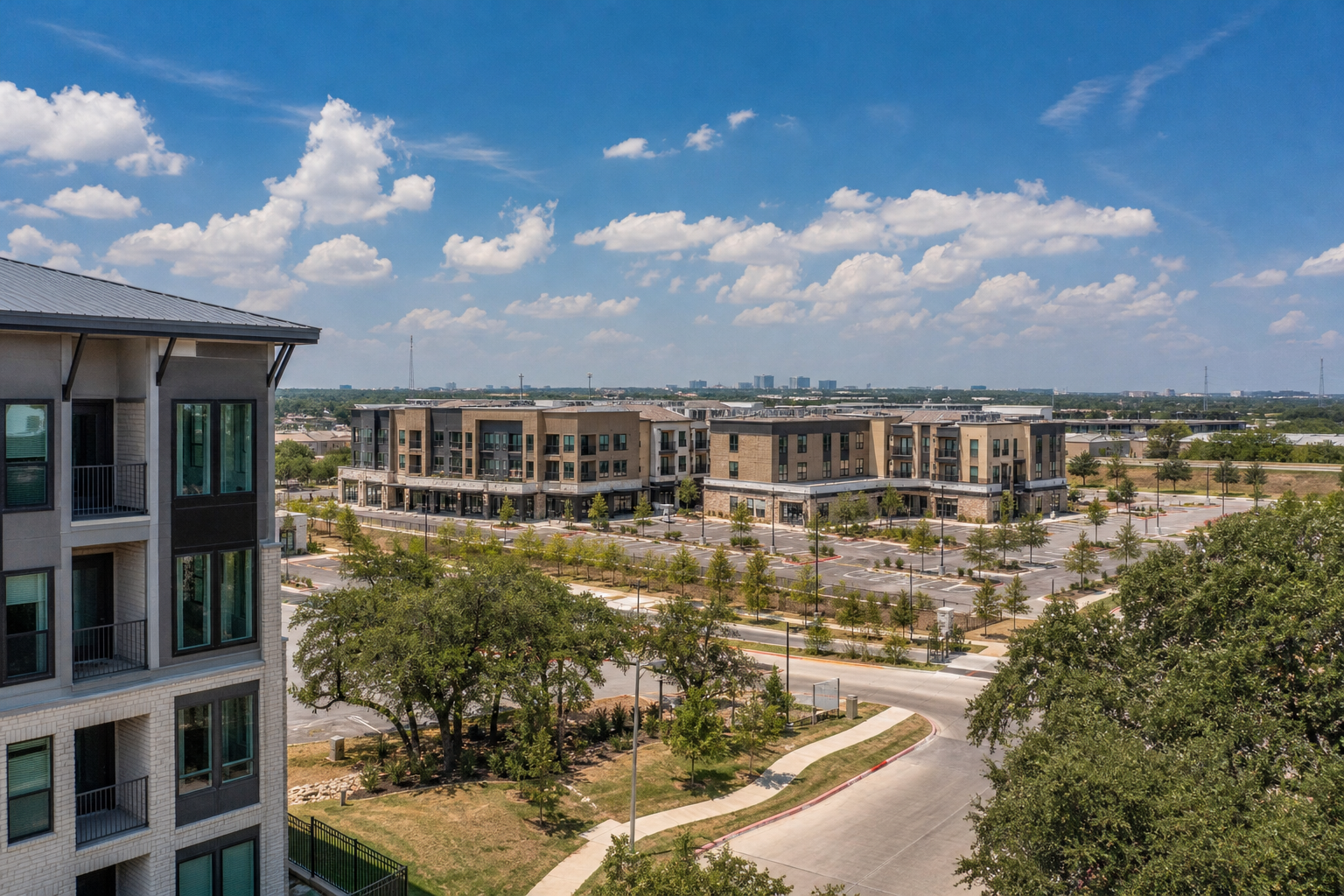
New multifamily development in DFW suburbs signals where developers see growth potential, but announced plans are not completed projects. As a buyer, you need to verify what is actually approved, understand how apartments differ from ownership, and evaluate how development fits the neighborhood you are considering.
Why Multifamily Development in Dallas-Fort Worth Matters Right Now
On October 21, 2026, Associa, the community management company headquartered in Richardson, Texas, announced the launch of Associa Development Group, Inc. (ADG). Established in July 2026, this new division targets Class A multifamily residential communities and select mixed-use projects in suburban Dallas-Fort Worth, with a stated goal of beginning two to three projects annually starting in 2027.
Why does this matter to you as a homebuyer? Because it is one example of a larger trend: institutional developers are looking at suburban DFW with serious intent. When we work with buyers comparing communities across North Texas, one of the first things we discuss is what is being built nearby and what that tells you about the area’s trajectory. Understanding real estate market trends across DFW in 2026 helps you make more informed decisions about where to invest.
But here is the critical distinction we always emphasize. An announcement about a development strategy is not the same as a shovel in the ground. ADG has not identified specific sites, published unit counts, or secured approvals for particular projects. Understanding that gap between announced plans and completed buildings is one of the most important things you can learn as a DFW buyer in 2026.
How Suburban DFW Site Selection Works and What It Tells You
The Factors Developers Evaluate
ADG has stated that its site-selection process will consider population growth, employment opportunities, and infrastructure investment. These are the same factors you should be weighing when you compare suburban communities. A suburb that draws institutional developer interest has typically demonstrated measurable access to jobs and transportation capacity.
What does that look like in practice? When we help buyers evaluate DFW suburbs, we walk through questions like these:
- Employment corridors: Is the suburb positioned near major employers or along a commuter route that provides reasonable access to job centers?
- Infrastructure investment: Are there funded road improvements, transit expansions, or utility upgrades that signal public confidence in the area’s growth?
- Population trends: Has the community shown consistent household formation, or is growth driven primarily by speculative building?
A developer’s interest in a suburb is a signal worth noting. But it is a signal, not a guarantee of neighborhood trajectory. With 6 years of experience working across Dallas-Fort Worth and 148 closed transactions, we have seen communities where developer interest translated into thriving neighborhoods, and we have seen areas where announced projects stalled for years in the entitlement process.
Why Dallas-Fort Worth Is Attracting Multifamily Investment
The underlying demand is real. According to HUD’s PRO Housing profile for Fort Worth, over 109,000 Fort Worth households are housing cost-burdened, spending more than a third of their income on housing. HUD estimates that closing the rental housing gap for renters earning under 60% of Area Median Income would require roughly $3.5 billion in public and private subsidy, per the same profile. That affordability pressure helps explain why new multifamily development continues to attract capital to the region.
Additionally, Dallas-Fort Worth is designated a High Cost Area under FHA Multifamily mortgage insurance rules effective January 2026, with a High Cost Percentage of 270%, according to HUD guidance on 2026 multifamily housing policy. For developers, this classification affects financing terms and reinforces the region’s status as a priority market.
How to Verify Development Plans in Your Target DFW Suburb
This is where we see buyers make their biggest mistakes. Someone tells them “apartments are going in down the street,” and they either panic or get excited without checking a single public record. Here is what you should actually do.
Step-by-Step Research Process
- Check the city’s planning and zoning portal. Municipalities across Dallas County, Collin County, Denton County, Tarrant County, and Ellis County maintain public records of filed development applications, approved plats, and building permits. These are free to access.
- Look for filed development applications. An announcement from a company is not the same as a filed application with the city. Until a developer has submitted a formal application, there is no project for the city to evaluate.
- Review the approved site plan. If a project has been approved, the site plan will show building footprints, parking, traffic flow, and phasing. This tells you far more than a press release.
- Attend planning commission meetings. These are public, and they are where proposed developments get debated. You can hear directly from city staff and neighbors.
- Ask about phasing and timelines. A project approved in phases may take years to complete. Construction noise and traffic disruption during build-out are real considerations.
What we tell our clients is simple: trust public records, not press releases. When you are comparing suburban communities and see development announcements, verify what stage the project is actually in before it influences your decision.
Class A Multifamily vs. Homeownership in Dallas-Fort Worth: The Real Comparison
Understanding What Class A Means
Class A multifamily refers to newly built, amenity-rich apartment communities positioned at the upper end of the rental market. These are not affordable housing; they are premium rental products with resort-style amenities, modern finishes, and professional management.
If you are weighing whether to sign a lease in a new Class A community or commit to buying a home, here is the framework we walk through with every buyer:
- Equity accumulation: Monthly rent builds zero equity. A mortgage payment, even at today’s rates, puts a portion of every dollar toward ownership.
- Maintenance responsibility: In an apartment, maintenance is the landlord’s problem. As a homeowner, that water heater replacement is on you.
- Flexibility vs. stability: A lease gives you the ability to relocate in 12 months. A home purchase anchors you but provides long-term financial benefit.
- Monthly cost composition: Your apartment rent covers everything the landlord needs to profit. Your mortgage payment covers principal, interest, taxes, and insurance, with a portion returning to you as equity.
What the Texas Market Data Shows
According to the 2026 Texas Homebuyers and Sellers Report from Texas REALTORS (covering July 2024 through June 2025), first-time buyers accounted for 21% of Texas home purchases, cash sales reached a record 30%, and 74% of sellers reduced their asking price two or more times before closing. Across Texas in Q1 2026, the statewide median home price was $328,000, homes averaged 80 days on market, and inventory reached approximately 5 months, a level analysts at the Texas Real Estate Research Center describe as balanced between supply and demand, per the Texas REALTORS Q1 2026 news release.
What does that mean for you? If you are renting and considering a purchase, the current real estate market timing in Dallas may offer more negotiating room than you have seen in recent years. Motivated sellers, balanced inventory, and longer days on market can work in your favor.
Mixed-Use Development in DFW Suburbs: Lifestyle Fit or Lifestyle Friction
Some of ADG’s planned projects may include ground-floor retail or complementary commercial space. For buyers evaluating a neighborhood, a mixed-use project nearby can mean walkable restaurants, coffee shops, and services. But it can also mean increased traffic, parking pressure, and years of construction noise during build-out.
Questions to Ask Before Buying Near a Mixed-Use Project
- What is the approved phasing schedule, and how long will construction last?
- How will traffic patterns change once the retail and residential components are occupied?
- Does the project include adequate parking, or will overflow affect surrounding streets?
- Are there covenants or restrictions governing noise, hours of operation, or building height?
In my experience, the buyers who are happiest near mixed-use development are the ones who understood the tradeoffs going in. The ones who feel blindsided are typically the ones who assumed a rendering was a promise.
How New Apartment Supply Affects Your DFW Home Purchase Decision
One of the most common questions we hear from buyers is whether new apartment construction will push home prices down in their target suburb. The honest answer: it is not that simple.
New Class A multifamily supply addresses the upper end of the rental market. It does not automatically reduce rents across the board or lower home prices in a particular community. The actual impact depends on supply volume, demand, location, pricing, competition, and the timing of construction.
Fort Worth is actively working to address affordability through several mechanisms. The city has established Neighborhood Empowerment Areas that provide tax abatements, fee waivers, and release of city liens to property owners implementing housing improvements. Fort Worth also uses Tax Increment Financing to fund infrastructure needed for housing development. The city plans to create a capital pool for affordable multifamily housing in High Opportunity Index areas and to establish a formal land bank to encourage redevelopment for affordable housing.
These programs signal that municipal leaders recognize the gap between what is being built (premium apartments) and what many households need (affordable options). As a buyer, you should not assume that a new luxury apartment complex nearby will meaningfully change the price of the single-family home you are considering.
The Difference Between an Announcement and a Completed Project in DFW
With 84 five-star reviews and recognition as a D Magazine Best Real Estate Agent since 2020, we have guided enough buyers through the DFW market to know this: real estate development timelines in Dallas rarely match initial announcements. Between site acquisition, feasibility analysis, entitlements, design, financing, and construction oversight, a project announced today may not deliver units for three to five years, if it moves forward at all.
ADG’s stated goal of beginning two to three projects annually starting in 2027 is exactly that: a stated goal. No specific suburban locations have been identified, no unit counts published, and no municipal approvals secured as of October 2026. If you are making a purchase decision today based on what might be built nearby in the future, make sure you are evaluating confirmed public records rather than press coverage.
Frequently Asked Questions
What is Associa Development Group and what does it plan to build in DFW?
Associa Development Group, Inc. (ADG) is a new development arm of Associa, a community management company headquartered in Richardson, Texas. Established in July 2026 and announced on October 21, 2026, ADG focuses on Class A multifamily residential communities and select mixed-use projects in suburban Dallas-Fort Worth. The group has stated a goal of beginning two to three projects annually starting in 2027, though no specific sites or approved projects have been identified.
Has ADG announced specific apartment locations in any DFW suburb?
No. As of October 2026, ADG has not identified confirmed project sites, published unit counts, or received municipal approvals for particular developments. The announcement describes a development strategy and future goals, not a list of approved apartment communities.
How can I find out about planned developments near a home I want to buy in DFW?
Check the relevant city’s planning and zoning portal for filed development applications, approved plats, and building permits. These are public records available in Dallas County, Collin County, Denton County, Tarrant County, and Ellis County municipalities. We always recommend buyers review these records before making an offer on a property near an area with reported development activity.
Will new apartment construction lower home prices in my DFW suburb?
Not necessarily. New Class A apartments serve the upper end of the rental market. Their impact on home prices depends on supply volume, demand, location, pricing, competition, and timing. You should not assume a new apartment community will reduce the price of a single-family home in the same area.
What is the difference between Class A apartments and affordable housing?
Class A multifamily refers to newly built, amenity-rich apartment communities at the upper end of the rental market. They differ significantly from affordable housing, which is typically income-restricted and subsidized. Fort Worth alone has over 109,000 cost-burdened households, and the gap between premium new supply and affordable need is substantial.
Should I rent a new apartment or buy a home in Dallas-Fort Worth right now?
That depends on your financial readiness, timeline, and goals. Renting offers flexibility and zero maintenance responsibility. Buying builds equity and provides long-term stability. The current Texas market shows balanced inventory and motivated sellers, which may offer buyers more negotiating leverage than in recent years.
What does mixed-use development mean for a neighborhood I am considering?
Mixed-use projects combine residential units with ground-floor retail or commercial space. This can provide walkable amenities but may also bring increased traffic, parking pressure, and construction disruption during build-out. Review the approved site plan and phasing schedule before deciding how a mixed-use project affects your interest in a neighborhood.
What factors should I compare when choosing a growing DFW suburb?
Evaluate employment access, infrastructure investment, population trends, school quality, proximity to daily services, and the status of any planned developments. These are the same factors institutional developers like ADG evaluate when selecting sites, and they should be part of your own decision-making process.
How long does it take for a planned development to become a completed building in DFW?
Development timelines vary widely, but the process from site acquisition through feasibility, entitlement, design, financing, and construction can take three to five years or longer. Projects can stall at any stage. Always check the current status through municipal records rather than relying on initial announcements.
How does DFW’s designation as an FHA High Cost Area affect multifamily development?
Dallas-Fort Worth is designated a High Cost Area under FHA Multifamily mortgage insurance rules effective January 2026, with a High Cost Percentage of 270%, according to HUD guidance. This affects financing terms available to developers using FHA-insured loans and reflects the region’s elevated construction and land costs.
The Bottom Line
Multifamily development is part of the evolving story of suburban Dallas-Fort Worth, and understanding how it fits into your housing decision gives you a real advantage. But announced plans are not completed projects, new luxury apartments do not automatically lower nearby home prices, and a developer’s strategy is not a substitute for your own research into public records, site plans, and municipal approvals.
As a certified Real Estate Negotiation Expert and a member of MetroTex’s 40 Under 40, we have spent 6 years helping buyers navigate exactly these kinds of decisions across the Dallas-Fort Worth metroplex real estate market. If you are comparing suburbs, weighing renting against buying, or trying to figure out what planned development means for the neighborhood you are considering, reach out to us at Unlocking DFW Realty. You can call us at 214-509-8094 or visit us at 2400 North Henderson Ave in Dallas. We will help you separate the signals from the noise and make a decision you feel confident about.

Leave a Reply