


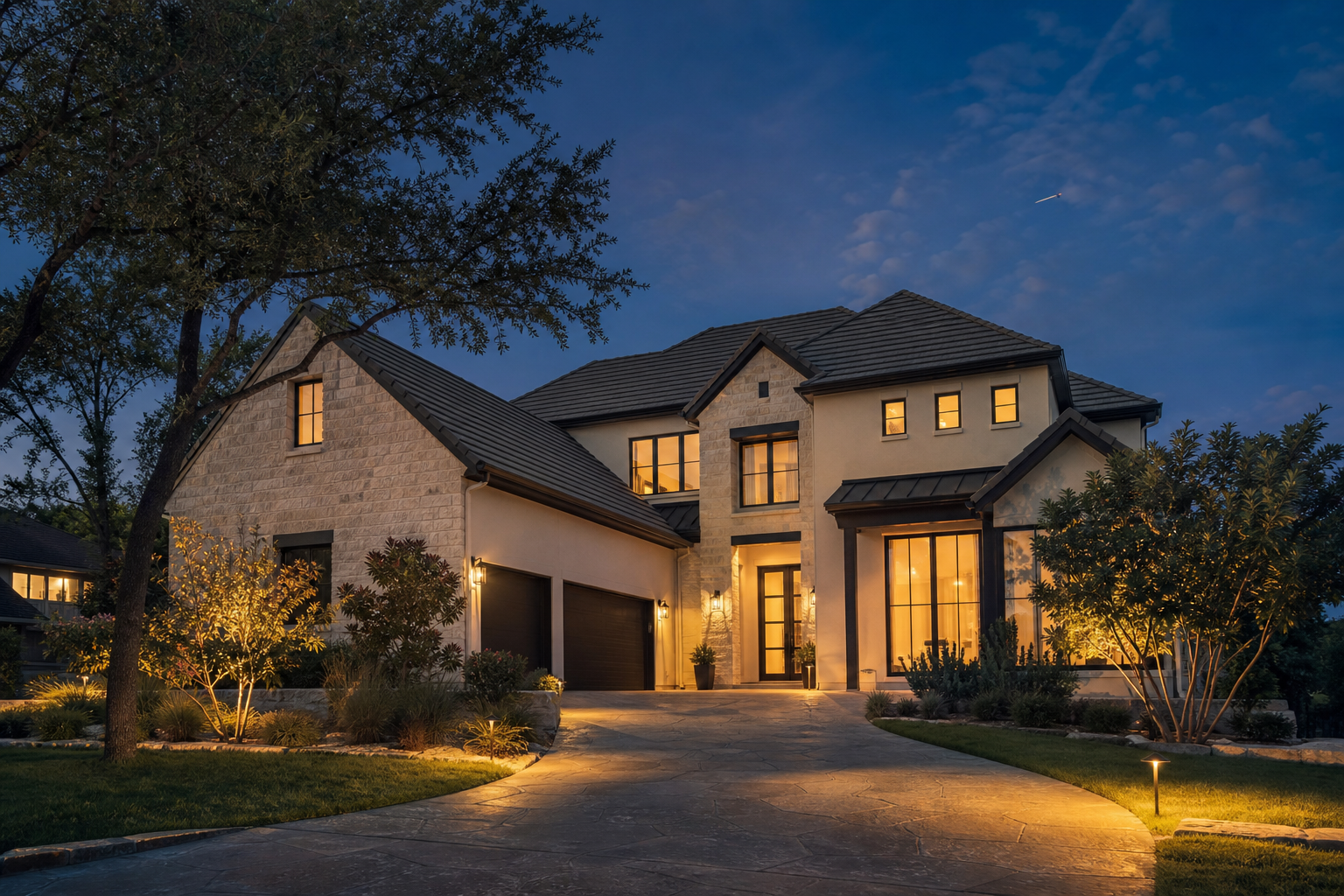
What should you consider when choosing where to live near DFW International Airport?
Start by testing actual drive times, checking aircraft noise maps for your specific address, and weighing airport convenience against daily commute routes, neighborhood fit, and housing costs before making an offer.
Why Choosing the Right Neighborhood Near DFW Airport Matters Right Now
DFW International Airport is in the middle of a massive transformation. In October 2026, the airport and American Airlines opened the first four new gates of the Terminal A Pier Expansion: gates A10, A11, A13, and A15. This added roughly 140,000 square feet of passenger space, with wider thoroughfares, taller ceilings, updated restrooms, and new concessions, all part of the airport’s $12 billion DFW Forward capital plan.
That’s exciting news for travelers. But here’s what we tell buyers who reach out to us at Unlocking DFW: terminal improvements make the airport better for passengers inside the building. They don’t automatically change what it’s like to live near the airport. Your drive time, your neighborhood’s noise levels, and your daily commute to work or school are separate questions that deserve separate research.
With 148 closed transactions and six years of guiding buyers through the DFW market, we’ve helped plenty of relocating households sort through these exact questions. So let’s break down what actually matters.
Mapping Your Real Commute to DFW Airport, Not Just the Distance
One of the most common mistakes we see relocating buyers make is looking at a map, seeing a community that appears close to DFW Airport, and assuming the drive will be quick. The DFW Metroplex is enormous, and “close on a map” and “fast in real life” are two very different things.
Test the Route at Your Travel Times
If you fly out at 5:30 a.m. on Mondays, you need to know what that specific drive looks like before dawn. If you typically land at 9:00 p.m. on Thursdays, run that route too. Highway access via SH-114, SH-121, SH-183, and I-635 varies significantly depending on which community you’re coming from and what time you hit the road.
Airport Access Is Only One Node
What we consistently recommend is mapping your full daily mobility network, not just your airport route. Where is your office? Where will your kids go to school? Where do you grocery shop, work out, or see your doctor? A home that’s perfect for airport access but adds 40 minutes to your daily work commute might not be the right trade-off. Think of airport proximity as one piece of a larger puzzle, and be honest about how often you actually fly versus how often you drive to work.
Understanding Aircraft Noise Before You Buy Near DFW Airport
This is the factor that catches many buyers off guard. You tour a home on a quiet Saturday afternoon, love the backyard, and put in an offer. Then you move in and realize a flight path runs directly overhead during peak departure hours. So how do you avoid that surprise?
The FAA’s Noise Standard and What It Means for You
The FAA uses a measurement called DNL 65 dBA as the threshold of significant noise exposure, according to FAA policy guidance on noise and community impacts. Below that level, the FAA considers residential use compatible. Above it, a home may qualify for sound insulation treatment under the FAA Part 150 program, which uses a standard of DNL 45 dB for interior noise, per FAA Advisory Circular 150-5000-9B from 2022.
What does that actually mean for you as a buyer? If your target property falls inside the DNL 65 dBA contour on the airport’s noise exposure map, you should know that before writing an offer. And even if you’re outside that contour, “below the threshold” does not mean “silent.” It means the FAA considers it livable, but you may still hear aircraft depending on flight schedules, weather patterns, and the type of planes in use.
Noise Is Not Equal Across Airport-Adjacent Communities
Here’s something the FAA itself acknowledges: noise experienced on the ground depends on aircraft type, flight path direction, whether the plane is taking off or landing, and weather conditions. A house half a mile north of DFW Airport can have a very different noise experience than one a mile south. Communities like Grapevine, Irving, Coppell, and Euless all sit at varying distances and angles from the runways, but equal distance does not mean equal noise.
We always encourage buyers to look up the specific flight tracks over their candidate neighborhood, not just the airport’s general location on a map. DFW Airport’s noise office can provide current noise exposure maps, and the FAA’s Part 150 noise monitoring documentation is another resource worth reviewing.
Comparing DFW Communities for Airport-Adjacent Living
When buyers ask us which neighborhood is “best” near DFW Airport, the honest answer is: it depends entirely on your priorities. Each community near the airport offers a distinct combination of highway access, school districts, local amenities, and residential character.
What to Weigh When Comparing Grapevine, Irving, Coppell, and Beyond
Rather than ranking these communities, here’s a framework for evaluating them on your own terms:
- Highway access: Which routes connect the neighborhood to DFW Airport, and how do those same routes connect to your workplace and daily destinations? SH-114 serves communities like Grapevine and Southlake differently than SH-183 serves Irving or Euless.
- Flight path exposure: Two neighborhoods at the same distance from the airport can have dramatically different noise profiles based on runway alignment and prevailing flight tracks. Research the specific flight paths over any neighborhood you’re considering.
- School district quality: Households with children may find that the communities with the most convenient airport access are not the same ones with their preferred school options. This is a real trade-off worth investigating early.
- Local lifestyle and amenities: Grapevine’s historic Main Street offers a different daily experience than Irving’s Las Colinas urban center. Flower Mound and Southlake provide more suburban, spread-out living. Your day-to-day quality of life matters more than shaving five minutes off an airport drive you take a few times a month.
- Housing costs: Price differences between these communities may reflect school districts, city services, lot sizes, and local demand rather than airport distance alone. Compare homes at similar distances from DFW Airport and you’ll likely see meaningful price variation driven by entirely non-airport factors.
What we tell our clients is this: rank your priorities before you start touring homes. If you know that school district quality matters more to you than airport proximity, that narrows your search in a productive way.
Why Airport Investment Does Not Guarantee Rising Home Values Near DFW
We want to be direct about this because it’s a question we hear often. The Terminal A Pier Expansion is one part of the airport’s $12 billion DFW Forward capital plan. It improves passenger facilities, adds gates, and upgrades the travel experience inside the terminal. That’s a significant investment in the region.
But here’s the distinction that matters for your home purchase: airport capital spending is not a residential real estate program. Any relationship between DFW Airport improvements and nearby home values would need to be established through actual local comparable sales data, not assumed.
DFW Airport is undeniably a major regional economic engine. It supports jobs, commerce, and connectivity across North Texas. But “the airport is investing billions” and “your home near the airport will appreciate” are two separate statements that require separate evidence. As a Real Estate Negotiation Expert (RENE) and a certified New Home Sales Agent, what I’ve learned is that buyers make better decisions when they separate the emotional pull of big headlines from the local, property-level data that actually drives home values.
If you’re buying near DFW Airport because the home fits your budget, your commute works, the schools meet your needs, and the neighborhood feels right, those are excellent reasons. If you’re buying primarily because you expect airport expansion to drive appreciation, that’s a bet you should make only with supporting market data in hand.
Your Pre-Offer Checklist for Homes Near DFW Airport
Before you commit to a home in any airport-adjacent community, run through this practical checklist. We’ve refined this list through six years and 148 transactions helping buyers navigate the DFW real estate market.
- Drive the airport route at realistic times. Not just once. Try your typical departure morning and your typical arrival evening. Note traffic patterns, construction zones, and highway merge points.
- Request the FAA noise exposure map for your specific address. Contact DFW Airport’s noise office or review the FAA’s Part 150 documentation. Don’t rely on general impressions; get the data for your property.
- Research flight paths over the neighborhood. The FAA recognizes that noise from individual overflights or repeated use of the same flight path creates a different experience than the annual average suggests. Look at the actual tracks, not just the contour lines.
- Map your full daily commute, not just the airport trip. Include your workplace, your children’s schools, grocery stores, medical offices, and weekend activities. Airport access is one piece of your transportation picture.
- Compare housing costs across communities at similar airport distances. Price differences may stem from school districts, lot sizes, city tax rates, or local amenities rather than airport proximity.
- Decide how much airport access really matters to you. If you fly twice a month, airport convenience deserves significant weight. If you fly four times a year, it might not be worth compromising on other priorities. Be honest with yourself about this.
Frequently Asked Questions About Living Near DFW Airport
What is changing at DFW Airport’s Terminal A?
DFW International Airport and American Airlines opened gates A10, A11, A13, and A15 in October 2026 as part of the Terminal A Pier Expansion. The project adds approximately 140,000 square feet, with wider passenger areas, updated restrooms, new concessions, and improved wayfinding. The project is part of the airport’s $12 billion DFW Forward capital plan.
How do I check aircraft noise levels before buying a home near DFW Airport?
Request the current noise exposure map from DFW Airport’s noise office or review the FAA’s Part 150 documentation. The FAA considers DNL 65 dBA the threshold of significant noise exposure for residential areas, per FAA policy guidance. A property inside that contour may qualify for sound insulation programs if interior noise levels also meet the FAA’s DNL 45 dB interior standard; a property outside it is below the FAA’s threshold but may still experience audible overflights.
Which DFW suburbs are most convenient for frequent travelers?
Communities like Grapevine, Irving, Coppell, and Euless all sit near DFW Airport, but convenience depends on your specific travel times, which terminal you use, and your highway route. We recommend testing the actual drive from any candidate property at the hours you expect to travel rather than relying on map distances alone.
Does living near DFW Airport affect home resale value?
Any relationship between airport proximity and home values needs to be evaluated through local comparable sales data. Airport capital investment, like the Terminal A expansion, improves passenger facilities but does not by itself establish that nearby homes will appreciate. Resale values are influenced by school districts, neighborhood demand, lot sizes, and many other local factors.
How do flight paths affect different neighborhoods near DFW Airport?
The FAA acknowledges that noise depends on aircraft type, flight path direction, takeoff versus landing patterns, and weather. Two neighborhoods at similar distances from DFW Airport can experience very different noise levels based on which runways are active and how flight tracks are aligned. Buyers should research specific flight tracks over their candidate neighborhood.
Is Grapevine, Texas a good place to live near DFW Airport?
Grapevine sits adjacent to DFW Airport and offers its own historic downtown, local dining, and community events. However, proximity means some neighborhoods may experience more aircraft noise than others. We encourage buyers considering Grapevine to check the noise exposure map for their specific address and test the commute to their workplace, not just the airport.
What transportation routes connect DFW Airport communities?
Major highway corridors including SH-114, SH-121, SH-183, and I-635 serve communities around DFW Airport. Each corridor connects differently to surrounding cities like Coppell, Flower Mound, Southlake, Irving, Euless, and North Richland Hills. The best route for you depends on where you work and where your daily errands take you.
Should I prioritize airport access over school district quality?
That depends on your household’s priorities. Families with school-age children often find that the communities with the best airport access aren’t always the same ones with their preferred school options. We always recommend ranking your priorities before touring homes so you can make intentional trade-offs rather than reactive ones.
How far is “too close” to an airport when buying a home?
There’s no universal answer. The FAA’s DNL 65 dBA threshold identifies areas where noise is considered significant for residential use, but noise tolerance varies by person and by household. Some buyers are comfortable living under a flight path; others want complete quiet. Visit the property at different times of day and check the noise exposure map before deciding.
What should relocating buyers know about the DFW Metroplex’s size?
Many out-of-state buyers underestimate how large the DFW Metroplex is. A community described as “near the airport” can still be a 30-to-45-minute drive from many employment centers, schools, or retail corridors. We work with relocating households regularly and always stress the importance of mapping real commute times rather than relying on general proximity descriptions.
The Bottom Line on Choosing Where to Live Near DFW Airport
Buying a home near DFW International Airport can be a smart move, but only if you’ve done the homework that matches the home to your actual life, not just your travel schedule. The Terminal A expansion is a welcome upgrade for passengers, and DFW Airport’s broader investment signals continued regional significance. But your home-buying decision should be grounded in drive-time testing, noise research, school evaluations, and honest priority-setting.
At Unlocking DFW Realty, we’ve been recognized as a D Magazine Best Real Estate Agent selection since 2020, a MetroTex 40 Under 40 honoree, and a Dallas Observer Readers’ Choice Best Real Estate Team, with 84 five-star client reviews backing up the work we do every day. If you’re considering a move to the DFW area and want help evaluating communities near the airport, reach out to us at 214-509-8094 or visit Unlocking DFW to start the conversation. We’ll help you find the neighborhood that fits your whole life, not just your boarding pass.

Leave a Reply