

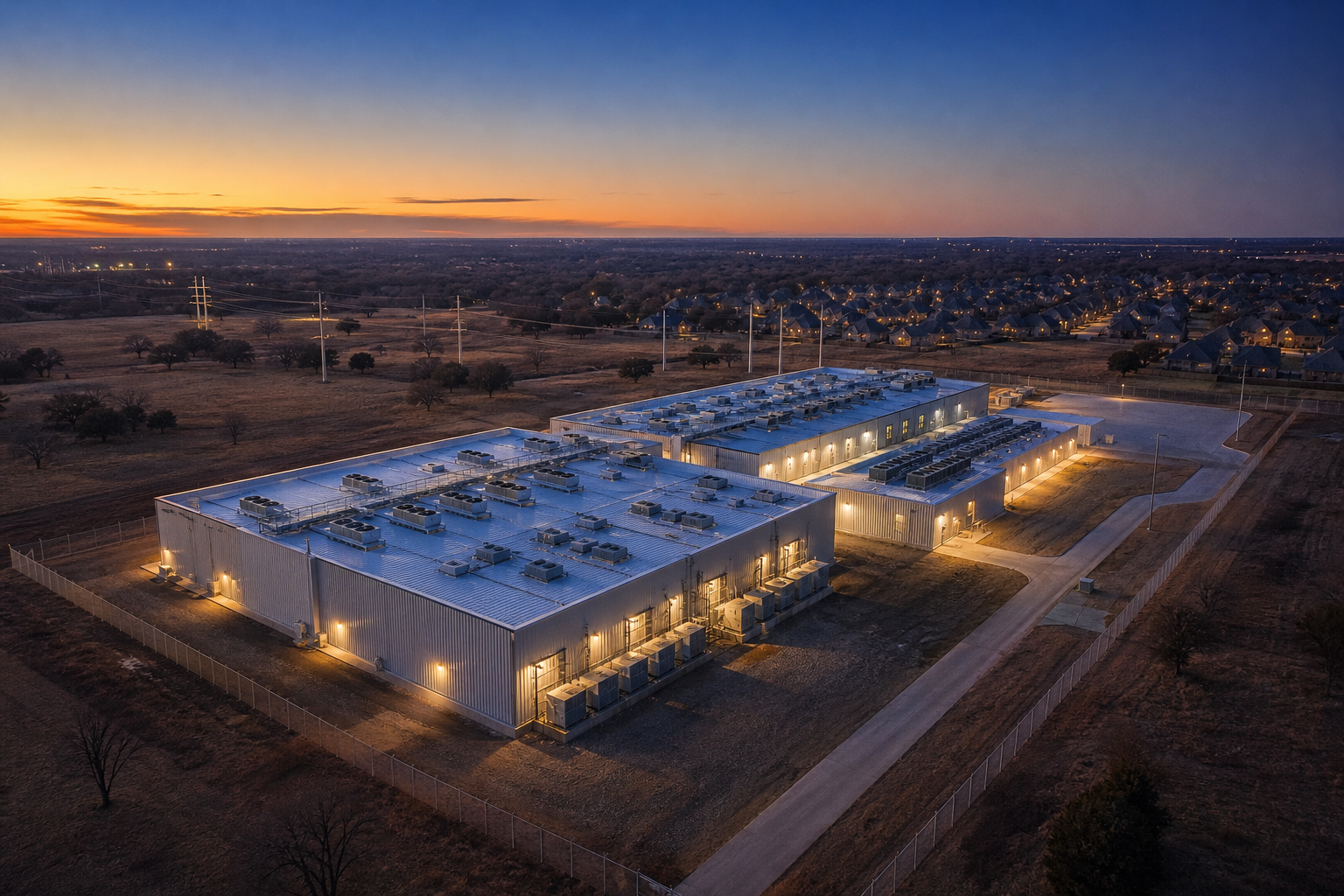
What should homebuyers research before buying near a major data center project in DFW?
Before purchasing a home near a data center project in Dallas-Fort Worth, you need to verify zoning classifications, project approval status, utility infrastructure plans, construction timelines, and surrounding land-use designations through your specific city’s development services department.
Why This Matters for Dallas-Fort Worth Homebuyers Right Now
AI data center construction is driving this investment cycle across North Texas.
What does that mean for you as a homebuyer? It means there are large-scale commercial and industrial projects in the pipeline across North Texas. And while commercial development can signal economic vitality in a corridor, it can also bring construction disruption, traffic changes, and land-use shifts that directly affect your daily life. With 6 years of experience helping buyers navigate DFW real estate and more than 148 closed transactions, we at Unlocking DFW can tell you that the single biggest mistake buyers make is assuming commercial headlines translate neatly into residential outcomes. They often do not.
How DFW Industrial Growth Differs from Residential Market Performance
Here is something we consistently explain to our clients: industrial real estate growth and residential home values are driven by fundamentally different forces. The Reuters report highlighted that average U.S. industrial asking rents reached $10.55 per square foot on a triple-net basis in Q3 2026, up 3.2 percent year over year, per JLL’s industrial report. Separately, Cushman and Wakefield’s Q3 2026 DFW industrial report recorded average asking rents of $9.76 net per square foot for the DFW market specifically, up 19.9 percent year over year.
Those are striking numbers, but they measure demand for warehouse and industrial square footage from logistics companies, telecom providers, construction firms, and utilities businesses. They do not measure residential buyer demand.
On the residential side, the picture is quite different. According to Texas REALTORS, the statewide median home price in Q1 2026 was $328,000, the first time in more than a decade that the statewide Q1 figure came in below the prior year. Average days on market reached 80 days and months of inventory reached approximately 5 months statewide, per Texas REALTORS’ Q1 2026 report.
So what should you take away from this? Rising warehouse rents in a corridor near your prospective home do not automatically mean your home will appreciate faster. No direct causal link between industrial rent growth and residential home prices has been established in the verified data we work with. The two markets operate under different demand drivers, tenant types, lease structures, and valuation methods.
Understanding Triple-Net Lease Figures
You may see industrial rent figures quoted in news coverage and wonder how they compare to what you pay for housing. Under a triple-net (NNN) lease, the commercial tenant pays base rent plus property taxes, insurance, and common-area maintenance separately. That means the $10.55 per square foot national figure from JLL actually understates the tenant’s total occupancy cost. For perspective, a 50,000 square foot tenant at $10.55 per square foot NNN pays $527,500 per year in base rent alone, before taxes, insurance, and maintenance charges. These numbers describe a completely different world from residential mortgage payments, and they should not be used to predict what your monthly housing cost or home value will look like.
How to Research Zoning and Land Use in Dallas-Fort Worth
This is where we tell buyers to start: verify the zoning. One thing we always recommend is pulling the actual zoning classification for any property you are considering, along with a review of adjacent parcels.
Here is your step-by-step approach for DFW:
- City of Dallas buyers: Search zoning cases, development applications, and planned development (PD) districts through the City of Dallas Development Services Department and the Dallas City Plan Commission. You can search by address or parcel number to identify the current zoning classification, pending rezoning cases, and approved site plans.
- Fort Worth buyers: Use the City of Fort Worth Development Services portal for the same information.
- Suburban and surrounding cities: Irving, Garland, Mesquite, Grand Prairie, Allen, Frisco, and other municipalities each maintain their own planning and zoning portals. There is no single DFW-wide zoning database.
This last point catches many relocation buyers off guard. If you are moving to North Texas from another state, you need to know that zoning and permitting records in Texas are managed at the city level. There is no county-wide or regional database for most of DFW. You will need to identify the exact municipality your prospective home falls within and then search that city’s records individually.
What should you look for? Check whether adjacent land is zoned for industrial, commercial, or mixed-use development. Look for any pending rezoning applications that could change what is allowed to be built nearby. And review approved site plans to understand what has already been entitled, even if construction has not started.
Understanding Data Center Project Status Before You Close in DFW
Not every project you read about in the news will actually get built. This is a critical distinction, and it is one of the most important research steps you can take. A data center or industrial project in the DFW area may be at any of several stages:
- Proposed: An application has been filed, but no approval has been granted. The project may be modified, delayed, or denied.
- Approved: Entitlements have been granted, but construction has not started. The developer has permission to build, but timelines can shift.
- Under construction: Active building is underway. You can assess current noise, traffic, and disruption levels firsthand.
- Operational: The facility is complete and running. This gives you the clearest picture of ongoing impacts like noise from cooling systems, truck traffic, and lighting.
Each stage carries different implications for what you will experience as a homeowner. What we tell our clients is that you should request the specific project’s permit status from the relevant city’s building inspection or permitting department. Do not rely on news coverage alone to determine whether a project will be built as described, on what timeline, or at what scale.
As a certified New Home Sales Agent and Real Estate Negotiation Expert (RENE), we have worked through transactions where the development landscape around a property was evolving. The buyers who do best are the ones who verify project details at the source rather than assuming a headline tells the full story.
Utility Infrastructure and Road Access Questions for DFW Homebuyers
Large data centers require enormous amounts of electrical capacity and water for cooling. This is not a minor detail for nearby residents. These utility demands can trigger infrastructure upgrades that affect your neighborhood in tangible ways.
Here are the specific questions you should ask before closing on a home near a proposed data center campus in Dallas-Fort Worth:
- Electrical infrastructure: Contact Oncor (the primary electric delivery company for most of DFW) and ask whether any transmission line upgrades or substation construction is planned near the property. New high-voltage lines or substations can affect the area near your property.
- Water and cooling: Ask the local water utility whether the data center project has filed for significant water service allocations. Some facilities require substantial water volumes for cooling.
- Road access and freight routes: Review the city’s capital improvement plan (CIP) for any planned road widening, new freight routes, or traffic signal changes that could affect your daily commute. These are public documents available through city engineering or public works departments.
- Construction vehicle routes: During the building phase, heavy construction traffic often uses designated haul routes. Ask the city’s permitting office whether a haul route has been established and whether it passes through or near your residential street.
These documents are public, and you have every right to review them before making a purchase decision. The mistake we watch buyers make is skipping this step because they assume someone else has already checked.
Using DFW’s Current Market Balance to Your Advantage
Here is the good news: the current residential market gives you more time to do this research than you would have had a few years ago. According to Texas REALTORS’ Q1 2026 report, Texas homes averaged 80 days on market and approximately 5 months of inventory statewide. Dallas ranked among the top metros for closed sales volume in Q1 2026, but the pace has moderated from the frenzy of 2021 and 2022.
What does that mean practically? You have breathing room. You can write offers with inspection periods long enough to pull zoning records, visit the site at different times of day, check noise levels, and research pending development applications without feeling like you will lose the house if you take an extra week.
With 84 five-star reviews from past clients, we have built our reputation at Unlocking DFW on exactly this kind of thorough, education-first approach. Whether you are a first-time buyer or relocating to North Texas, we encourage you to use the current market conditions to your full advantage. Do the due diligence. Ask the hard questions. The right home will still be there after you have done your homework.
How to Monitor Development After You Have Already Purchased in DFW
Maybe you already own a home near a proposed or active data center project. Or maybe you bought before the project was announced. Either way, you need a system for staying informed.
- Sign up for city notifications: Most DFW cities allow residents to subscribe to zoning case notifications and planning commission agendas by email. The City of Dallas, Fort Worth, and many suburban municipalities offer these services through their development departments.
- Attend planning commission meetings: These are public meetings where rezoning cases, site plan amendments, and development applications are discussed. You can attend in person or, in many cities, watch via livestream.
- Review capital improvement plan updates: Cities typically update their CIPs annually. Check for new road, water, or electrical infrastructure projects near your home.
- Talk to your city council representative: Your elected council member can often provide information about proposed projects and upcoming public hearings in your district.
Staying engaged after closing is just as important as the research you do before buying.
Frequently Asked Questions
Does a data center project near my DFW home guarantee my property value will increase?
No. While commercial development can signal economic activity in an area, no direct causal link between industrial rent growth and residential home values has been established in the verified data for the DFW market. Industrial and residential real estate operate under different demand drivers, lease structures, and valuation methods. Evaluate your home’s value based on comparable residential sales, not commercial headlines.
Where do I find zoning information for a specific DFW property?
Zoning records in Texas are managed at the city level. For Dallas, search through the City of Dallas Development Services Department. For Fort Worth, use the City of Fort Worth Development Services portal. Surrounding cities like Irving, Garland, Frisco, and Allen each maintain separate planning and zoning portals. There is no single DFW-wide database.
What is the difference between a “proposed” and “approved” data center project?
A proposed project means an application has been filed but no approval has been granted. It may be modified, delayed, or denied. An approved project means entitlements have been granted and the developer has permission to build, though construction timelines can still shift. Always verify the current status through the city’s building inspection or permitting department.
How can I check whether road construction is planned near a home I am considering in DFW?
Review the city’s capital improvement plan, which is a public document available through city engineering or public works departments. This plan outlines scheduled road widening, new freight routes, and intersection improvements. You can also ask the city’s permitting office whether the data center project has an approved haul route for construction vehicles.
Will a nearby data center affect my utility service?
It can. Large data centers require significant electrical capacity and water for cooling. Contact Oncor to ask whether transmission upgrades or substation work is planned near your property. Ask your local water utility about any large service allocation requests from the project developer. These inquiries are straightforward and free.
What does triple-net lease mean when I see commercial rent figures in the news?
Under a triple-net (NNN) lease, the commercial tenant pays base rent plus property taxes, insurance, and common-area maintenance as separate charges. The quoted rent figure understates total occupancy cost. This lease structure is standard in industrial real estate and is not comparable to residential rent or mortgage payments without significant adjustments.
How much industrial real estate demand is AI creating in Dallas-Fort Worth?
According to Reuters’ October 20, 2026 reporting on JLL’s Q3 2026 industrial report, DFW was specifically identified as a market where AI data center construction is generating additional warehouse and industrial demand. Cushman and Wakefield’s separate Q3 2026 DFW industrial report recorded average asking rents of $9.76 net per square foot, up 19.9 percent year over year, per the agents’ observations from that report.
Should I avoid buying near a data center project in DFW?
Not necessarily. The answer depends on your specific situation, the project’s stage, your proximity to it, and your tolerance for potential construction activity and traffic. Some homeowners live comfortably near operational data centers with minimal disruption. The key is researching the specific project rather than making blanket assumptions in either direction.
How long does data center construction typically take?
Timelines vary widely depending on the size and scope of the facility, but large data center campuses can involve construction timelines that vary significantly depending on the size and scope of the facility. Ask the city’s permitting department for the project’s approved construction schedule and phasing plan. News reports often describe the full build-out vision rather than the near-term construction phase.
Can a real estate agent help me research development near a DFW property?
Yes. An experienced DFW agent can help you identify pending development applications, connect you with the right municipal departments, and interpret zoning classifications. At Unlocking DFW, with recognition including D Magazine Best Real Estate Agent since 2020 and MetroTex 40 Under 40, we regularly help buyers evaluate the development landscape around prospective homes.
The Bottom Line
Buying a home near a major data center or industrial project in Dallas-Fort Worth is not inherently good or bad. It is a decision that requires specific, verified information. Check the zoning. Confirm the project’s approval status. Review utility and road infrastructure plans. Understand that rising industrial rents in a corridor do not automatically translate into residential appreciation. And use the current market’s more balanced conditions, with approximately 5 months of inventory statewide per Texas REALTORS’ Q1 2026 data, to give yourself the time to do this research properly.
At Unlocking DFW Realty, we help buyers across Dallas-Fort Worth make informed decisions grounded in real data, not assumptions. If you are considering a home near a major development project and want help navigating the research, reach out to us at 214-509-8094 or visit our office at 2400 North Henderson Ave, Suite B, in Dallas. We would welcome the chance to help you make this decision with confidence.

Leave a Reply