


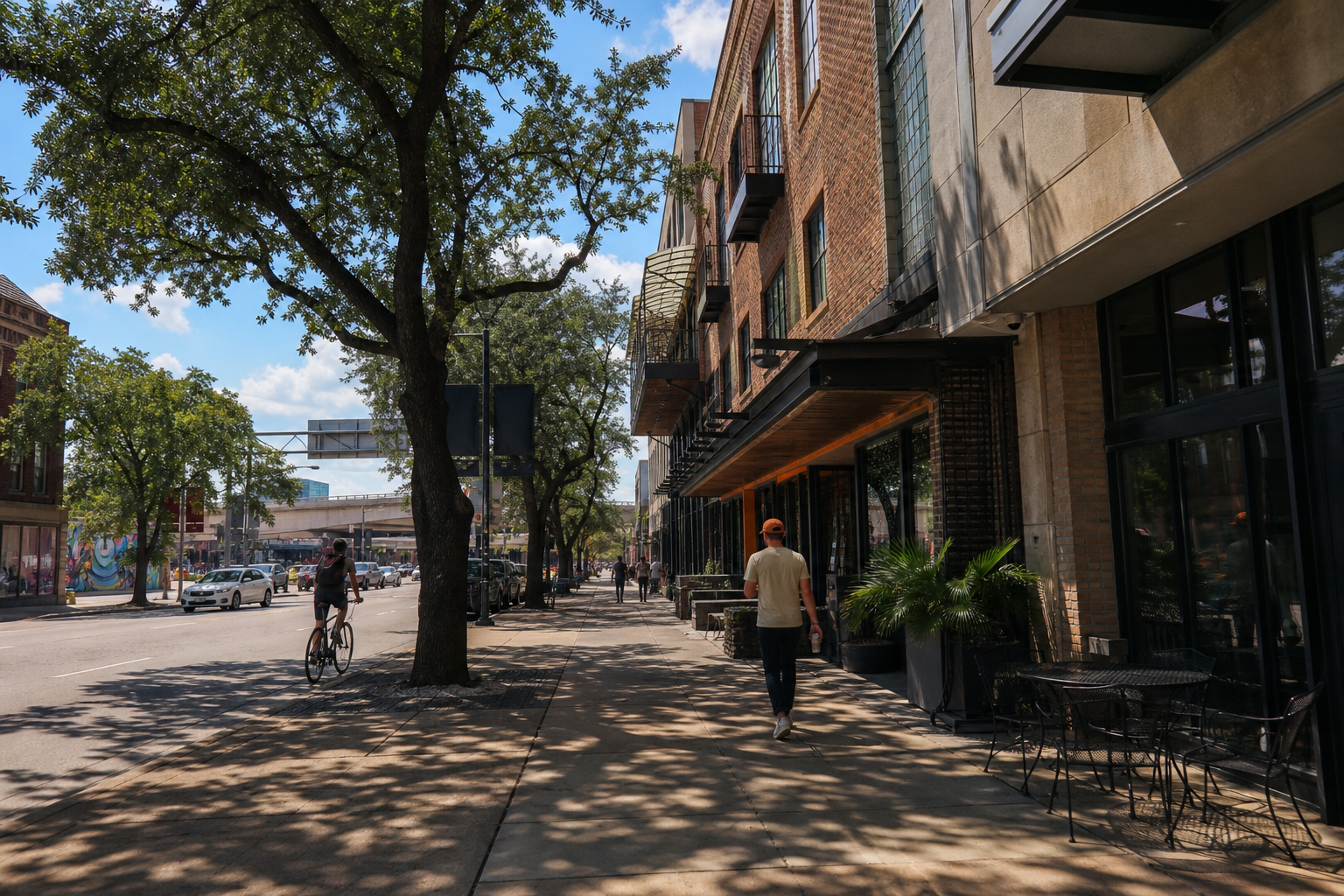
If you’re relocating to the Dallas-Fort Worth Metroplex, how do you pick a neighborhood that actually works for your daily commute and lifestyle?
You start by testing real routes during peak hours, mapping every destination your household visits regularly, and factoring transportation costs into your housing budget before you fall in love with a home that makes your daily life harder than it needs to be.
Why Your DFW Commute Decision Matters More Than Ever
A survey published by The Dallas Morning News on October 23, 2026, found that traffic is the most commonly cited weakness among North Texans when describing where they live, with concerns varying significantly by geography. That finding should get the attention of anyone shopping for a home in the Dallas-Fort Worth Metroplex right now.
We see this play out constantly in our work with buyers. With 148 closed transactions and six years of experience across DFW, we can tell you that the single biggest regret we hear from homeowners is not about square footage or finishes. It is about the commute they did not test before signing a contract. The North Central Texas Council of Governments (NCTCOG) reported that the average traveler in the Dallas-Fort Worth-Arlington urbanized area experienced 15.1 hours of peak-hour excessive delay in 2024, according to their 2025 Performance and Operations report (note: this figure is flagged for pre-publication verification against the original NCTCOG source). That is a regional average, and your personal experience could be much better or much worse depending on where you buy. So how do you make sure your next home works for your real life? Let us walk through it.
Why Map Distance in the Dallas-Fort Worth Metroplex Can Be Misleading
If you are relocating to the Dallas-Fort Worth Metroplex from another part of the country, here is something that might surprise you: two homes at similar price points can deliver wildly different daily experiences based on nothing more than location. The DFW Metroplex is massive, and a suburb that looks close on a map may involve 45 to 60 minutes of peak-hour driving.
How DFW’s Highway-Dependent Design Affects You
The metroplex is built around highways, interchanges, and toll roads. NCTCOG defines peak periods as weekday mornings from 6 to 10 AM and afternoons from 3 to 7 PM, per their CMAQ Performance Plan documentation. During those windows, speeds on many corridors fall below 20 mph or 60 percent of the posted speed limit, which is what triggers the “excessive delay” measurement.
What does that actually mean for your home search? It means you cannot rely on a midday or weekend drive to judge what your Monday morning will feel like. If you are considering a home anywhere in the metroplex, you need to drive the actual route during the hours you would normally commute. Not once. Multiple times.
For buyers looking at the Henderson Avenue corridor in East Dallas, this is one of the location’s practical advantages. But “closer” still requires verification, because Central Expressway is known for significant peak-hour congestion heading north toward Plano, Allen, and McKinney.
How to Build a Real Commute Budget for Your DFW Home Search
One thing we always tell our clients at Unlocking DFW is that your mortgage payment is not your full housing cost. Your commute has a price tag, too, and ignoring it can erase the apparent savings of a less expensive home farther from where you work.
The Costs Beyond Travel Time
A longer DFW commute can involve several expenses that many buyers overlook:
- Tolled highways: The North Texas Tollway Authority operates an extensive network, and daily toll use adds up fast over a year
- Fuel costs: A 40-mile round-trip daily commute consumes meaningful fuel over 250-plus workdays
- Vehicle wear and maintenance: More miles mean more oil changes, tire replacements, and brake work
- Parking fees: Downtown Dallas and some employment centers charge for parking
- Your time: An extra hour in the car each day is an hour you are not spending with family, exercising, or resting
We are not saying you should avoid suburbs or communities farther from the urban core. We are saying you should run the numbers. A home that costs less per month in mortgage but adds meaningful toll and fuel costs may not be the deal it appears to be.
This is one reason buyers who work in the central business district, Uptown, or along the US-75 corridor may find Henderson Avenue and the surrounding East Dallas neighborhoods worth evaluating, given the area’s location inside Loop 12.
How to Compare DFW Neighborhoods by Commute, Not Just by Price
Here is the framework we recommend to every buyer, whether you are a first-time purchaser, a relocation buyer, or a family looking to move up.
Step 1: Map All Your Regular Destinations
Your commute is not just your drive to work. Before you target a neighborhood, list every place your household visits regularly:
- Primary workplace(s): If you are a dual-income household, both workplaces matter
- School or childcare: Morning drop-off timing can be just as stressful as highway traffic
- Healthcare providers: Pediatricians, dentists, specialists you visit regularly
- Grocery and daily errands: Where you shop weekly
- Family and social connections: If you are relocating to be near family, how far are they?
Step 2: Test Routes During Peak Hours
Drive from the homes you are considering to each of those destinations during the weekday windows that NCTCOG defines as peak: 6 to 10 AM and 3 to 7 PM. Use real-time navigation during the drive, not just the estimated time shown on a map at 2 PM on a Saturday.
Step 3: Research Available Transit Options
Dallas Area Rapid Transit (DART) serves the broader East Dallas and Greenville Avenue area, and proximity to DART’s Blue, Red, and Orange line stations (such as Mockingbird Station) varies by specific address. If public transit matters to your household, verify current routes and schedules through DART directly. Trinity Metro serves the Fort Worth side of the metroplex with separate coverage.
Step 4: Factor Congestion Zones Into Your Comparison
NCTCOG tracks peak-hour excessive delay separately for three DFW urbanized area zones: Dallas-Fort Worth-Arlington, Denton-Lewisville, and McKinney-Frisco, as documented in the 2027-2030 Transportation Improvement Program (Chapter V). This means congestion is not uniform across the metroplex. Comparing a home in Frisco to one in Oak Cliff means comparing meaningfully different commute environments, even though both are labeled “DFW.”
What Relocation Buyers Should Know About DFW Commute Patterns
If you are moving to North Texas from out of state, you face a specific knowledge gap that local buyers do not have. We work with corporate relocations to the DFW area regularly as part of our practice at Unlocking DFW, and the mistake we watch buyers make most often is assuming that suburb-to-city driving here works like it does in their previous metro.
The Scale Factor
DFW spans dozens of cities across multiple counties. A community that seems “right outside Dallas” on a national-scale map might sit 35 or 40 highway miles from your office. During peak hours, that can translate to well over an hour of driving.
Highway Access Varies by Corridor
Not all suburban commutes are created equal. The corridor you drive matters as much as the distance. Central Expressway (US-75) heading north from the Henderson Avenue area toward Plano and McKinney carries heavy peak-hour congestion. I-35E toward Denton, the Dallas North Tollway, and I-30 heading east each serve different parts of the metroplex, and buyers should test their specific corridor during peak hours before committing to a community.
What we recommend is this: do not choose a suburb first and then figure out the commute. Start with where you will work, identify which corridors connect to that employment center, and then explore the communities along those routes. That approach saves you from falling in love with a home in a community that adds an hour to your day.
Hybrid and Remote Workers Face a Different Calculation
If you work from home most days and commute to an office only occasionally, commute time still matters, but it competes with other priorities. You might value walkability and neighborhood character, neighborhood restaurants, and daily convenience more heavily. The Henderson Avenue and Lower Greenville corridor is a strong example of a neighborhood where walkable mixed-use living can offset the occasional peak-hour drive.
As a certified Real Estate Negotiation Expert (RENE) and a D Magazine Best Real Estate Agent since 2020, we bring data and local knowledge to help hybrid workers weigh these trade-offs honestly. There is no single right answer, but there is a process for finding yours.
How Henderson Avenue and East Dallas Stack Up for DFW Commuters
Our office sits at 2400 North Henderson Avenue in Dallas, right in the heart of a walkable, mixed-use corridor with restaurants, retail, and residential density. We know this neighborhood deeply, and it is worth understanding why many commuter-focused buyers gravitate here.
Location Advantages
- Inside Loop 12: You are closer to Downtown Dallas, Uptown, Deep Ellum, and the Design District than most suburban alternatives
- US-75 (Central Expressway) access: Connects you northbound to Richardson, Plano, Allen, and McKinney, though peak-hour congestion on this corridor is well documented
- I-30 access: Connects east and west, reaching Arlington and Fort Worth
- DART proximity: The broader East Dallas and Greenville Avenue area is served by DART, with light rail stations like Mockingbird Station accessible depending on your specific address
The Trade-Off to Consider
That is the calculation we help buyers run every day.
What matters is your math, not a generic comparison. Your workplace location, your partner’s workplace, your kids’ schools, and the places you visit weekly all factor into whether a closer-in neighborhood or a suburban community makes more financial and practical sense for your household.
Frequently Asked Questions
How do I estimate my actual commute time from a DFW home before buying?
Drive the route from the home to your workplace during peak hours, which NCTCOG defines as weekday mornings from 6 to 10 AM and afternoons from 3 to 7 PM. Do this on multiple days. Midday or weekend test drives will give you an unrealistically optimistic picture of what your daily commute will feel like during the workweek.
What are peak-hour excessive delay statistics for DFW?
According to NCTCOG’s 2025 Performance and Operations report, the average traveler in the Dallas-Fort Worth-Arlington urbanized area experienced 15.1 hours of excessive delay in 2024 (this figure is flagged for verification against the original NCTCOG source). This is a regional average, not a prediction for any individual commute.
Should I choose a DFW home based on commute time or price?
Neither factor should be evaluated in isolation. A lower-priced home with a longer commute may carry higher annual transportation costs in tolls, fuel, and vehicle maintenance. We recommend calculating total monthly costs, including housing and transportation, before deciding which community fits your budget best.
How does the Henderson Avenue area in Dallas compare for commuters?
Henderson Avenue sits inside Loop 12 with access to US-75 (Central Expressway) and I-30, placing it closer to many major employment centers than outer suburban alternatives. However, Central Expressway is known for significant peak-hour congestion heading north. Proximity to DART service varies by specific address within the area.
What should relocation buyers know about DFW traffic?
The Dallas Morning News reported on October 23, 2026, that traffic is the most commonly cited weakness among surveyed North Texans when describing where they live. The DFW Metroplex spans dozens of cities across multiple counties, and a suburb that looks close on a map may involve 45 to 60 minutes of peak-hour driving. Test routes before committing to a community.
Does DART serve East Dallas and the Henderson Avenue corridor?
DART serves the broader East Dallas and Greenville Avenue area, with light rail stations such as Mockingbird Station in the vicinity. Proximity and route availability vary by specific address. If public transit is important to your household, verify current DART routes and schedules directly before finalizing your home search.
How do tolls affect commuting costs in DFW?
The North Texas Tollway Authority operates an extensive toll road network across the metroplex. If your daily commute involves tolled highways, the annual cost can be significant. We recommend calculating your estimated toll costs as part of your housing budget when comparing communities.
Is congestion the same everywhere in the Dallas-Fort Worth Metroplex?
No. NCTCOG tracks peak-hour excessive delay separately for three urbanized area zones: Dallas-Fort Worth-Arlington, Denton-Lewisville, and McKinney-Frisco, as documented in the 2027-2030 Transportation Improvement Program. Congestion burden differs by corridor and subregion, so comparing homes in different parts of the metroplex means comparing different commute environments.
What if I work from home most days? Should commute still matter?
It depends on how often you travel to an office and what other daily destinations matter to your household. Even hybrid workers benefit from evaluating walkability, access to groceries and healthcare, and the convenience of occasional office trips. A neighborhood like Henderson Avenue, with its mixed-use corridor, may offer daily lifestyle advantages that outweigh the apparent savings of a more distant suburb.
How can a real estate agent help me evaluate commute factors?
An experienced local agent can help you identify which corridors connect to your workplace, compare communities based on your household’s specific destinations, and calculate the transportation costs that affect your total cost of living. With 84 five-star reviews and recognition as a MetroTex 40 Under 40 honoree, our team at Unlocking DFW brings deep local knowledge to help you make a location decision you will not regret.
The Bottom Line
Choosing where to buy in the Dallas-Fort Worth Metroplex is not just about the home. It is about the daily life that home creates for you. We believe that a smarter home search starts with understanding how your location shapes your routine, your budget, and your time.
At Unlocking DFW, we help buyers, especially those relocating to North Texas, compare communities based on real commute data, actual peak-hour routes, and total cost of living. Whether you are drawn to the walkable energy of the Henderson Avenue corridor or exploring suburbs along the US-75 or I-30 corridors, we will help you run the numbers and test the routes before you make an offer. Reach out to us at 214-509-8094 or visit our DFW real estate blog to start a conversation about which DFW location fits your life.

Leave a Reply