


If I sell my M Streets East Dallas home in late 2026 and the appraisal comes in below my asking price, what are my real options as a seller in today’s Dallas market, and how much risk does that create for my deal?
You have four main options: reduce your price to the appraised value, negotiate to split the gap with your buyer, challenge the appraisal through a Reconsideration of Value, or let the buyer walk and relist. Each carries real risk in today’s shifting Dallas market.
Why a Low Appraisal in M Streets Dallas Matters More Right Now
If you had sold your M Streets home in 2021 or 2022, a low appraisal might have been a minor speed bump. Buyers were competing fiercely, waiving contingencies, and bringing extra cash to the table. That is not the market we are working in as of late 2026.
Texas homes stayed on the market for an average of 80 days in Q1 2026, six days longer than the same period last year, according to the Texas Real Estate Research Center. In Q2 2026, the statewide median home price was $340,000, down 1.4% from the same quarter the prior year, per the same source. Home availability increased in most Texas markets through Q3 2026, with median prices dipping slightly statewide.
What does that mean for you on Monticello, Morningside, or Marquette? It means buyers have options, they have time, and they feel less pressure to cover an appraisal gap out of their own pocket. The negotiating leverage has shifted, and a low appraisal in this environment is a bigger deal for sellers than it has been in years. Understanding your options before you list, not after the appraisal report hits, is what separates a smooth closing from a derailed one.
Option One: Accept the Appraised Value and Keep Your Dallas Deal Alive
This is the most straightforward path. The appraiser says your M Streets home is worth a certain amount, and you agree to sell at that figure.
In the survey period from July 2024 through June 2025, 22% of Texas sellers reduced their price once before their home sold, and 18% reduced their price two or more times, according to the Texas Homebuyers and Sellers Report. Price reductions are not unusual in this market. They are part of the landscape.
Why would you choose this route? Because the alternative, losing your buyer and relisting, comes with its own costs. You reset your days on market. You signal to the next round of buyers that something went wrong. And in a market where 27% of Texas sellers had their home listed for 13 weeks or more during the most recent survey period, time is not on your side.
So when does accepting the appraised value make sense? When the gap is relatively small, when you need to close on a specific timeline, or when your next move (whether that is buying another Dallas home or relocating) depends on this sale going through. What we tell our clients is this: every dollar you negotiate over the appraised value is a dollar the buyer has to produce in cash, and in this market, many buyers simply do not have it or are not willing to stretch.
Option Two: Negotiate to Split the Appraisal Gap in M Streets
This is the middle ground, and it works best when both sides have motivation to close. You lower your price partway toward the appraised value, and your buyer brings additional cash to cover the remaining difference.
Here is the reality we see consistently in East Dallas. The buyer’s lender will only finance up to the appraised value. Any amount above that is the buyer’s responsibility to pay in cash at closing. So if the gap is substantial, you need a buyer who has the liquidity and the desire to stay in the deal.
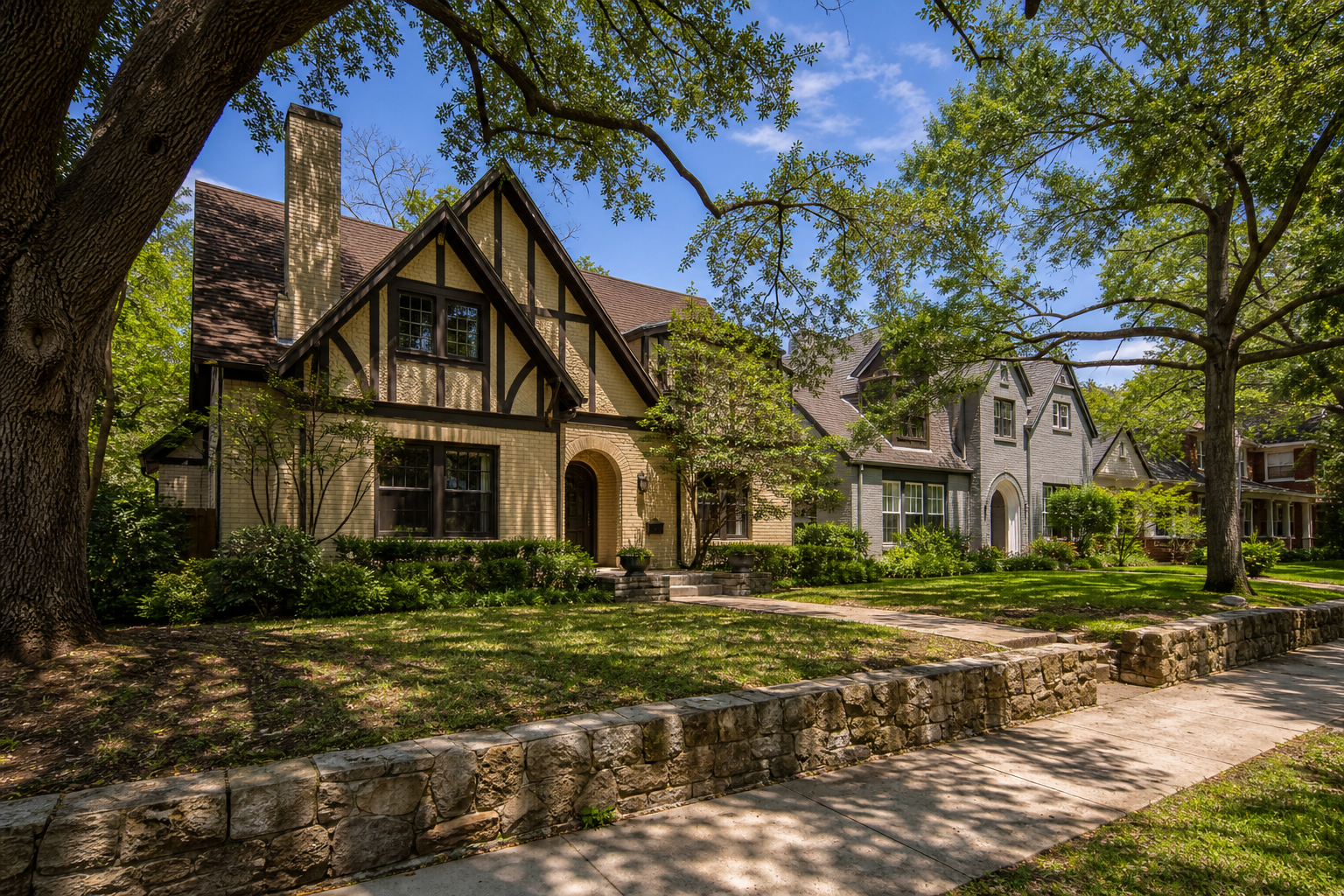
In a market where days on market are rising and buyers have more choices, your buyer’s willingness to bridge part of that gap depends on how much they love your home and how competitive your neighborhood feels. M Streets has real charm: the Tudor architecture, the mature tree canopy, the walkability to Lower Greenville and Lakewood shopping. Those qualities create emotional attachment that sometimes motivates a buyer to stretch.
But “sometimes” is not a strategy. If you are counting on a buyer splitting the gap, you need to know before the appraisal comes back whether your buyer has the reserves to do it. Having closed 148 transactions, we can tell you that the conversations about appraisal contingencies need to happen early, not after the report is in hand.
A few factors that affect whether splitting the gap works in your situation:
- Your buyer’s cash reserves. First-time buyers, who make up a significant share of the Dallas market, often have limited funds beyond their down payment.
- Competing inventory. If similar M Streets homes are sitting on the market, your buyer has alternatives.
- Your timeline. If you need to close before year end 2026, your negotiating flexibility shrinks.
Option Three: Challenge the Appraisal with a Reconsideration of Value in East Dallas
This is where working with an agent who truly knows M Streets makes a difference. A Reconsideration of Value, or ROV, is a formal request submitted to the lender asking the appraiser to review additional comparable sales that may have been overlooked.
Here is why this option matters specifically in M Streets and East Dallas. Your neighborhood is filled with architecturally distinct older homes, many built in the 1920s and 1930s. Tudor cottages, Spanish Eclectic bungalows, and Craftsman-style homes sit alongside mid-century ranches and newer infill construction. An appraiser unfamiliar with the nuances of these streets might pull comps from a different part of 75206, or even from neighborhoods with completely different housing stock.
A well-supported ROV should include recent closed sales of homes with similar vintage, style, square footage, and lot characteristics on streets like Monticello, Morningside, Marquette, or Mercedes. This is not about arguing that the appraiser was wrong. It is about providing data they may not have had.
What we always tell sellers: an ROV costs nothing but time, and it works only when the appraiser’s original comp selection was demonstrably weak. If the appraiser pulled solid, truly comparable sales and the number still came in low, a challenge is unlikely to change the outcome.
With 6 years of experience focused heavily on East Dallas neighborhoods and homes around the $500K price point, we have built a deep understanding of which recent sales genuinely compare to which properties. That kind of granular comp knowledge is exactly what an effective ROV requires.
Option Four: Let the Buyer Walk and Relist Your Dallas Home
If your contract includes the standard TREC appraisal contingency (and most financed Texas contracts do), your buyer can terminate and get their earnest money back if the home does not appraise. You are then back on the market.
This is the highest-risk option in late 2026, and here is why.
Texas homes averaged 61 days on market in Q2 2026, per the Texas Real Estate Research Center, up from the prior year. In Q1 2026, that number was 80 days. Relisting means starting that clock over, and buyers notice. A home that was under contract and is now back on the market raises questions: What happened? Is something wrong with the property? Will it appraise for the next buyer either?
That last question is the critical one. If one appraiser valued your home below your asking price, there is a reasonable chance the next appraiser will land in a similar range, unless market conditions have improved or you have made meaningful changes to the property. In Q3 2026, Texas home availability continued increasing while median prices dipped slightly statewide, according to the Texas Real Estate Research Center, so a seller who relists after a failed deal may face a softer pricing environment the second time around.
When does relisting make sense? When the appraisal was clearly flawed, when you have reason to believe market conditions are about to shift in your favor, or when you are not under time pressure. But in most late-2026 scenarios, the math favors negotiating with your current buyer rather than rolling the dice on a new one.
How Dallas Zoning Proposals Can Increase Appraisal Risk in M Streets
This is something we consistently advise our clients to understand, especially buyers and sellers in older East Dallas neighborhoods with redevelopment potential.
Dallas recently released the first public draft of its proposed Development Code rewrite, the first comprehensive update to the city’s zoning rules in over 40 years. The proposal addresses housing choices, additional dwelling units, mixed-use development, neighborhood compatibility, tree protection, and other standards.
Here is the connection to your appraisal: if you have priced your M Streets home partly on the expectation of future ADU potential or mixed-use value under the proposed code, an appraiser working from today’s zoning will not credit that premium. Appraisers value property based on current permitted use, not what a draft proposal might eventually allow.
In our experience, this creates a specific kind of appraisal gap risk for sellers who are forward-pricing their property. Draft #1 of the Development Code is still open for public feedback, and the city may revise it substantially before any formal adoption. You should not price a property based on the assumption that a proposed zoning change will automatically grant new development rights.
Our advice: check your property’s current zoning, applicable restrictions, and any requirements that could affect your plans. If a proposed change is important to your pricing strategy, verify its status with the city before setting your list price.
What This Means for Buyers Looking at M Streets Homes
If you are a buyer considering an older M Streets home with redevelopment potential, keep in mind that the seller may have priced in value that your lender’s appraiser will not recognize. That is not a reason to walk away, but it is a reason to understand where the appraisal gap is coming from and to plan your real estate negotiation strategy accordingly.
Frequently Asked Questions
Can the seller refuse to lower the price after a low appraisal in Dallas?
Yes, you can hold firm at your original asking price. However, the buyer using a mortgage cannot borrow more than the appraised value, so they would need to cover the entire gap in cash. In late 2026, with rising inventory and longer days on market across Texas, most buyers in Dallas are unlikely to pay a large cash premium above appraised value when other options are available.
Does a low appraisal mean my M Streets home is overpriced?
Not necessarily. It means the appraiser could not find sufficient comparable sales data to support your asking price. In architecturally distinct neighborhoods like M Streets, where Tudors, bungalows, and infill construction sit side by side, comp selection can be genuinely challenging. A well-prepared Reconsideration of Value may address the issue.
How long does a Reconsideration of Value take in Texas?
Typically, the process takes one to two weeks from submission, though timelines vary by lender. The buyer’s agent submits the request with supporting comparable sales data. During that window, your closing timeline may shift, so both parties should plan for a potential delay and amend the contract accordingly if needed.
What happens to the buyer’s earnest money if the appraisal comes in low?
If the contract contains a standard TREC appraisal contingency and the buyer terminates because of the low appraisal, the buyer generally receives their earnest money back. Specific contract terms can vary, so both parties should review their agreement carefully and consult their agents or attorneys.
Can I get a second appraisal if the first one is low?
The buyer’s lender controls the appraisal process. As the seller, you cannot order a second appraisal through the buyer’s lender, but you can submit a Reconsideration of Value. In some cases, the lender may order a second appraisal at their own discretion, though this is not guaranteed. Your agent can advise on the most effective approach.
How common are low appraisals in Dallas in 2026?
While there is no single published statistic for the low-appraisal rate in Dallas specifically, the conditions that contribute to appraisal gaps are present: the statewide median price dipped slightly in Q3 2026 per the Texas Real Estate Research Center, and inventory has been increasing. In a softening price environment, appraisals based on slightly older comps often lag behind asking prices.
Should I price my M Streets home lower to avoid an appraisal issue?
Pricing strategy is one of the most important decisions you will make. In our experience, pricing at or just below where recent comparable sales cluster, rather than aspirationally above them, significantly reduces appraisal risk. With 84 five-star reviews from past clients, our team has seen firsthand how strategic pricing protects sellers’ bottom lines.
Does the proposed Dallas Development Code rewrite affect my home’s appraised value?
Not yet. Appraisers value property based on current zoning and permitted use, not proposed changes. The Development Code rewrite is still in draft form and open for public comment. Pricing your home based on future zoning possibilities that have not been adopted creates appraisal gap risk.
What if my buyer offers to pay cash above the appraised value?
If a buyer has the liquidity and willingness to cover the gap entirely in cash, the deal can proceed at your original price. This was more common in the highly competitive 2021 and 2022 Dallas market. In late 2026, with approximately 5 months of statewide inventory as of Q1 2026 per the Texas Real Estate Research Center, buyers generally have less urgency to cover large gaps.
How can I prepare for a potential low appraisal before I list my Dallas home?
Start by working with an agent who understands East Dallas comp data at a granular level. Gather documentation of any improvements, pull recent sales from your immediate streets, and price based on closed comparable data, not aspirational value. Addressing deferred maintenance and presenting the home well for both showings and the appraiser’s visit also matters.
The Bottom Line
Selling your M Streets East Dallas home in late 2026 means operating in a market that gives buyers more leverage than they have had in years. A low appraisal is not the end of your deal, but it is a serious negotiation point that requires clear thinking, strong comparable sales data, and a realistic assessment of your options.
Whether you reduce the price, split the difference, challenge the appraisal, or relist, every path has tradeoffs. The right choice depends on your timeline, your financial goals, and the strength of the comparable sales in your corner of 75206.
As a D Magazine Best Real Estate Agent since 2020, a MetroTex 40 Under 40 honoree, and a Real Estate Negotiation Expert with 148 closed transactions, we have navigated appraisal challenges in East Dallas many times. At Unlocking DFW Realty, we focus on giving you the education, data, and advocacy to make the best decision for your situation. If you are thinking about selling in M Streets or anywhere in Dallas, reach out to us at 214-509-8094 or visit our office near Henderson Avenue to talk through your strategy before you list, not after the appraisal lands.

Leave a Reply