
What are the best areas in Dallas to invest in real estate?
Dallas neighborhoods like Oak Cliff, East Dallas, Lake Highlands, and Northeast Dallas each offer distinct investment profiles, from rental income potential to long-term appreciation, depending on your financial goals and risk tolerance.
Why Dallas Real Estate Investing Matters Right Now
If you have been watching the Dallas-Fort Worth market from the sidelines, the current environment may present the window you have been waiting for. According to the Q1 2026 Texas Quarterly Housing Report from Texas REALTORS, the statewide median home price in Q1 2026 was $328,000, which was lower than the same quarter the prior year for the first time in more than a decade. Homes averaged 80 days on market statewide in Q1 2026, six days longer than the year before.
What does that mean for you as an investor? More time on market and softening prices can create more negotiating room, whether through price reductions before listing, concessions at the table, or both. We are seeing a market that is normalizing after years of extreme undersupply, and that normalization creates real entry points for first-time investors in Dallas.
Statewide inventory stood at approximately 5 months in Q1 2026, up 0.3 months from 2025, per the Texas Real Estate Research Center. That center considers 4 to 5 months of inventory a balanced market. This is not a crash. It is a recalibration, and Dallas investors who do their homework can benefit.
How to Choose the Right Dallas Neighborhood for Your Investment Goals
When clients ask us where the best areas in Dallas are for real estate investing, our answer is that it really depends on what they want their investment to accomplish. Some neighborhoods may offer stronger rental income potential, while others may be more appealing for long-term appreciation or future development. That distinction matters more than any “top neighborhood” list you will find online.
Before you pick a neighborhood, you need to define your investment thesis. Are you looking for monthly cash flow from rental income? Are you banking on appreciation over five to ten years? Or are you looking for a blend of both?
Here is how we encourage investors to think about it:
- Cash flow investors should focus on neighborhoods where purchase prices are lower relative to achievable rents, and where tenant demand is consistent
- Appreciation investors should look at areas undergoing revitalization or positioned near major infrastructure, employment hubs, or planned development
- Hybrid investors want neighborhoods where you can cover expenses with rental income while the property also gains value over time
Your strategy dictates your neighborhood. A property in East Dallas that might be perfect for a long-term hold could be the wrong choice if you need strong monthly cash flow from day one. With 6 years of experience and over 148 closed transactions, we have seen how different neighborhoods reward different strategies, and getting this alignment right is the most important decision you will make.
Oak Cliff and North Oak Cliff: Dallas Investment Potential for Value Seekers
Oak Cliff and North Oak Cliff are neighborhoods we consistently point investors toward, and for good reason. These areas have been in a steady cycle of revitalization, with a growing number of restaurants, small businesses, and cultural institutions drawing younger renters and buyers.
What makes Oak Cliff interesting for investors is the range of property types and price points you can find. You might encounter a property that needs significant work alongside a fully renovated home just a few blocks away. That price diversity creates opportunity, especially if you are comfortable with properties that need some improvement.
North Oak Cliff in particular has seen growing interest from renters who want proximity to the Bishop Arts District, the Texas Theatre corridor, and quick access to downtown Dallas via the Jefferson Boulevard corridor. For investors evaluating rental demand, that proximity to amenities and employment centers matters.
But here is where we urge caution. Our biggest advice is not to buy simply because an area is popular or because someone says property values are going up. You need to look at comparable rental rates, property taxes, insurance, maintenance costs, vacancy risks, and potential resale value before making a decision. A property that looks like a great deal upfront may not deliver the returns you expect once all the expenses are included.
So how do you avoid overpaying? The data offers a sobering reminder. According to the 2026 Texas Homebuyers and Sellers Report (based on 2025 survey data), 74% of Texas sellers reduced their asking price two or more times before a sale, up 53 percentage points from the prior year. An additional 18% reduced the price once. Overpaying is a real risk even in a strong metro.
East Dallas, Lake Highlands, and Northeast Dallas: Comparing Investment Profiles
We would encourage investors to look closely at East Dallas, Lake Highlands, and Northeast Dallas because each offers a fundamentally different investment experience.
East Dallas
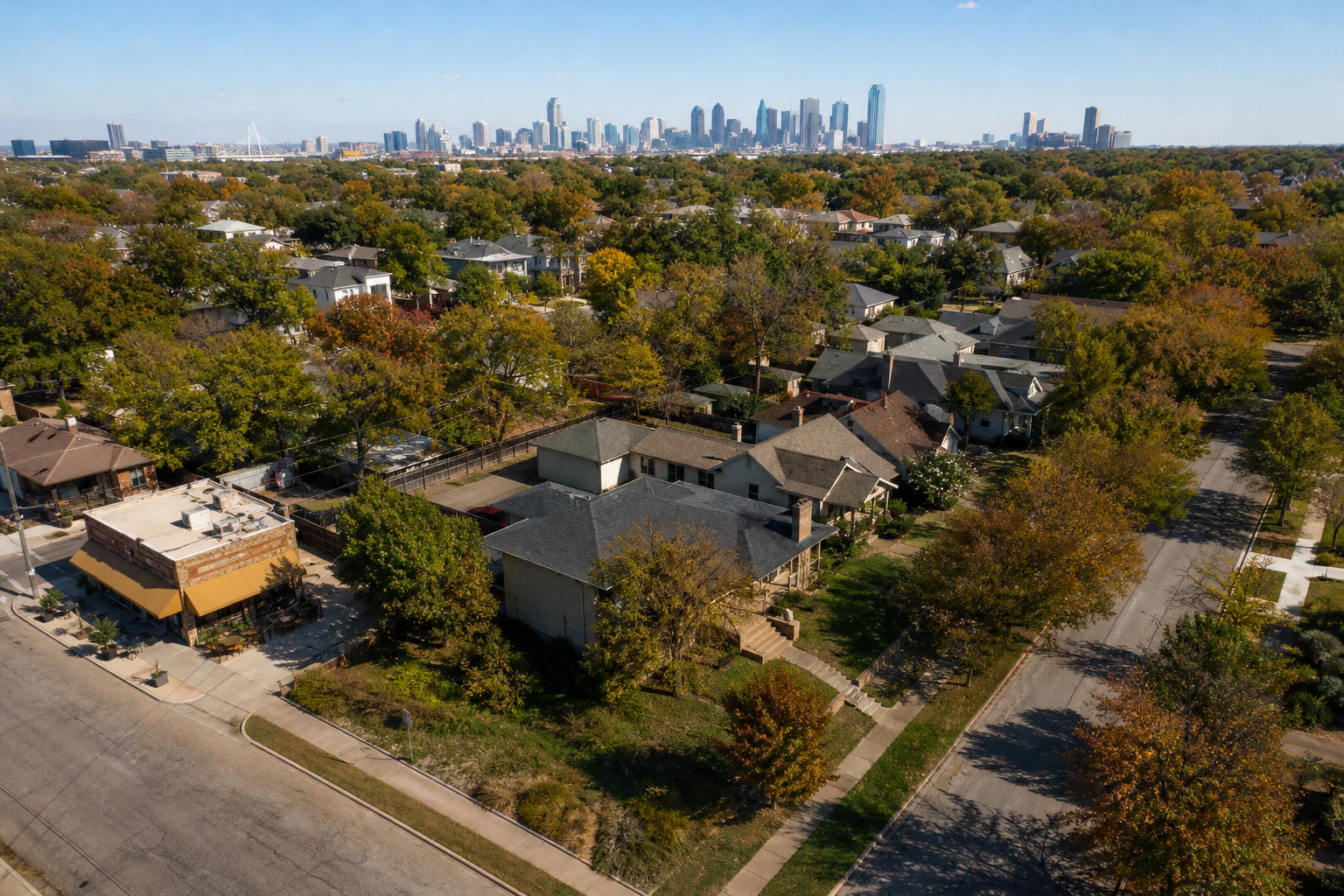
East Dallas is an area we know well, having focused much of our work on homes in this part of the city. The neighborhood benefits from its proximity to White Rock Lake, the Lakewood Shopping Center area, and established residential streets with mature tree canopies. In our experience working in East Dallas, rental demand in this area often comes from young professionals and families who value walkability and neighborhood character.
Lake Highlands
Lake Highlands draws a different kind of tenant and buyer. Known for its strong school reputation and family-oriented suburban feel while still being inside Dallas city limits, in our experience, Lake Highlands properties may attract families who prioritize school proximity and are willing to pay accordingly If your investment thesis centers on attracting stable, long-term tenants willing to pay a premium for location, Lake Highlands deserves your attention.
Northeast Dallas
In our experience, Northeast Dallas can offer lower entry price points compared to Lake Highlands and parts of East Dallas, which may translate to more favorable rent-to-price ratios for cash flow investors. The trade-off is that some pockets of Northeast Dallas may carry higher vacancy risk or require more active property management. Understanding the block-by-block differences is critical here.
Investors willing to explore surrounding communities may also want to consider Richardson, Garland, and Mesquite.
Cash Flow Versus Appreciation in the Dallas-Fort Worth Market
This is the core question every investor needs to answer honestly before writing an offer. And it is more nuanced than most people realize.
Cash flow is what remains after you collect rent and pay your mortgage, property taxes, insurance, maintenance, and vacancy reserves. A property with strong gross rent does not automatically cash flow well. Texas property taxes, in particular, can eat into your margins faster than you expect if you are coming from a lower-tax state.
For illustration, per the research data: an investor purchasing a $300,000 rental property and achieving a gross annual rent of $24,000 would have a gross rent multiplier of 12.5 ($300,000 divided by $24,000). That is a common starting screen, but it tells you nothing about net returns until you subtract taxes, insurance, vacancy, and maintenance.
Appreciation is harder to predict. The metro commanded 38% of all Texas $1M-plus home sales (5,485 homes, $9.7 billion in volume) during the period from November 2024 through October 2025, according to the 2025 Texas Sales of Million-Dollar Homes Report. That kind of deep, liquid upper-tier market reflects a deep, liquid upper-tier market — one indicator, among others, of broader long-term interest in DFW real estate.
As real estate agents, we believe the smartest investment is one that makes sense on paper and aligns with your long-term financial goals. The right property in the right location can make a difference, but doing your homework before buying is what helps protect that investment.
What Out-of-State Investors Need to Know About Dallas Real Estate
If you are exploring Dallas from out of state, you face a geographic knowledge gap that can cost you real money. You might see a zip code that looks promising in a spreadsheet, but block-by-block differences in Dallas neighborhoods can mean the difference between a profitable rental and a money pit.
Here is what we tell out-of-state investors to prepare for:
- Texas has no state income tax, which is attractive, but property taxes are generally higher than in many other states. Factor this into your cash flow projections
- Cash buyers are competing aggressively. Cash sales reached a record high of 30% of all Texas home sales in 2025, per the 2026 Texas Homebuyers and Sellers Report. If you are financing, you need to be prepared to move decisively and price your offers competitively
- First-time buyers are at a near-historic low. Only 21% of all homebuyers in Texas in 2025 were first-time buyers, near the all-time low of 20% the year prior. This means a smaller share of the market consists of first-time buyers, so you may be competing against a broad mix of experienced purchasers
- You need local eyes on the ground. Rated 5 out of 5 stars across 84 client reviews, our team at Unlocking DFW Realty has the kind of neighborhood-level knowledge that spreadsheets and online searches simply cannot replicate
Having someone who understands where Dallas is heading, not just where it has been, can make or break your first investment.
Frequently Asked Questions About Dallas Real Estate Investing
Is Dallas a good city for first-time real estate investors in 2026?
Dallas offers a combination of population growth, diverse employment sectors, and a range of neighborhood price points that can work for first-time investors. The market has shifted toward more balance, with statewide inventory at approximately 5 months as of Q1 2026 per the Texas Real Estate Research Center, giving you more negotiating room than in prior years. However, success depends on choosing the right neighborhood for your specific goals.
What is the difference between investing in Oak Cliff versus Lake Highlands?
Oak Cliff may offer lower entry price points and the potential for revitalization-driven appreciation, while Lake Highlands typically commands higher purchase prices but may attract more stable, family-oriented tenants willing to pay premium rents. Your choice should depend on whether you prioritize cash flow or long-term value growth.
How do Dallas property taxes affect rental property returns?
Texas property taxes are generally higher than in many other states. You need to calculate your expected property tax burden before estimating cash flow. A property that appears profitable based on gross rent alone may underperform once taxes, insurance, and maintenance are factored in.
Should I invest in Dallas if I live out of state?
Many investors successfully own Dallas rental properties from out of state. The key is working with a local real estate team that understands block-by-block differences in neighborhoods like East Dallas, Northeast Dallas, and surrounding communities like Richardson and Garland. Remote investing without local expertise significantly increases your risk.
What areas near Dallas should investors also consider?
We encourage investors to look beyond Dallas proper. Richardson, Garland, and Mesquite can offer lower entry points while still benefiting from the DFW employment base and infrastructure. Each community has its own rental demand dynamics and price trajectory worth evaluating.
How much competition will I face from cash buyers in Dallas?
Cash sales hit a record 30% of all Texas home sales in 2025, per the 2026 Texas Homebuyers and Sellers Report. If you are financing your investment property, prepare to move quickly and present clean, competitive offers to stand out against all-cash competitors.
Is now a good time to buy investment property in Dallas?
The Q1 2026 statewide median home price of $328,000, per Texas REALTORS, was lower than the same quarter the prior year for the first time in over a decade. Homes are also sitting longer at 80 days on average in Q1 2026. These conditions can favor buyers, though Q3 2026 reports suggest continued inventory growth and mixed price trends.
What should I calculate before buying a rental property in Dallas?
At a minimum, evaluate comparable rental rates, property taxes, insurance premiums, expected maintenance costs, vacancy risk, and potential resale value. We strongly advise running these numbers in detail before making an offer. A property that looks affordable at purchase can underperform if the full expense stack is not accounted for.
How do I decide between cash flow and appreciation in Dallas?
Start with your timeline and financial needs. If you need monthly income now, target neighborhoods where rent-to-price ratios are favorable, such as parts of Northeast Dallas. If you can hold for five to ten years without relying on rental income, areas like East Dallas and North Oak Cliff may offer stronger appreciation upside.
Why should I work with a local Dallas real estate agent for investment purchases?
Neighborhood-level differences in Dallas can be dramatic even within the same zip code. Having closed over 148 transactions and earned recognition including D Magazine Best Real Estate Agent since 2020 and MetroTex 40 Under 40, our team brings the granular, on-the-ground knowledge that helps investors avoid costly mistakes in unfamiliar territory.
The Bottom Line on Dallas Real Estate Investing
The best area in Dallas to invest in real estate is the one that aligns with your financial goals, timeline, and risk tolerance. Oak Cliff, East Dallas, Lake Highlands, Northeast Dallas, and surrounding communities like Richardson, Garland, and Mesquite each offer something different, and choosing wisely starts with defining what you need your investment to do.
The current market conditions in 2026 offer more negotiating room and more inventory than investors have seen in years. But opportunity only converts to profit when you do the math honestly and have local expertise guiding your decisions.
If you are ready to explore Dallas real estate investment opportunities, we would love to help you evaluate neighborhoods, run the numbers, and find the right property for your goals. Reach out to us at Unlocking DFW Realty at 214-509-8094 or visit our office near Henderson Avenue in Dallas. With 84 five-star reviews and a track record built on education, honesty, and results, we are here to help you make your first (or next) investment the right one.

Leave a Reply