

If you can’t afford a traditional starter home in Dallas-Fort Worth, what are your realistic alternatives for breaking into homeownership?
You have more options than you think. Condos, townhomes, smaller detached homes, and older properties needing manageable updates can all get you into the DFW market at a lower price point than a conventional single-family home.
Why This Matters for Dallas-Fort Worth Buyers Right Now
The affordability gap in Dallas-Fort Worth is not just a feeling. It is documented.
According to Texas REALTORS, the statewide median home price stood at $328,000 in Q1 2026, per the Texas Quarterly Housing Report. That was actually a slight decline of 0.8% compared to Q1 2025, and three of the four largest Texas metros, including Dallas-Fort Worth, saw price dips of under 3% over that same period.
Here is the reality, though. Even a modest dip does not make a $300,000-plus home affordable for a younger household earning below the Texas homebuyer median income of $112,500 (per the most recent Texas REALTORS survey covering July 2024 through June 2025). The median buyer age in Texas has reached an all-time high of 58, according to that same survey, which tells you just how difficult it has become for younger households to break through.
But there is a silver lining. Home availability increased in most Texas markets by Q3 2026, per Texas REALTORS, and that means more choices for buyers. We want to help you understand exactly how to use that expanded inventory.
Why Traditional Dallas-Fort Worth Starter Homes Have Gotten So Expensive
One of the biggest challenges we see for first-time buyers is figuring out how to enter the housing market without stretching their budget too far.
In our experience working with first-time buyers across Dallas-Fort Worth, the sticker shock is real. The typical Texas starter-home price increased from approximately $155,000 in 2015 to around $275,000 in 2026, according to data from the Texas Real Estate Research Center as we have observed it in our practice. That is a roughly 77% increase over about a decade. If your income did not grow at that same pace, you are not imagining the gap.
Texas REALTORS has reported that first-time homebuyers in Texas remain near an all-time low as a share of all buyers.
What does that actually mean for your monthly budget? Let us put it in perspective. At a 6.5% 30-year fixed rate, a buyer putting 5% down on a $300,000 home would carry a principal-and-interest payment of roughly $1,896 per month, as estimated in research data reviewed for this article. That is before property taxes, homeowner’s insurance, and any HOA fees. For many younger DFW households, that total monthly cost simply does not fit.
Does that mean homeownership is off the table? Not at all. It means the traditional path needs an update.
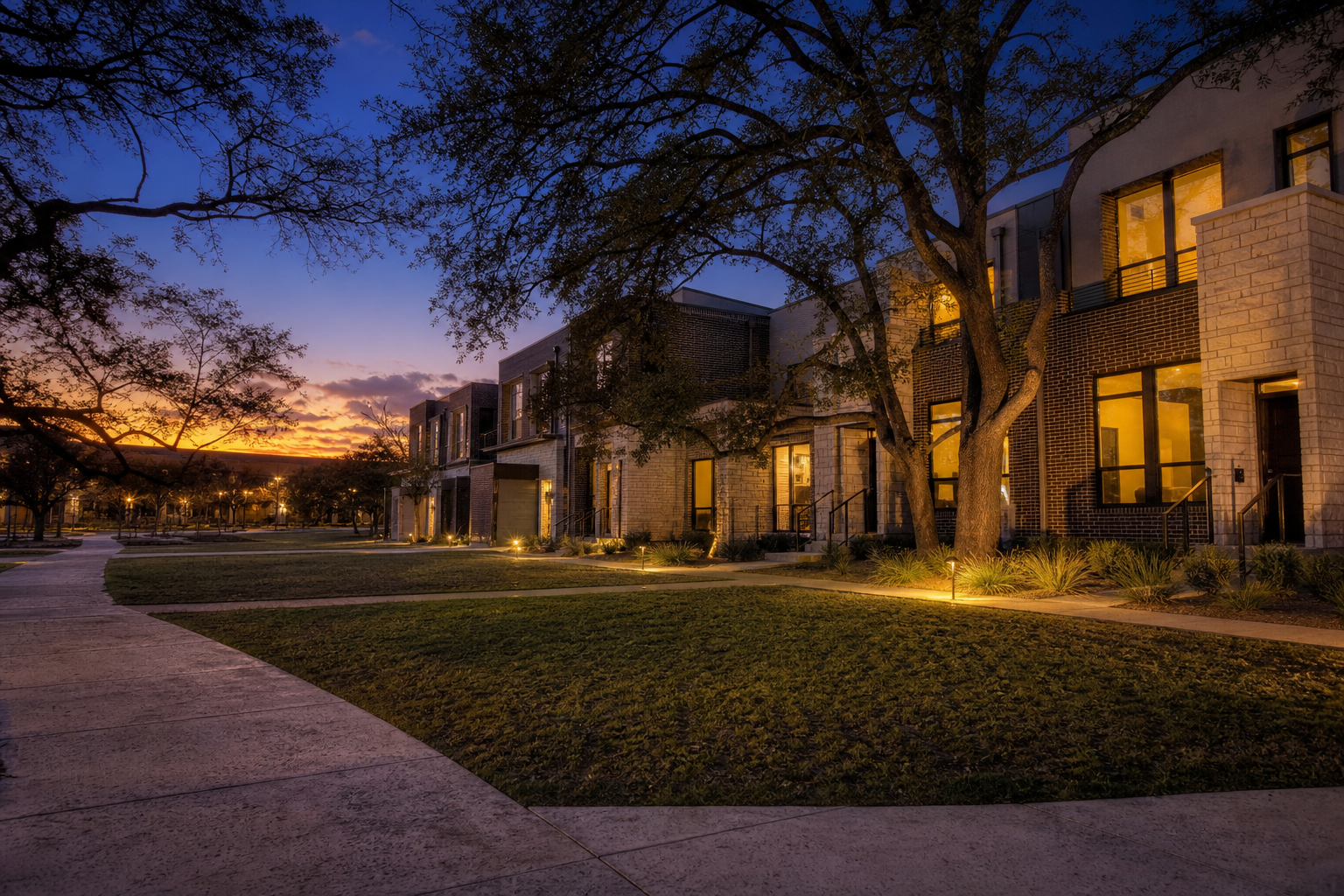
Condos and Townhomes in DFW: A Practical First Step
Here is something we always tell our clients: your first home does not have to be the traditional three-bedroom, two-bath single-family house. The DFW Metroplex spans dozens of municipalities across multiple counties, and that geographic diversity means a wide range of property types at very different price points.
Why Condos and Townhomes Deserve a Serious Look
In our experience working with buyers across Dallas-Fort Worth, condos and townhomes can offer entry points at lower price points than comparable single-family homes, though this varies by community and submarket. They can be a genuine entry point for buyers who want to start building equity without waiting another five years to save.
A few things to keep in mind:
- HOA fees are part of your total monthly cost. A condo may have a lower list price, but the monthly HOA can add a meaningful amount to your payment depending on the community. We always encourage buyers to calculate their full monthly obligation, not just the mortgage payment.
- Maintenance is often shared. Exterior upkeep, landscaping, and common-area repairs are typically covered by the HOA, which can actually save you money compared to maintaining a single-family home on your own.
- Resale considerations matter. Condos and townhomes can appreciate, and building equity in one can help fund your future move-up purchase. However, resale timelines and appreciation rates can vary by community and location within DFW.
The mistake we watch buyers make here is dismissing condos and townhomes without running the numbers. When you compare the total monthly cost of a condo at a lower price point against renting, you may find that ownership is closer than you thought.
Older Homes and Smaller Properties Across the Dallas-Fort Worth Metroplex
Another path we consistently recommend exploring is older homes or smaller detached properties. The DFW Metroplex is enormous, and price points vary significantly from one submarket to the next.
What “Manageable Updates” Really Means
An older home that needs cosmetic work (paint, flooring, fixtures) is very different from one that needs a new roof, foundation repair, or a full plumbing overhaul. In our practice, having closed 148 transactions, we have seen both ends of that spectrum. The key is knowing the difference before you make an offer.
Here is what we tell buyers to evaluate:
- Get a thorough inspection. This is non-negotiable.
- Factor repair costs into your budget. If a home is listed below market because it needs updates, add realistic repair estimates to the purchase price. That is your true cost of entry.
- Consider smaller square footage. A two-bedroom home or a home under 1,200 square feet may not sound glamorous, but it can be the difference between owning and continuing to rent. Your first home does not have to be your forever home.
Expanding your search beyond one property type or one specific neighborhood within DFW can surface options that better fit your financial situation. That geographic flexibility is one of the biggest advantages of buying in a metro this large.
Understanding Your True Monthly Cost in DFW (Not Just the Mortgage)
This is where we see first-time buyers get tripped up most often. The asking price is just one number. Your real question should be: what will this home cost me every single month?
The Full Cost Stack Every Dallas-Fort Worth Buyer Should Calculate
- Principal and interest. Your mortgage payment, determined by your loan amount, interest rate, and term.
- Property taxes. Texas has no state income tax, but property tax rates across DFW counties can be significant. This is often the line item that surprises buyers most.
- Homeowner’s insurance. Required by your lender, and rates vary based on the property type, age, and location.
- HOA fees. Applicable for condos, townhomes, and many planned communities. Can range widely.
- Maintenance reserves. Even in a condo, you should budget for interior maintenance. For a single-family home, a general guideline is to set aside a percentage of the home’s value annually for upkeep.
What we tell our clients is this: the goal is not just to qualify for a mortgage. It is to find a home you can comfortably afford while still having room for savings, emergencies, and everyday life. If a home stretches you so thin that one unexpected expense puts you in a bind, you have bought too much house.
As a Real Estate Negotiation Expert (RENE) and certified New Home Sales Agent, we help our buyers work through these numbers before they ever start touring homes. That upfront planning is what separates a stressful purchase from a confident one.
The Starter Home as a Stepping Stone: Building Equity in Dallas-Fort Worth
If you are thinking about buying a starter home with the intention of upgrading later, that is a conversation worth having early.
How the Move-Up Strategy Works
Building equity in a starter property, even a condo or townhome, can help fund a future purchase. Here is the general idea: you buy at a price point you can afford today, make your payments, benefit from any appreciation over time, and eventually sell to put that equity toward a home that better fits your next chapter.
But we want you to go in with clear eyes. Before treating appreciation as a guaranteed bridge, you need to understand:
- Your mortgage balance at the time of sale. Early in a mortgage, most of your payment goes toward interest, not principal. Equity builds slowly at first.
- Selling costs. In Texas, total selling costs (including agent commissions, title fees, and other closing expenses) typically run 6% to 8% of the sale price.
- The cost of your next purchase. You will need a down payment, closing costs, and moving expenses for your move-up home. Your equity from the starter home may cover some of this, but likely not all of it.
Does this mean you should not buy a starter home? Not at all. It means you should buy with realistic expectations about the timeline and the math. We help our buyers map this out from day one, so there are no surprises when it is time to make that next move.
Having helped more than 148 buyers and sellers close transactions across DFW, and as a D Magazine Best Real Estate Agent since 2020 and MetroTex 40 Under 40 honoree, we have walked this path with clients at every stage.
How to Start Your Dallas-Fort Worth Home Search on a Limited Budget
So where do you actually begin? Here is a practical framework:
- Get pre-approved first. Understand what you can borrow and, more importantly, what you can comfortably afford each month.
- Expand your property type search. Look at condos, townhomes, smaller homes, and older properties, not just traditional single-family homes.
- Explore multiple DFW submarkets. The Metroplex is vast. A neighborhood ten minutes further from your office could offer meaningfully different pricing.
- Calculate total monthly costs, not just list prices. Include taxes, insurance, HOA, and maintenance in every comparison.
- Work with an agent who knows entry-level DFW inventory. Not every agent specializes in helping first-time buyers navigate budget constraints. You want someone who understands both resale and new construction options.
With 84 verified five-star reviews and a 5 out of 5 average rating from past clients, our team at Unlocking DFW Realty has built a track record of helping first-time buyers and relocation clients find the right fit in this market.
Frequently Asked Questions
Can I buy a home in Dallas-Fort Worth with less than 20% down?
Yes, many loan programs allow significantly less than 20% down. FHA loans, for example, can require as little as 3.5% down for qualified buyers. Conventional loans may go as low as 3% to 5%. Just keep in mind that a lower down payment typically means private mortgage insurance, which adds to your monthly cost. We always recommend discussing your specific situation with a lender before assuming what you need.
Are condos in DFW a good investment for first-time buyers?
Condos can be a practical way to enter the market and start building equity. However, the investment potential varies by location, HOA health, and the specific community. We encourage buyers to review HOA financials and reserve funds carefully. A condo with a well-managed HOA in a desirable DFW submarket can absolutely serve as a stepping stone.
What are HOA fees, and how much should I expect in Dallas-Fort Worth?
HOA fees cover shared expenses like exterior maintenance, landscaping, amenities, and sometimes insurance for common areas. In DFW, these fees vary widely depending on the community and property type. Some condos and townhome communities may charge a few hundred dollars monthly, while others charge more. Always factor HOA fees into your total monthly housing cost.
How do property taxes in Texas affect my monthly payment?
Texas property tax rates can be significant, and there is no state income tax to offset them. Your property tax bill is often collected monthly through your mortgage escrow account. This can add a substantial amount to your payment, so we always recommend getting a tax estimate specific to the property and county you are considering.
Is it better to buy a fixer-upper or a move-in-ready home in DFW?
It depends on your budget, risk tolerance, and timeline. A fixer-upper with cosmetic needs (paint, flooring, landscaping) can be a smart buy if you factor home repairs and renovation costs into your total budget. A home with major structural or mechanical issues is riskier. A thorough inspection is essential either way. In our experience, buyers who plan for repair costs upfront tend to come out ahead.
What is the difference between a townhome and a condo in Dallas-Fort Worth?
In general, a townhome is a multi-story unit where you own the structure and the land beneath it, while a condo typically means you own the interior of your unit and share ownership of common areas. Both may have HOA fees. The distinction can affect financing, insurance, and resale, so it is worth understanding before you make an offer.
Can I use a starter home to build equity and upgrade later?
Yes, and many buyers in DFW do exactly this. Building equity through regular payments and potential appreciation can help fund a future move-up purchase. However, you should account for your remaining mortgage balance, selling costs of typically 6% to 8% in Texas, and the expenses of buying your next home. We map this out with buyers from the beginning.
How much income do I need to buy a home in Dallas-Fort Worth?
It varies based on the home price, your down payment, interest rate, and debts. For context, the median household income of Texas homebuyers was $112,500, per the most recent Texas REALTORS survey covering July 2024 through June 2025. Many first-time buyers earn below that figure. The best starting point is a conversation with a lender who can run your specific numbers.
Should I expand my search area within the DFW Metroplex?
In many cases, yes. The Dallas-Fort Worth Metroplex stretches across multiple counties and dozens of municipalities. Price points can differ meaningfully from one submarket to the next. Being open to exploring areas you had not originally considered can significantly expand your options and bring your monthly cost closer to what you can comfortably manage.
How do I know if I am ready to stop renting and buy in DFW?
Readiness involves more than just having a down payment. We encourage potential buyers to consider their job stability, emergency savings, debt levels, and how long they plan to stay in the area. If you can cover a down payment, closing costs, and a comfortable monthly payment while still having reserves, you may be in a strong position. A pre-approval conversation is the best first step.
The Bottom Line
Our advice? Do not wait until you can afford your dream home before exploring homeownership in Dallas-Fort Worth. Start by understanding what works for your budget today. Your first home may not be your forever home, but it can still be a meaningful first step toward your long-term goals.
The DFW market in 2026 offers more inventory than in Q1 2025, giving first-time buyers more choices than they had a year ago. That combination creates a real window for first-time buyers willing to think beyond the traditional single-family starter home. Whether it is a condo, townhome, smaller detached home, or older property needing updates, the path into ownership is wider than many people realize.
When you are ready to explore your options, we are here. At Unlocking DFW Realty, we specialize in guiding first-time buyers and relocation clients through every step. Reach out to us at 214-509-8094 or visit Unlocking DFW to start the conversation. With 6 years of experience, 148 closed transactions, and 100 five-star reviews, our team is ready to help you find the right fit in Dallas-Fort Worth.

Leave a Reply