


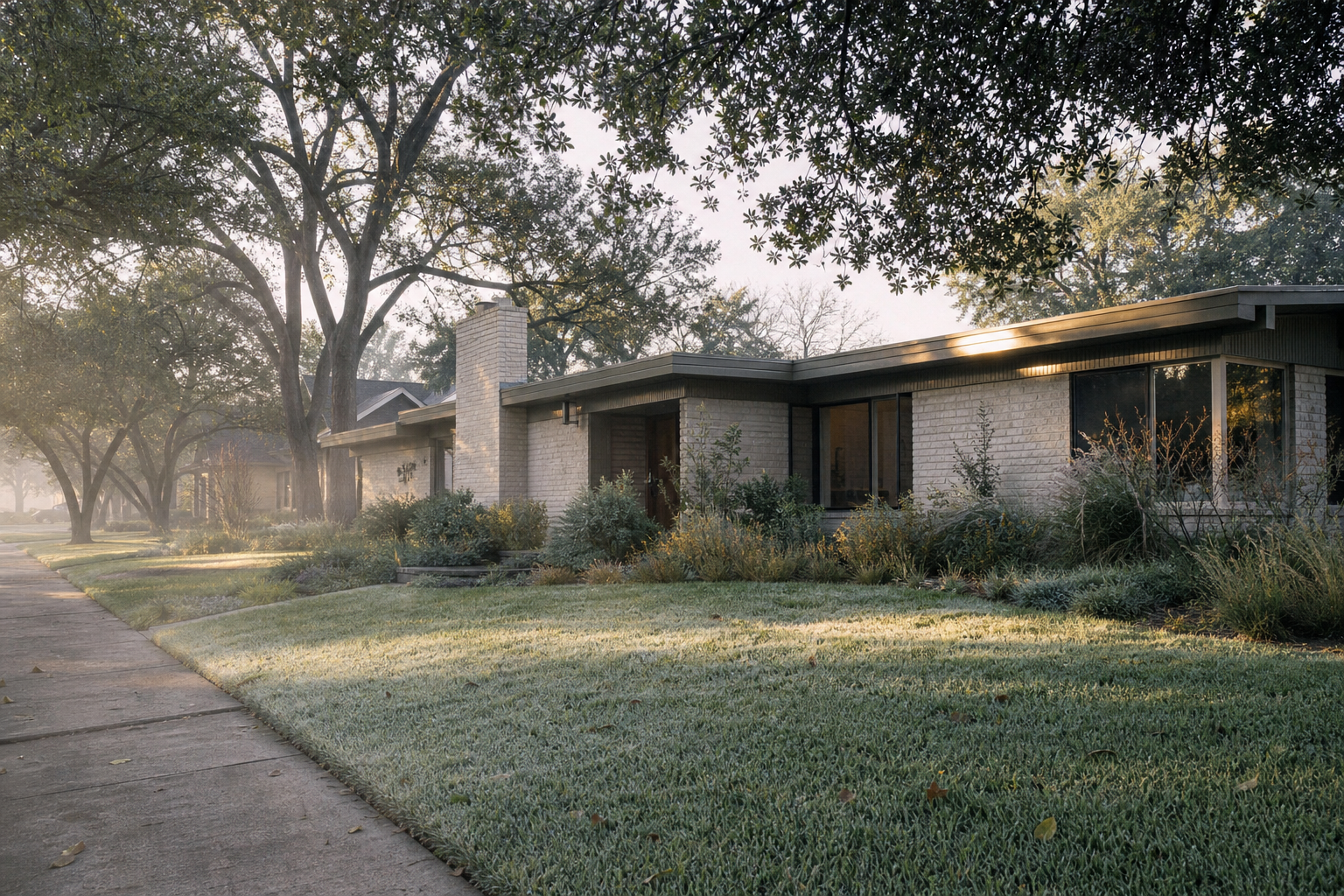
Dallas-Fort Worth home prices are easing while mortgage rates decline. Does that actually mean better opportunities for buyers right now?
It depends on your full financial picture, not just the listing price. DFW asking prices have dipped modestly, and rates are trending down week over week, but financing costs remain elevated compared to a year ago. The real opportunity lies in how you approach the market, not in waiting for a perfect moment that may never arrive.
Why This Matters for Dallas-Fort Worth Buyers Right Now
If you’ve been watching the Dallas-Fort Worth housing market from the sidelines, you’ve probably noticed the headlines shifting. Prices easing. Rates dipping. More homes to choose from. It sounds like the green light you’ve been waiting for, right?
Here’s the thing: the full picture is more nuanced than a headline can capture. We work with buyers across Dallas, Plano, Richardson, Frisco, McKinney, and East Dallas every day, and what we consistently see is that the buyers who succeed in this market are the ones who understand what these shifts actually mean for their monthly payment, not just the sticker price on a listing.
The DFW median listing price was reported at $419,900 in October 2026, reflecting a 1.2% year-over-year decline, according to listing data cited in a November 2026 press release. Meanwhile, the 30-year fixed mortgage rate averaged 7.11% as of November 12, 2026, per Freddie Mac’s Primary Mortgage Market Survey. Those two numbers pull in opposite directions for your budget, and understanding how they interact is the key to making a smart move right now.
What the Price Decline Actually Means in Dallas-Fort Worth
Let’s start with that 1.2% year-over-year decline in DFW’s median listing price. It’s real, and it matters. But we need to put it in context before you start planning your offer strategy around it.
Asking Price vs. What You’ll Actually Pay
First, a critical distinction: that $419,900 figure represents the median price sellers are *asking*, not what buyers are actually paying at closing. Closed-sale prices, which come from MLS transaction data, can differ meaningfully from listing prices depending on the neighborhood, the home’s condition, and how motivated the seller is. In our experience working across East Dallas and the broader metroplex, some homes still close at or near asking price, while others, particularly those sitting on the market with price reductions, close well below.
So when you hear “prices are easing,” what you’re really hearing is that sellers are adjusting their expectations. And that’s genuinely good news for you as a buyer, because it signals a willingness to negotiate.
Price Reductions Tell a Bigger Story
Here’s where it gets interesting. Roughly 26.4% of active DFW listings carried a price reduction in October 2026, compared with about 20.5% nationally, according to listing data referenced in the same press release. That gap suggests Dallas-Fort Worth sellers are adjusting more aggressively than the national average.
What does that mean at the kitchen table when you’re writing an offer? It means there’s room to have a real conversation about price, especially on homes that have been sitting. But a price reduction alone doesn’t make a home a good deal. You still need to evaluate it against recent comparable closed sales in that specific neighborhood, not against what the seller originally hoped to get.
How Mortgage Rates Reshape the Dallas-Fort Worth Buyer’s Budget
This is the part of the equation that many buyers overlook, and it’s the part we spend the most time walking through with our clients.
The Weekly Decline Feels Good, But the Year-Over-Year Gap Hurts
The 30-year fixed rate dropped to 7.11% as of November 12, 2026, down from 7.18% the prior week, per Freddie Mac. Four consecutive weeks of declines. That feels like momentum in the right direction, and it is.
But zoom out. A year ago, that same rate was 6.24%. That’s roughly 87 basis points higher on the 30-year product today compared to November 2025.
What does that look like on a real payment? For illustration, consider a $280,000 loan amount (roughly what you’d finance on a $350,000 purchase with 20% down). The difference between a 6.24% rate and a 7.11% rate on that loan is approximately $130 per month in principal and interest alone. Over the life of the loan, that adds up significantly.
Meanwhile, that week-over-week drop from 7.18% to 7.11%? On the same loan, it saves you roughly $14 per month. Helpful, but not life-changing.
Why We Tell Buyers to Focus on the Monthly Number
This is exactly why we encourage every buyer we work with, whether you’re shopping in Mesquite, Allen, or Fort Worth, to anchor your budget to your monthly payment, not the listing price. A home that’s $10,000 cheaper than it was last year might still cost you *more* per month if rates have climbed. Your lender can run these numbers in real time, and we strongly recommend getting a fresh pre-approval before you start touring homes.
Where Dallas-Fort Worth Inventory Stands and What It Means for Your Search
More homes on the market means more choices and, often, more leverage. So where does DFW stand?
Texas-Wide Inventory Is Growing, But Slowly
Statewide, Texas had several months of housing inventory in Q1 2026, according to Texas REALTORS research data, an increase from the same period in 2025. Analysts generally consider four to five months of inventory a balanced market, meaning conditions aren’t tilting heavily toward either buyers or sellers.
Texas REALTORS reported in October 2026 that homebuyers had more options in Q3 2026 across the state, with home availability increasing in most markets, though closed sales were down overall. Active listings statewide rose 7.4% compared to Q1 of the prior year, a trend that continued into Q3 2026, though the pace of inventory growth has slowed from the 30%-plus annual gains seen in earlier periods.
DFW Has Its Own Rhythm
Here in Dallas-Fort Worth specifically, the picture is a bit different from the statewide trend. The listing data noted that active listings in the metro were down approximately 1.7% year over year, and new listings fell roughly 6.1% in October 2026. That means while there’s some negotiating room on price, we’re not swimming in available homes the way some other Texas markets might be.
In Q1 2026, Dallas was one of the three Texas metros with the most sales, according to Texas REALTORS, and closed transactions in those top metros were each down less than 2% compared with 2025. The market isn’t stalling. It’s recalibrating.
For buyers searching in neighborhoods like East Dallas, the Henderson Avenue corridor, or the northern suburbs from Richardson up through McKinney, what we see is that well-priced, well-maintained homes still move. The ones sitting are often the ones that were priced against last year’s comps instead of today’s reality.
How to Spot a Real Opportunity in the Dallas-Fort Worth Market
So if prices are easing and rates are inching down, how do you separate a genuine value from a home that just looks like a deal on paper? Here’s the framework we walk through with every buyer.
Look Beyond the Price Reduction
A price reduction doesn’t automatically equal a bargain. Some sellers start high and reduce to where they should have been all along. Others reduce because there’s something about the home, deferred maintenance, an awkward floor plan, a busy street, that buyers are rightfully passing on. Your job is to figure out which category a home falls into.
Here’s what to evaluate:
- How does the current asking price compare to recent closed sales of similar homes in the same neighborhood? Not the original list price. The closed price.
- How long has the home been on market? The DFW median was 64 days on market in October 2026, unchanged from a year earlier, per listing data. Homes sitting well beyond that mark may represent stronger negotiating opportunities.
- Has the home had multiple price reductions? Statewide, 74% of Texas sellers reduced their asking price two or more times before closing during the period from July 2024 through June 2025. That’s an increase of 53 percentage points from the previous year. Multiple reductions can signal seller motivation, but they can also signal underlying issues with the property.
- What’s the condition? A lower price means nothing if you’re walking into a home that needs a new roof, foundation work, or significant cosmetic updates beyond your budget.
Consider What You Can Control
You can’t control mortgage rates. You can’t control what sellers decide to list their homes for. But you can control your financial readiness, your pre-approval, your down payment strategy, and the team you work with. In our experience, the buyers who come out of this market feeling great are the ones who focused on those controllable factors rather than trying to time the bottom perfectly.
Should You Buy Now or Wait in Dallas-Fort Worth?
This is the question we hear most often, and we’re going to give you the honest answer: nobody can tell you exactly when the “best” time to buy is. But we can give you a framework for deciding whether *now* is the right time for *you*.
The Case for Acting Now
- Sellers are adjusting prices, and over a quarter of DFW listings carry reductions, giving you negotiating leverage that didn’t exist a year or two ago.
- Rates have declined for four consecutive weeks, per Freddie Mac. If that trend continues, competition could increase as more buyers re-enter the market.
The Case for Waiting
- Rates remain elevated at 7.11% for the 30-year fixed product as of November 12, 2026, per Freddie Mac. If rates decline further, your monthly payment on the same home drops.
- Statewide inventory has been growing, which could mean even more options in the coming months.
The Reality Check
Waiting for the perfect confluence of low rates, low prices, and high inventory is a strategy that rarely plays out. Those conditions don’t tend to exist simultaneously, because lower rates bring more buyers into the market, which pushes prices up. What we encourage is this: if you’re financially ready, pre-approved, and you find a home that fits your needs and your budget, that’s your moment. You can’t go back in time and buy the home someone else got while you were waiting.
Frequently Asked Questions About Buying in Dallas-Fort Worth Right Now
Are Dallas-Fort Worth home prices dropping significantly in 2026?
Not dramatically. The median listing price in the DFW metro was $419,900 in October 2026, reflecting a 1.2% decline from a year earlier, according to listing data from a November 2026 press release. That’s a modest easing, not a crash. Prices are softening enough to create negotiating room on some listings, but we’re far from a situation where values are falling sharply. If you’re waiting for a major correction, the data doesn’t support that expectation right now.
What is the current mortgage rate for Dallas-Fort Worth buyers?
As of November 12, 2026, the national 30-year fixed-rate mortgage averaged 7.11%, and the 15-year fixed averaged 6.45%, per Freddie Mac’s Primary Mortgage Market Survey. These rates apply nationally, though your individual rate depends on your credit score, down payment, loan type, and lender. We always recommend getting quotes from multiple lenders to compare.
Is it a buyer’s market in Dallas-Fort Worth?
Not exactly. It’s more accurately a balanced-to-shifting market. Texas had several months of housing inventory statewide in Q1 2026, per Texas REALTORS, which analysts consider roughly balanced. In DFW specifically, active listings were down about 1.7% year over year in October 2026. You have more leverage than you did in 2021 or 2022, but sellers aren’t desperate.
How much can I negotiate on a DFW home right now?
It depends on the specific property. About 26.4% of DFW active listings had a price reduction in October 2026, well above the national average of 20.5%. Homes that have been on the market longer than the median 64 days and have already seen a reduction are often the best candidates for negotiation. Your agent should pull comparable closed sales to determine a realistic offer price using real estate negotiation tactics.
Should I wait for mortgage rates to drop further before buying in Dallas-Fort Worth?
That’s a personal financial decision, not a market-timing question. Rates have declined for four consecutive weeks as of mid-November 2026, but they remain well above the 6.24% recorded a year ago, per Freddie Mac. If rates continue falling, you could potentially refinance later. But lower rates also tend to bring more buyers into the market, which can push prices up and reduce your negotiating power.
What neighborhoods in Dallas-Fort Worth offer the best opportunities right now?
DFW is a large and diverse metro. What works for a first-time buyer in Mesquite or Richardson looks very different from what a family moving to Frisco or McKinney needs. Across the East Dallas neighborhoods we know best, including areas around the Henderson Avenue corridor, we see that well-priced homes still attract strong interest while overpriced listings sit. Your best bet is to work with an agent who knows the specific submarket you’re targeting.
How long are homes sitting on the market in DFW?
The median days on market for DFW active listings was 64 days in October 2026, unchanged from the year before, per listing data. Statewide, Texas homes stayed on the market longer in Q1 2026 than the same period a year earlier, according to Texas REALTORS.
Is it better to buy a new construction home or a resale in Dallas-Fort Worth?
Both have advantages in this market. New construction builders sometimes offer rate buydowns or closing cost incentives that can lower your effective monthly payment. Resale homes in established neighborhoods like East Dallas may offer more character, mature trees, and walkability. We work with both resale and new construction, and the right choice depends on your priorities and budget.
What should first-time buyers in Dallas-Fort Worth focus on?
Focus on three things: get a solid pre-approval that reflects current rates, understand your true monthly payment (including taxes, insurance, and any HOA fees, not just principal and interest), and don’t confuse a price reduction with a good deal. Run every potential purchase against comparable closed sales, not listing prices.
Can I buy a home in Dallas-Fort Worth for under $400,000?
Many areas within the DFW metro have homes available below that threshold, particularly in markets like Mesquite, parts of Fort Worth, and certain neighborhoods in Richardson and Plano, based on what we see day to day in this market. The metro’s median listing price of $419,900 means roughly half of listings are priced below that mark. Your options expand significantly if you’re open to different property types, including condos and townhomes.
The Bottom Line for Dallas-Fort Worth Buyers
The Dallas-Fort Worth housing market in late 2026 isn’t offering a once-in-a-generation buying opportunity, but it is offering something many recent buyers didn’t have: breathing room. Sellers are adjusting prices. Rates are trending down, even if they remain elevated. And the urgency that defined the market in prior years has eased in many neighborhoods.
The buyers who win in this environment are the ones who come prepared, pre-approved, with realistic expectations and a clear understanding of what they can afford on a monthly basis.
Contact Jamie Simpson, Unlocking DFW Realty: call 2145098094, email jamie@unlocking-dfw.com, or visit unlocking-dfw.com.

Leave a Reply