
What should Fort Worth homebuyers know about the Trinity Railway Express crossing upgrade on Riverside Drive, and how could it affect nearby neighborhoods?
Fort Worth is investing $720,000 in safety improvements at the TRE crossing on Riverside Drive, adding pedestrian gates, new medians, sidewalks, and dedicated crossings. For buyers and sellers, this signals continued city investment in transit infrastructure that can contribute to neighborhood connectivity and long-term appeal.
Why This Fort Worth Infrastructure Project Matters Right Now
Fort Worth just cracked America’s top 10 largest cities, crossing the 1 million resident mark with 1,008,106 residents as of 2024. That’s a 9.1% gain in just four years, and the city is now growing at more than three times Austin’s rate. When a city adds roughly 21,000 new residents per year, infrastructure has to keep up, or the cracks start showing.
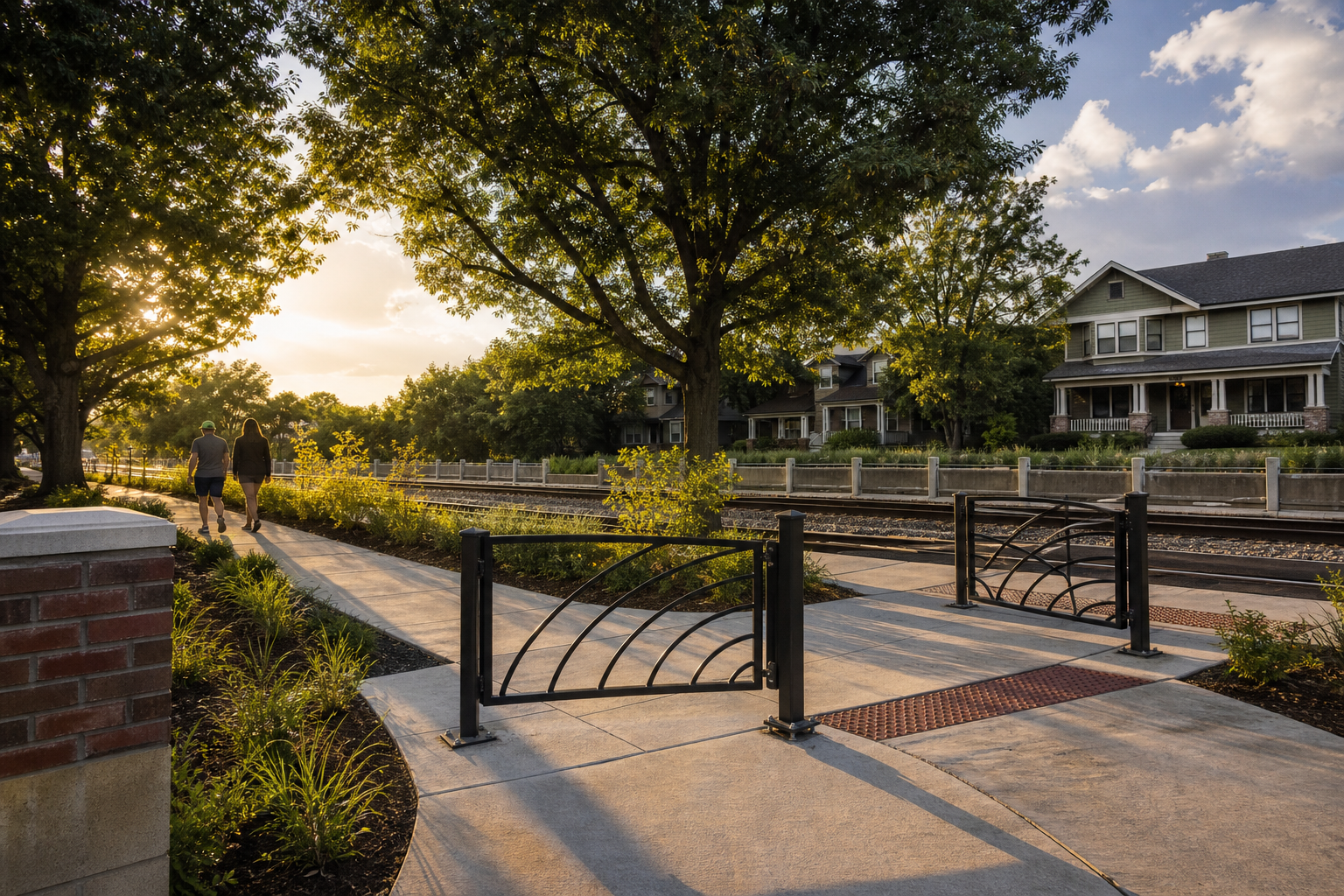
That’s exactly what makes the Riverside Drive TRE crossing upgrade worth your attention. This isn’t a headline-grabbing highway expansion. It’s a $720,000 safety improvement project focused on making a critical rail crossing safer and more functional for pedestrians, cyclists, and drivers. Construction includes pedestrian swing gates, new medians, sidewalks, curb ramps, updated signage, and dedicated pedestrian crossings. Work is expected to continue through December or early January, weather permitting.
What we tell our clients at Unlocking DFW is simple: the home itself matters, but so does everything happening around it. And right now, what’s happening around Riverside Drive tells a compelling story about Fort Worth’s real estate priorities.
What the Riverside Drive TRE Crossing Upgrade Actually Includes in Fort Worth
You might be wondering what $720,000 buys at a rail crossing. Here’s the breakdown of what’s being built:
- Pedestrian swing gates at the TRE crossing point
- New medians to improve traffic separation and safety
- Sidewalks and curb ramps for ADA-compliant pedestrian access
- Updated signage and road striping for improved visibility
- Dedicated pedestrian crossings separated from vehicle traffic
The Trinity Railway Express connects Fort Worth and Dallas across 34 miles, serving thousands of weekday riders. At-grade crossings like Riverside Drive create friction points where trains, cars, and pedestrians converge. Every improvement at these intersections reduces wait times, lowers accident risk, and makes the surrounding area more walkable.
And here’s the part most people miss: this project isn’t happening in isolation. Another safety improvement project is already planned at the nearby North Beach Street crossing. When you see a city investing in back-to-back transit corridor upgrades, that’s a pattern, not a coincidence.
One relocating buyer we worked with last year was evaluating neighborhoods near the TRE corridor specifically because she was commuting to the CentrePort/DFW Airport station three days a week. When she learned about the Riverside Drive improvements and the planned North Beach Street project, it confirmed what she’d been sensing about the area’s trajectory. She ended up purchasing a renovated craftsman in the Near Southside for $340,000 and has been thrilled with how easy the commute turned out to be.
How Fort Worth Infrastructure Projects Can Affect Neighborhood Appeal
We want to be straightforward here because we think honesty builds better client relationships. Having closed 148 transactions across the DFW market over the past 6 years, we’ve seen firsthand how infrastructure projects interact with home values, and the relationship is more nuanced than most headlines suggest.
An individual infrastructure project does not automatically increase nearby property values. That’s an important distinction. What continued investment in roads, transit, and pedestrian infrastructure *can* do is contribute to a community’s overall functionality and appeal. Over time, those improvements make neighborhoods more attractive to buyers, which supports demand.
What Buyers Should Evaluate Near Fort Worth Transit Corridors
When you’re looking at homes near a transit improvement zone like Riverside Drive, consider these factors:
- Current walkability: West 7th and Downtown Fort Worth have the city’s best walkability scores, and the Near Southside corridor along Magnolia Avenue competes directly for that title
- Commute options: Can you walk, bike, or drive to the nearest TRE station? The Riverside Drive upgrade makes all three safer
- Neighborhood trajectory: Are there other investments happening nearby? In this case, the answer is yes
- Price relative to improvements: Fort Worth’s citywide median sits at approximately $338,000, well below the DFW metro median of $415,000
What does that actually mean for your decision? It means Fort Worth already offers one of the most accessible entry points in the entire Metroplex, and the areas benefiting from transit investment give you both affordability and upside potential.
Fort Worth Neighborhoods Near the TRE Corridor Worth Exploring
If the Riverside Drive upgrade has you curious about the surrounding neighborhoods, here’s where we’d point you first.
Near Southside and Fairmount
This is one of Fort Worth’s most walkable and character-rich neighborhoods. Magnolia Avenue serves as the spine, lined with spots like Fixture (craft cocktails with a shaded back patio) and Tulips Fort Worth (a live-music venue you hear before you see on weekend nights). Renovated bungalows and craftsman-style homes here run in the $295,000 to $380,000 range, with original unrenovated homes sometimes dipping below $270,000.
The Riverside Drive TRE crossing is just minutes from this neighborhood, which means the safety improvements directly benefit residents here. Schools in the zone include Overton Park Elementary and Tanglewood Elementary, both of which earned an A rating from the Texas Education Agency in 2025.
A couple we helped last spring had relocated from Portland and was drawn to Near Southside specifically because it reminded them of their old neighborhood’s walkability and local business scene. They bought a 1920s bungalow on a tree-lined street near South Henderson for $315,000 and walk to Magnolia Avenue almost every weekend. Their biggest surprise? How much more house they got compared to what they left behind.
Arlington Heights
Just west of downtown, Arlington Heights offers proximity to the Fort Worth Cultural District (home to the Kimbell Art Museum, the Modern Art Museum, and the Amon Carter Museum of American Art). Camp Bowie Boulevard anchors the neighborhood’s dining scene, with Heim Barbecue drawing lines for its beef rib and bacon burnt ends. The area’s mature tree canopy along Roaring Springs Road is genuinely stunning. Homes here tend to price slightly above the city median, but the TRE corridor access and cultural amenities justify the premium for many buyers.
What Fort Worth Sellers Should Know About Marketing Near Infrastructure Improvements
If you’re selling a home near the Riverside Drive corridor or any TRE-adjacent neighborhood in Fort Worth, this upgrade gives you a talking point. Not an inflated price justification, but legitimate context about your neighborhood’s direction.
Fort Worth homes are currently selling at 97.99% of asking price, with 47 days on market and a 3.4-month supply of inventory. That’s a balanced market where smart positioning matters more than ever.
Here’s what we’d recommend as a REALTOR® who has been recognized by D Magazine as a Best Real Estate Agent since 2020: highlight infrastructure investment as *part* of the story, not the whole story. Buyers are evaluating neighborhoods holistically. When they see a new TRE crossing upgrade, an active sidewalk and pedestrian improvement program, and a broader rail safety investment plan (including the upcoming North Beach Street project), it paints a picture of a community that’s growing with intention.
The Greater Fort Worth Association of REALTORS® noted that across Tarrant County, the median home price held steady at $348,000 as active listings increased 3.7% annually. In a market with rising inventory, neighborhood differentiation becomes your competitive advantage.
How Relocating Buyers Should Evaluate Fort Worth’s Transit and Infrastructure
If you’re moving to Fort Worth from out of state, you’re probably comparing it to the city you’re leaving. Here’s the context that matters.
Dallas-Fort Worth is the fourth-largest metro in the country with a population approaching 9 million. The region added more than 203,000 residents in 2025 alone. According to CBRE analysis, Dallas ranked number one nationally for corporate headquarters relocations from 2018 to 2024, attracting 100 new corporate headquarters.
Fort Worth specifically sits at the center of what’s being called the “Westoplex,” an emerging growth frontier gaining momentum because eastern DFW counties have become constrained by limited land and rising development costs.
For your commute evaluation, the TRE line connects Fort Worth’s T&P Station downtown to Dallas Union Station, with stops at CentrePort/DFW Airport, Richland Hills, and other key stations. The Riverside Drive crossing upgrade and planned North Beach Street improvements are making this transit corridor safer and more user-friendly, which matters if you’re planning to ride the TRE regularly.
With 84 five-star reviews from past clients and a Real Estate Negotiation Expert (RENE) certification, we’ve guided dozens of relocation buyers through exactly this evaluation process. The question isn’t just “which house?” but “which commute, which neighborhood trajectory, which community investment pattern?”
Frequently Asked Questions About the Fort Worth TRE Crossing Upgrade
What exactly is being built at the TRE crossing on Riverside Drive in Fort Worth?
The project includes pedestrian swing gates, new medians, sidewalks, curb ramps, signage, road striping, and dedicated pedestrian crossings. The total investment is $720,000, and construction is expected to continue through December or early January, weather permitting. It’s specifically a safety improvement project at the point where the Trinity Railway Express rail line crosses Riverside Drive.
Will the Riverside Drive upgrade increase Fort Worth home values nearby?
We wouldn’t make that claim directly. An individual infrastructure project doesn’t automatically increase property values. However, continued investment in transit, roads, and pedestrian infrastructure can contribute to a neighborhood’s overall functionality and appeal, which supports buyer demand over time. Context and patterns matter more than any single project.
What is the Trinity Railway Express and why does it matter for Fort Worth homebuyers?
The TRE is a commuter rail line spanning 34 miles between Fort Worth’s T&P Station and Dallas Union Station, with stops including CentrePort/DFW Airport. It serves thousands of weekday riders and is a critical commute option for anyone working between the two cities. Improvements to its crossings make surrounding neighborhoods more accessible.
How long will the Riverside Drive construction take in Fort Worth?
Construction is expected to continue through December or early January, weather permitting. During this period, you may experience temporary lane adjustments or crossing modifications near the Riverside Drive intersection. A follow-up project at North Beach Street is also planned.
What neighborhoods in Fort Worth are closest to the Riverside Drive TRE crossing?
The Near Southside and Fairmount neighborhoods are among the closest, with Magnolia Avenue just minutes away. These areas offer renovated bungalows and craftsman homes in the $295,000 to $380,000 range, strong walkability, and proximity to downtown Fort Worth.
Is Fort Worth a good place to buy a home in 2026?
Fort Worth’s median home price of approximately $338,000 sits well below the DFW metro median of $415,000, making it one of the most accessible entry points in the region. With a 3.4-month inventory supply and homes selling at nearly 98% of asking price, conditions are balanced for both buyers and sellers.
Are there other infrastructure projects planned near the Fort Worth TRE corridor?
Yes. Beyond the Riverside Drive crossing upgrade, another safety improvement project is planned at the nearby North Beach Street crossing. These back-to-back investments signal a broader commitment to improving the TRE corridor’s safety and accessibility throughout Fort Worth.
How fast is Fort Worth growing compared to other Texas cities?
Fort Worth is currently the fastest-growing large city in Texas, growing at more than three times Austin’s rate. The city added 19,512 residents between 2024 and 2025, the second-largest numeric increase of any U.S. city, and has crossed the 1 million resident mark.
What schools are rated highest near Fort Worth’s TRE corridor neighborhoods?
In the Near Southside area, Overton Park Elementary and Tanglewood Elementary each earned an A rating from the Texas Education Agency’s 2025 accountability ratings. For high school, Young Women’s Leadership Academy and Texas Academy of Biomedical Sciences also maintained A ratings.
When is the best time to buy a home in Fort Worth?
Data suggests August through December is typically the best time to buy in Fort Worth, when supply is high and demand tends to soften. However, spring listings in walkable neighborhoods like Near Southside move fastest as buyers rush to settle before summer.
The Bottom Line on Fort Worth’s Riverside Drive TRE Upgrade
The $720,000 TRE crossing upgrade on Riverside Drive isn’t going to transform Fort Worth’s real estate market overnight, and anyone who tells you otherwise is overselling it. What it does represent is exactly the kind of intentional, community-focused infrastructure investment that makes neighborhoods more livable, more connected, and more appealing over time. Paired with the planned North Beach Street project, it signals that Fort Worth is serious about keeping its transit corridors functional as the city grows past 1 million residents.
If you’re buying, selling, or relocating to Fort Worth and want to understand how projects like this fit into your real estate decision, we’d love to help you think it through. At Unlocking DFW Realty, we’ve built our reputation on giving clients the education and context they need to make confident decisions. Reach out to us at 214-509-8094 or visit our team to start the conversation. Whether you’re evaluating your first Fort Worth neighborhood or preparing to list near the TRE corridor, we’re here to help you make it happen.

Leave a Reply