

How are corporate relocations, wealth migration, and economic expansion changing the Dallas housing market for homeowners thinking about selling?
Corporate growth and incoming wealth are creating a deep, cash-capable buyer pool for established Dallas neighborhoods, but today’s market also rewards pricing discipline, meaning your selling strategy matters more than ever.
Why This Matters Right Now in Dallas
If you’re a homeowner in Dallas who has been watching the news about corporate headquarters moving to North Texas, you’re probably wondering what all that activity means for your home’s value. Here’s the short version: it means a lot, but not in the way you might expect.
For the third consecutive year, Dallas-Fort Worth earned the number one spot on PwC and ULI’s Emerging Trends in Real Estate 2027 Markets to Watch list, as of October 2026. That ranking comes from nearly 1,500 investors, developers, lenders, and advisors, and it describes DFW’s growth as “broad-based and increasingly self-reinforcing.”
What we see on the ground confirms that assessment. In our experience, the growth of Dallas’s financial services sector — often called “Y’all Street” — is bringing executive-level households into established neighborhoods like Lakewood, Preston Hollow, and the Park Cities. For homeowners considering a downsize or a next chapter, that incoming buyer pool is real. But so is a more selective market. Let’s walk through what that means for you.
Who Is Actually Buying Homes in Dallas Right Now?
You might assume corporate relocations only matter at the very top of the market. That’s not the full picture. The ripple effect touches multiple price points across Dallas.
Executive Households and Cash Buyers
According to the 2026 Texas Homebuyers and Sellers Report, cash sales reached a record high of 30% of all Texas home sales. High-net-worth buyers relocating for corporate or financial-sector roles are among those more likely to transact without financing, though the 30% cash-sales figure reflects all Texas buyers and does not isolate any one group. In a market where higher rates have made financing-dependent buyers more cautious, cash-capable purchasers have a meaningful advantage.
Local Move-Up Buyers
Corporate expansion doesn’t only attract out-of-state talent. In our experience, local families whose incomes have grown alongside Dallas’s economy are also purchasing larger or more expensive homes. In some cases, family financial support is helping younger generations enter the housing market, creating movement across multiple price tiers.
The Luxury Segment Tells Its Own Story
From November 2024 through October 2025 — the most recent period available at time of writing — the DFW-Arlington area accounted for 38% of all Texas million-dollar-plus home sales, per Texas REALTORS data on luxury home sales. That’s 5,485 homes worth a combined $9.7 billion. The median closing price for those luxury homes was $1,421,560, the highest of any major Texas metro.
So who is competing for your home if you decide to sell? Potentially, a well-funded buyer who relocated for a corporate role, a local family moving up, or an investor attracted by Dallas’s long-term fundamentals. That’s a diverse and motivated pool.
What Dallas’s Two-Speed Market Means for Your Pricing Strategy
Here’s where we need to have an honest conversation. Dallas is operating as what many industry observers describe as a two-speed market. The luxury real estate market in Dallas remains active, while the broader market is more selective than it has been in years.
According to MetroTex data cited in a November 2026 brokerage press release, DFW September 2026 closed sales declined roughly 6.6% year over year. Statewide, homes sat on the market an average of 80 days in Q1 2026, per Texas REALTORS data on market timing, six days longer than the same period the prior year. Active listings across Texas rose 7.4% year over year during that same quarter.
What does that actually mean for you if you’re considering listing your home? It means buyers have more options, more time, and more negotiating leverage than at any point since the pandemic-era frenzy.
The 2026 Texas Homebuyers and Sellers Report found that 74% of Texas sellers reduced their asking price two or more times before the sale. That’s a 53-percentage-point increase from the prior year. An additional 18% reduced once. If you’re anchoring your expectations to what your neighbor’s home sold for in 2021 or 2022, you’ll likely need to recalibrate.
The good news? Well-priced homes are still selling. Million-dollar-plus homes in the Dallas MSA closed at 93% of their original list price during the November 2024 through October 2025 period — the most recent available at time of writing — according to Texas REALTORS.
Why Dallas’s Long-Term Fundamentals Still Favor Sellers in Established Neighborhoods
You may be thinking: if the broader market is softer, should I wait? That’s a reasonable question, and it depends on your goals. But consider the structural forces working in your favor.
Corporate Relocations Are Not a One-Year Trend
Sun Belt markets, led by Dallas-Fort Worth, dominate the PwC/ULI 2027 outlook, reflecting continued migration and investment flows into North Texas. The PwC/ULI report’s language about DFW’s growth being “increasingly self-reinforcing” is worth pausing on. When corporate headquarters move here, their employees follow. Those employees need housing, schools, restaurants, and community.
Your Home Is What Relocating Executives Want
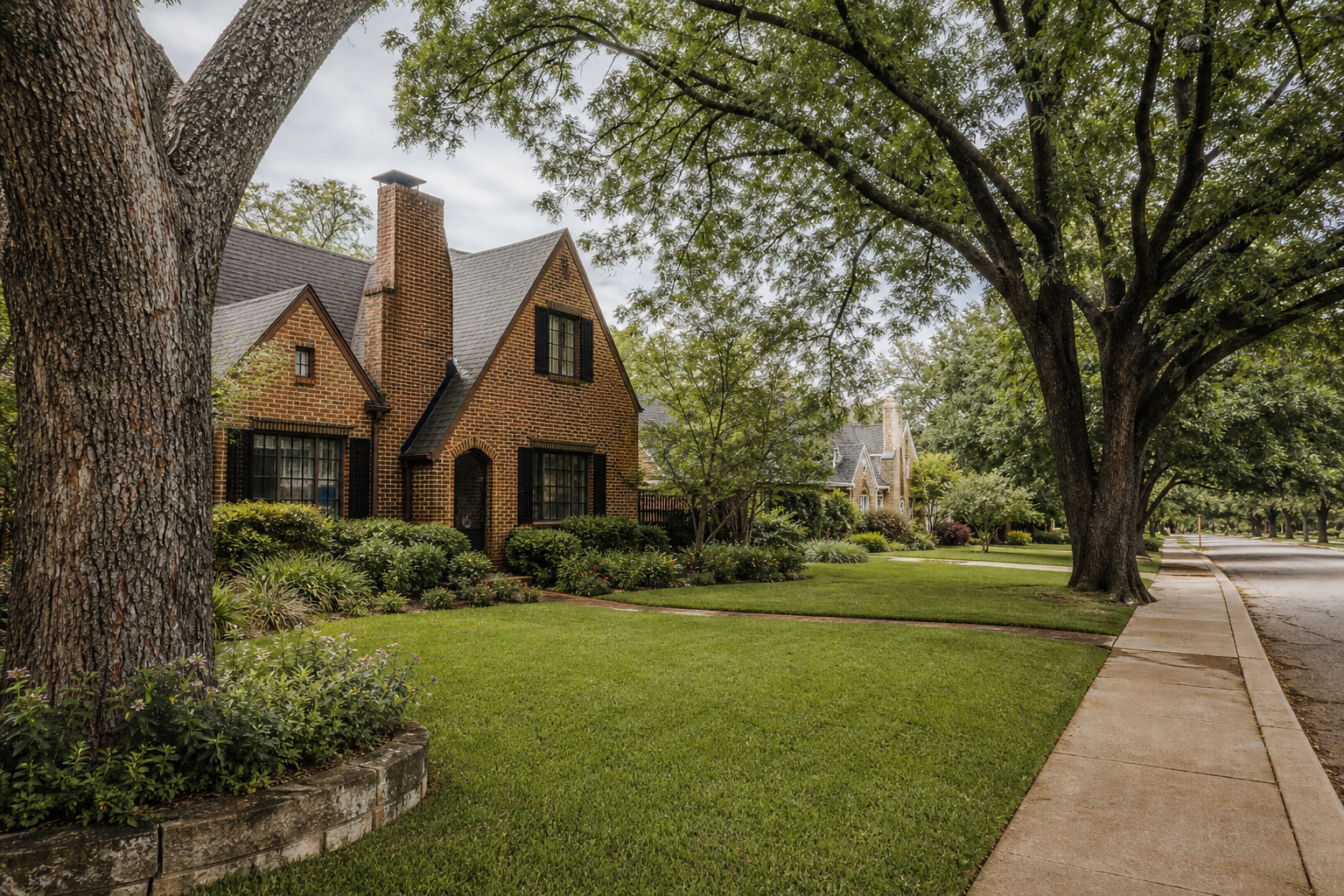
In our experience working with buyers relocating to Dallas, incoming executive households often gravitate toward established neighborhoods with mature trees, walkability, and character. Areas like Lakewood real estate, Preston Hollow, and East Dallas have exactly those qualities. If you’re a 55-plus homeowner in one of these areas, your home may be precisely what a relocating family is searching for.
You’re Likely a Cash-Capable Buyer Yourself
Here’s something many downsizers overlook: when you sell a fully paid-off or heavily equitied home, you become a cash buyer for your next purchase. In a market where 30% of transactions are already cash, per the 2026 Texas Homebuyers and Sellers Report, that positions you as one of the strongest buyers in whatever market you enter next, whether that’s a condo in Uptown, a low-maintenance home in Richardson or Plano, or something outside the metro entirely.
How to Position Your Dallas Home for Today’s Relocating Buyers
Knowing that corporate-driven buyers are active is helpful. Knowing how to appeal to them is what actually gets your home sold at the right price.
Price for the Market You’re In, Not the One You Remember
As Texas REALTORS Chairman Jennifer Wauhob observed, “The real estate market can look very different depending on the city or even the neighborhood you’re standing in.” Current comparable sales, not peak pandemic prices, need to anchor your listing strategy. A well-priced home attracts serious interest. An overpriced one sits, and sitting erodes perceived value.
Understand What Relocating Buyers Prioritize
What we consistently hear from relocating buyers is that they want move-in readiness, strong school proximity, and neighborhood character. They’re often making decisions quickly, sometimes sight-unseen on a first visit, and they respond to homes that feel complete and cared for. If you’re preparing to list, focus on the basics: fresh paint, clean landscaping, and well-maintained systems.
Leverage the Timing of Corporate Hiring Cycles
Many corporate relocations happen on a fiscal-year calendar. If you’re flexible on timing, listing when corporate hiring cycles create the most relocation activity can help you tap into an eager buyer pool. In our market, we often see relocating buyers intensify their searches in Q1 and early Q2, aligning with new-year job starts and corporate onboarding schedules.
What 55-Plus Sellers in Dallas Should Know Before Listing
Downsizing is more than a financial decision. It’s a lifestyle decision. But the financial piece matters, and the current Dallas real estate market dynamics give you some genuine advantages if you approach the process strategically.
- Your equity is real, even if it has moderated. The statewide Texas median home price in Q1 2026 was $328,000, per Texas REALTORS, down 0.8% year over year. That slight softening does not erase years of appreciation.
- Inventory is higher, which helps you as a buyer. Statewide months of inventory reached approximately 5 months in Q1 2026, per Texas REALTORS. More choices mean better negotiating position when you’re shopping for your next home.
- Tax considerations deserve professional guidance. If you’ve owned your home for decades, capital gains exclusions and property tax implications can be significant. We always recommend consulting a tax professional before listing.
- Your neighborhood’s reputation is a selling point. Established Dallas neighborhoods carry weight with relocating buyers who are researching from out of state. The name recognition of your area can be a genuine competitive advantage.
Frequently Asked Questions
Is the Dallas housing market still strong in 2026?
Dallas-Fort Worth ranked number one on the PwC/ULI Emerging Trends in Real Estate 2027 Markets to Watch list for the third consecutive year, as of October 2026. The broader market is more selective than during the pandemic frenzy, with longer days on market and more price reductions statewide. However, structural demand from corporate growth and wealth migration continues to support the market’s long-term outlook.
How are corporate relocations affecting Dallas home prices?
Corporate relocations bring executive-level households who are often cash-capable buyers. The DFW luxury segment remains particularly active, with 5,485 homes sold above $1 million in the November 2024 through October 2025 period — the most recent available at time of writing — per Texas REALTORS data released in January 2026. This demand supports pricing in established neighborhoods, though the broader market requires realistic pricing.
What is “Y’all Street” and why does it matter for Dallas real estate?
“Y’all Street” refers to the growth of Dallas’s financial services sector as firms relocate or expand operations in North Texas. In our experience, this trend brings well-compensated professionals into the area who need housing, particularly in established neighborhoods with character and proximity to business centers.
Should I sell my Dallas home now or wait?
The answer depends on your personal goals, but consider this: you currently have an active buyer pool driven by corporate relocations, and you’re likely a strong cash buyer for your next home. Waiting introduces uncertainty around interest rates and inventory levels. What we tell our clients is that the best time to sell is when it aligns with your life plan, not when you’re trying to time the market perfectly.
How much are luxury homes selling for in Dallas?
The median closing price for million-dollar-plus homes in DFW-Arlington was $1,421,560 during the November 2024 through October 2025 period — the most recent available at time of writing — per Texas REALTORS data released in January 2026. Those homes closed at 93% of their original list price in the Dallas MSA — whether from buyer offers, seller price adjustments along the way, or both — suggesting that well-priced luxury homes are still transacting.
Are cash buyers common in the Dallas market?
Yes. Cash sales reached a record high of 30% of all Texas home sales, according to the 2026 Texas Homebuyers and Sellers Report. In our experience, cash-capable buyers are active in Dallas — though no market-wide figure for Dallas specifically was available at the time of writing.
What neighborhoods in Dallas are most popular with relocating buyers?
Established neighborhoods like Lakewood, Preston Hollow, the Park Cities, and East Dallas neighborhoods consistently attract relocating professionals. These areas offer the mature trees, walkability, and neighborhood character that out-of-state buyers research and prioritize.
How long does it take to sell a home in Dallas right now?
Statewide, Texas homes averaged 80 days on market in Q1 2026, per Texas REALTORS, which was six days longer than the same period in 2025. Well-priced homes in desirable Dallas neighborhoods may move faster, but accurate pricing is the most important factor in controlling your timeline.
Why are so many Texas sellers reducing their asking price?
The 2026 Texas Homebuyers and Sellers Report found that 74% of Texas sellers reduced their asking price two or more times before selling. Buyers have more inventory to choose from, and sellers are adjusting prices to meet the market — whether through negotiation, proactive reductions, or both. Pricing based on current comparable sales rather than peak-market expectations is essential.
Is downsizing a good financial move in Dallas right now?
For many 55-plus homeowners, downsizing allows you to unlock significant equity while repositioning as a cash buyer. With approximately 5 months of statewide inventory in Q1 2026 per Texas REALTORS, you’ll have more choices and negotiating power on your next purchase than you would have had during the pandemic-era market.
The Bottom Line
Dallas’s real estate market in 2026 is being shaped by powerful, structural forces: corporate growth, wealth migration, and an expanding financial services sector that continues to bring well-funded buyers into North Texas. If you’re a homeowner in an established Dallas neighborhood thinking about your next chapter, you’re holding an asset that these incoming buyers genuinely want.
But the market also demands honesty about pricing and preparation. What we see rewarded is strategic pricing, well-maintained homes, and sellers who understand today’s buyer expectations.
At Unlocking DFW Realty, we help homeowners across Dallas, Plano, Richardson, Frisco, and throughout the metroplex navigate exactly these decisions. Jamie Simpson is a Real Estate Negotiation Expert, certified New Home Sales Agent, and D Magazine Best Real Estate Agent since 2020, with 84-plus Google reviews at 5.0 stars. If you’re considering a sale or downsize and want guidance grounded in real market knowledge, give us a call at 214-509-8094.

Leave a Reply