


How should homebuyers research and evaluate a Dallas neighborhood like Deep Ellum before making a purchase decision?
You evaluate a Dallas neighborhood by reviewing official crime data over time, visiting at multiple hours, engaging with community organizations, and weighing safety alongside your personal lifestyle priorities, not by reacting to a single headline.
TLDR: When a headline shakes your confidence in a neighborhood, don’t make a snap decision. Use the Dallas Police Department’s free NIBRS Crime Dashboard and CompStat reports to review data over 12+ months, visit Deep Ellum at multiple times of day, and assess whether the neighborhood’s lifestyle profile actually matches how you live. One event — even a tragic one — is not a trend.
Why This Matters Right Now in Dallas
When news breaks about a serious incident in a neighborhood you have been considering, it is natural to feel shaken. In early November 2026, three separate shootings in the Deep Ellum entertainment district, along Elm Street, Main Street, and South Crowdus Street, occurred. The Deep Ellum Foundation expressed concern for the victims and their families and announced plans for community listening sessions, per FOX 4 Dallas-Fort Worth.
Our hearts go out to everyone affected.
For buyers researching Dallas neighborhoods, a moment like this raises urgent questions. Should you cross a neighborhood off your list? Should you wait? What we tell our clients at Unlocking DFW is this: a single event, no matter how tragic, does not define an entire community. But it does underscore why thorough, clear-eyed neighborhood research matters before you sign a contract. Let us walk through exactly how to do that.
How to Use Official Dallas Crime Data for Deep Ellum and Other Neighborhoods
If you are moving to the Dallas-Fort Worth Metroplex from out of state, you may not realize that granular, publicly available crime data exists at the neighborhood level. The Dallas Police Department publishes a daily-updated NIBRS Crime Dashboard, a Daily CompStat report, and a Weekly CompStat by Watch, all accessible through the DPD crime reports page at dallaspolice.net. These are your best starting point, and they are free.
What to Look For in the Data
Here is how to make these tools work for you:
- Use the interactive crime map with an address search. You can search specific blocks, not just citywide totals. Deep Ellum falls within DPD’s Central Division, so make sure you are filtering by the correct Division or TAAG (Target Area Action Grid) area when comparing data.
- Look at crime categories separately. NIBRS data breaks incidents into violent crime and property crime, among other categories. A neighborhood with higher property crime but low violent crime tells a very different story than the reverse.
- Review at least 12 months of data. One weekend, even a devastating one, is not a trend. DPD’s CompStat reports include year-to-date and prior-year comparison columns specifically designed for this kind of longitudinal review.
- Note that these statistics are preliminary. Per DPD’s own published disclaimer, figures may be adjusted as investigations progress. Treat them as directional, not definitive.
What does all of this mean practically? It means you should never base a major financial decision on a number you saw once. Pull the data, note the reporting period and geographic boundary, and compare it across several time frames.
Why You Need to Visit a Dallas Neighborhood at Multiple Times of Day
Data is essential, but it cannot replace what your own eyes and ears tell you. This is something we emphasize with every buyer at Unlocking DFW, especially those relocating to Dallas who may only visit once or twice before making an offer.
Deep Ellum is a vibrant arts and entertainment district. Its character at 2:00 a.m. on a holiday weekend is substantially different from how it feels on a Tuesday morning or a Sunday afternoon. That is not a flaw; it is the nature of a mixed-use urban neighborhood. But you need to experience that range firsthand.
Your Visit Checklist
When you walk or drive through Deep Ellum, or any Dallas neighborhood you are considering, pay attention to:
- Lighting and visibility on residential blocks versus entertainment corridors
- Pedestrian activity at different hours: who is walking, how busy the sidewalks are, how foot traffic changes after dark
- Noise levels, especially on weekend evenings near venues
- Parking availability and traffic flow during peak entertainment hours versus weekday commutes
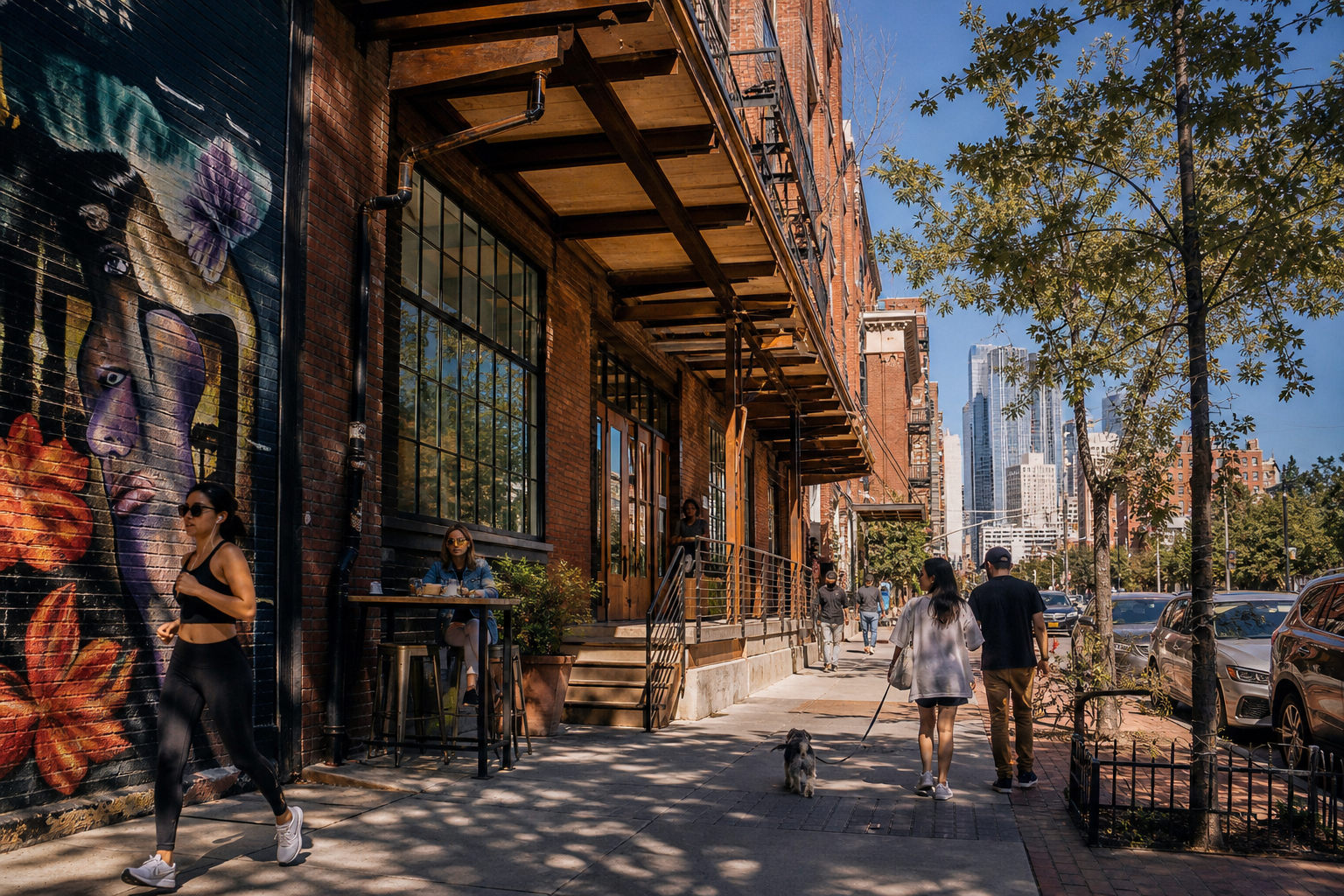
- The presence of families, dog walkers, and joggers during daytime, which signals a residential community alongside the nightlife
One thing we always recommend is visiting during the time of day you would actually be coming and going from the property. If you work from home, a Tuesday at noon matters more than a Saturday at midnight. If you work late shifts and drive home at 1:00 a.m., that late-night visit is exactly the one you need.
How to Distinguish a Single Incident from a Broader Dallas Neighborhood Trend
Headlines are written to capture attention. That is their purpose. But as a buyer, your purpose is different: you need to understand whether a neighborhood’s conditions fit your life over the long term. Here is how to separate a specific event from a pattern.
Ask the Right Questions
- Is the incident typical of the area, or is it an outlier? The November 2026 Deep Ellum shootings occurred during an unusually high-activity period (post-Halloween, late-night entertainment crowds) with police already deployed in the district, per FOX 4 Dallas-Fort Worth. That context matters.
- What do multiple years of data show? A single spike in one category during one weekend looks very different when you zoom out to a 24-month or 36-month view. DPD’s year-to-date comparisons in its CompStat reports are built for exactly this analysis.
- Are you comparing the right things? Comparing raw incident totals between a busy entertainment district and a quiet residential cul-de-sac is misleading. The geographic size, foot traffic, and commercial activity of an area all influence incident counts. Make sure you are comparing areas of similar scale and usage.
With 6 years of experience and over 148 closed transactions across the Dallas-Fort Worth Metroplex, what we see consistently is that buyers who use negotiation tactics in real estate based on clear data and local insight end up making decisions they feel confident about years later.
Evaluating Lifestyle Fit in Deep Ellum and Urban Dallas Neighborhoods
Safety data matters. But so does the question: will this neighborhood actually fit the way you live? Some buyers are drawn to walkability, restaurant density, live music, murals, and proximity to downtown employment centers. That is precisely the profile Deep Ellum offers.
Others prioritize quiet streets, school proximity, large yards, and low traffic. Neither preference is wrong, and the honest answer is that no single neighborhood serves every lifestyle equally well.
Deep Ellum: Pros and Cons for Homebuyers
Pros:
- Exceptional walkability to restaurants, bars, live music venues, and arts spaces
- An active civic organization — the Deep Ellum Foundation — representing businesses and community stakeholders
- Proximity to downtown Dallas employment centers
- A well-known Dallas entertainment and arts district
Cons:
- Elevated noise levels on weekend evenings, particularly near entertainment corridors
- Parking can be limited and competitive during peak hours
- Late-night foot traffic and bar-closing activity may not suit all households
- Property crime patterns in entertainment districts may differ from those in quieter residential neighborhoods — reviewing the DPD data for the specific area is the only way to know
Questions to Ask Yourself Before Choosing
- Do you value being able to walk to restaurants, coffee shops, and entertainment?
- How sensitive are you to noise, particularly on weekend evenings?
- What does your typical weeknight look like: do you go to bed at 9:00 p.m. or are you out until midnight?
- Do you need proximity to specific schools, parks, or childcare facilities?
- How important is parking availability at your home versus on-street?
If you are comparing Deep Ellum to adjacent communities like Old East Dallas, Bryan Place, the Baylor District, or the Farmers Market District, recognize that each of these areas may have its own character, boundaries, and housing options — verify official boundaries and current conditions before drawing direct comparisons. Before drawing comparisons, verify the official neighborhood boundaries and police reporting areas, because colloquial names and the boundaries used in real estate marketing do not always align with the geographic zones used in city data.
As a certified Real Estate Negotiation Expert and D Magazine Best Real Estate Agent since 2020, we have helped buyers navigate these exact trade-offs across East Dallas neighborhoods. The mistake we watch buyers make is evaluating a neighborhood against an abstract ideal rather than against their own actual daily routine.
How Community Organizations Signal a Neighborhood’s Strength
One of the most underappreciated research tools is simply looking at how organized a community is. Does the neighborhood have an active business improvement district? A neighborhood association? Regular community meetings?
In Deep Ellum, the Deep Ellum Foundation represents businesses and community stakeholders. Following the November 1 incidents, the Foundation expressed concern for victims and families and announced plans for community listening sessions, as reported by FOX 4 Dallas-Fort Worth. That kind of organized, transparent response is a meaningful data point. It tells you there are people paying attention and responding publicly to conditions in the district.
What to Look For in Any Dallas Neighborhood
- Active neighborhood associations that hold regular meetings and communicate with residents
- Business improvement districts that invest in lighting, cleanliness, and public space maintenance
- Relationships between community groups and local police that facilitate communication about safety concerns
- City-sponsored public safety initiatives, including lighting upgrades, pedestrian infrastructure, and nightlife management programs
When a community has these structures in place, it signals that issues get addressed, not ignored. For buyers weighing whether a neighborhood is right for them, that civic engagement matters as much as any data set.
Where to Find Reliable Dallas Neighborhood Information Beyond Headlines
Relocation buyers unfamiliar with Dallas often lean heavily on online reviews and national news coverage. But the most reliable neighborhood information comes from local, official, and primary sources.
Here is a practical research stack we recommend to our clients:
- Dallas Police Department NIBRS Crime Dashboard and CompStat reports at dallaspolice.net for crime data filtered by address, Division, or TAAG area
- City of Dallas official neighborhood and police-district boundary maps to confirm exactly which area a statistic describes
- Deep Ellum Foundation and other neighborhood organizations for community updates and planned initiatives
- In-person visits at varied times, including weekday mornings, weekend evenings, and late nights for entertainment-adjacent areas
- Your real estate agent’s local knowledge, including block-by-block insights that no database captures
With 84 five-star reviews across multiple platforms, our team at Unlocking DFW has built a reputation for giving buyers honest, balanced guidance. We do not oversell a neighborhood, and we do not scare you away from one. We help you build your own understanding so the decision is yours, made from a position of knowledge rather than anxiety.
Frequently Asked Questions About Evaluating Dallas Neighborhoods
How can I check crime statistics for a specific Dallas address?
The Dallas Police Department offers an interactive crime map on its website at dallaspolice.net that allows you to search by address. You can view incidents reported near a specific property over various time frames. Keep in mind that DPD notes these statistics are preliminary and may be adjusted as investigations progress.
What is the difference between a DPD Division and a TAAG area?
DPD organizes its reporting by Division (large geographic areas) and by TAAG areas (Target Area Action Grids), which are smaller zones used for more targeted analysis. Deep Ellum falls within the Central Division. Knowing which reporting zone your property sits in helps you pull accurate, appropriately scoped data.
Should I avoid buying near an entertainment district in Dallas?
Not necessarily. Many buyers specifically seek the walkability, dining, and cultural access that entertainment districts provide. The key is visiting the area at different times, reviewing safety data over an extended period, and honestly assessing whether the neighborhood’s activity level aligns with your daily routine and lifestyle priorities.
How far back should I look at crime data when evaluating a Dallas neighborhood?
We recommend reviewing at least 12 months of data, and ideally multiple years if the data is available. DPD’s CompStat reports include year-to-date and prior-year comparisons that make this kind of longitudinal review straightforward.
What should I look for when visiting Deep Ellum or similar neighborhoods in person?
Pay attention to lighting, pedestrian activity, noise levels, parking, and the general atmosphere. Visit during weekday daytime hours, weekend evenings, and late-night periods. Notice whether you see residents walking dogs, jogging, or otherwise using the streets as a residential community, not just as an entertainment destination.
How do I know if a neighborhood has an active community organization?
Search for the neighborhood name plus “foundation,” “neighborhood association,” or “business improvement district.” In Deep Ellum, the Deep Ellum Foundation is an active community organization that represents stakeholders and has announced community listening sessions in response to recent events.
Can a single violent incident affect property values in a Dallas neighborhood?
A single incident does not establish a neighborhood’s overall safety trajectory, and making assumptions about property value impacts based on one event is not supported by the kind of data available in this situation. If you have specific concerns about a property’s market position, work with your agent to review recent comparable sales and market conditions over a meaningful time frame.
What is the difference between violent crime and property crime in DPD data?
NIBRS data separates incidents into categories including violent crimes (such as assault and robbery) and property crimes (such as burglary and theft). A neighborhood with elevated property crime but low violent crime presents a very different risk profile than the reverse. Always look at the categories separately rather than just total incident counts.
How do official neighborhood boundaries differ from what I see on real estate listing sites?
The City of Dallas and DPD use specific geographic boundaries that may not match the boundaries shown on real estate portals or the way people colloquially refer to neighborhoods. Before citing any crime statistic for a neighborhood, confirm the official boundary so you are comparing consistent geographic areas.
Should I hire a local real estate agent to help me evaluate Dallas neighborhoods?
Yes, especially if you are relocating from out of state. A local agent with block-by-block knowledge can provide context that data alone cannot capture, from which streets flood during heavy rain to which blocks are quieter despite being near commercial corridors. That ground-level insight is one of the most valuable parts of working with someone who knows the area deeply.
The Bottom Line on Evaluating Dallas Neighborhoods Like Deep Ellum
Evaluating a neighborhood is not about finding the “perfect” place with zero risk. It is about building an informed understanding of a community so you can make a decision that fits your life, your priorities, and your comfort level.
When headlines capture attention, take a breath. Look at the official data over time. Visit the neighborhood at hours that match your actual routine. Seek out the community organizations that signal active civic engagement. And be honest with yourself about what you want your daily life to look and feel like.
At Unlocking DFW Realty, we are here to walk through this process with you. Whether you are considering Deep Ellum, Old East Dallas, Bryan Place, or anywhere across the Dallas-Fort Worth Metroplex, our team provides the local knowledge and balanced perspective that helps you move forward with confidence, not fear.
Ready to start your Deep Ellum or Dallas neighborhood search with a team that gives you straight answers? Call us at 214-509-8094, email us through our website at unlocking-dfw.com, or reach out anytime to schedule a no-pressure consultation. We are here to help you make the right move for your life — not just your timeline.

Leave a Reply