What should you research about planned development before buying a home in Frisco, TX?
Before buying in Frisco, you should verify every nearby project’s actual status, from proposal to construction to completion, using the City of Frisco’s public records, council agendas, and development agreements rather than relying on marketing materials alone.
Why Researching Frisco Development Matters Right Now
Frisco has an established track record of large-scale development activity in North Texas, and the pace of new proposals can make it difficult to separate what is real from what is aspirational. As of October 2026, the Frisco City Council was scheduled to consider a Chapter 380 economic development agreement for a proposed 250-room upscale hotel, convention space, and retail near Toyota Stadium, according to a Dallas Business Journal report dated October 19, 2026. Just weeks earlier, on October 6, 2026, the council approved a separate 9.4-acre mixed-use development anchored by a Trader Joe’s, per Community Impact reporting.
So what does all this activity mean for you as a buyer? It means the neighborhood you tour today could look and feel very different over the coming years — though some phases of the master plan extend to 2035 and 2037, so the timeline varies significantly by component. That is not necessarily a bad thing, but it is something you need to research with your eyes open. As a certified New Home Sales Agent who has closed over 148 transactions, we help buyers across DFW understand the difference between a flashy announcement and a shovel-ready project. That distinction can shape your entire home search.
How to Verify a Frisco Development Project’s Real Status
The single most important skill you can develop as a Frisco homebuyer is learning to check where a project actually stands in the approval pipeline. A proposed development is not the same as a completed neighborhood amenity, and Frisco’s own approval process illustrates exactly why.
Understanding the Development Pipeline
Every major project in Frisco moves through distinct stages, and you should know which stage you are looking at:
- Proposed: A developer or entity has presented a concept. No formal city approval exists yet.
- Incentive agreement under consideration: The City Council is reviewing terms, such as a Chapter 380 economic development agreement, but has not voted.
- Approved by council: The agreement has been authorized, but construction may not have started.
- Under construction: Permits have been issued and work is physically underway.
- Completed and operational: The project is open and serving the community.
The proposed hotel near Toyota Stadium is a perfect example. As of October 19, 2026, the agreement between the City and D96 Hotel & CC LLC was scheduled for a council vote on October 20, 2026, according to the Dallas Business Journal. The vote outcome should be confirmed through the City of Frisco’s posted action summaries before treating the project as approved.
What we always tell our buyers is this: check the city’s records yourself. The agenda portal at friscotexas.gov publishes supporting documents, including memoranda and agreement drafts, so you can read the actual terms rather than relying on secondhand summaries.
Where to Find Frisco Development Records and Council Decisions
You do not need special access or insider knowledge to research Frisco development projects. The city makes this information publicly available, and knowing where to look gives you a significant advantage.
Your Frisco Research Checklist
- City Council agendas and action summaries: The City of Frisco posts these for every regular Tuesday meeting.
- Frisco agenda portal: This is where you will find detailed supporting documents for agenda items, including development agreement drafts and staff memoranda.
- Frisco Economic Development Corporation and Community Development Corporation pages: These track incentive agreements, performance timelines, and public investment commitments.
- Planning and Zoning Commission records: For zoning applications and land-use changes that precede construction.
- In-person attendance: Frisco City Council and Planning and Zoning Commission meetings are held at the George A. Purefoy Municipal Center, located at 6101 Frisco Square Blvd. You can attend public meetings or review posted agendas in person.
With over 84 five-star reviews from past clients, we have built our reputation at Unlocking DFW Realty on exactly this kind of thorough neighborhood research. We encourage every buyer to treat these public resources as essential tools, not optional extras.
How to Read Frisco’s Public Incentive Agreements as a Homebuyer
When you hear that a city is offering “incentives” for a development, it is natural to wonder what that means for your tax dollars and your neighborhood. But public incentives and private investment are different categories, and understanding that distinction helps you evaluate projects more clearly.
Breaking Down the Toyota Stadium Campus Example
The proposed hotel incentive near Toyota Stadium provides a useful illustration:
- Proposed city hotel-tax incentive: The developer would receive 50 percent of the city hotel occupancy tax collected by the new hotel, for up to 10 years or until payments total $5 million, whichever comes first, according to the Dallas Business Journal report dated October 19, 2026.
- Development fee waiver: The proposal includes waiving 50 percent of certain development fees for the buildings covered by the agreement.
- State incentives: Local approval would allow the project to apply for potential state incentives under the qualified hotel project program. State eligibility and approval are separate steps.
- Private investment: The broader Toyota Stadium campus envisions more than $1 billion in anticipated private investment across all phases, according to a September 2024 announcement from the City of Frisco.
These are not interchangeable numbers. The $5 million cap on hotel-tax rebates is a separate financial commitment from the stadium renovation’s $182 million in approved public funding (per the City of Frisco, as of September 2024), which is itself funded through Frisco Community Development Corporation sales-tax revenue bonds and a tax increment reinvestment zone.
Why does this matter to you? Because when someone tells you “a billion dollars is being invested near your future home,” you need to understand which dollars are public, which are private, and which are still proposed. That level of clarity helps you make a grounded buying decision rather than an emotional one.
What Frisco’s Multi-Phase Development Plans Mean for Your Timeline
One of the most common mistakes we see buyers make is treating a mixed-use master plan as a single project with a single completion date. In reality, these plans unfold over years or even decades, and each phase has its own approval requirements.
The Toyota Stadium Campus Phasing
The September 2024 Master Development Agreement approved by Frisco City Council, per city documents, established distinct deadlines:
- Stadium capital improvements: Required completion by December 31, 2028
- Phase 1A: Required completion by December 31, 2035
- Phase 1B: Required completion by December 31, 2037
- Stadium lease extension: Through December 31, 2057
The Hunt family is responsible for up to $65 million plus any cost overruns above $182 million, per the same September 2024 city presentation. These are contractual figures from the agreement, and buyers should verify whether any amendments have changed these terms since then.
What does this mean practically? If you buy a home near the Toyota Stadium campus today expecting a full mixed-use entertainment district, you should understand that some components may not be completed for a decade or more. Others may never materialize if market conditions change. As a Real Estate Negotiation Expert (RENE) and a D Magazine Best Real Estate Agent since 2020, we have guided many buyers through exactly this kind of timeline analysis. The question is not just “What is planned?” but “What will be finished while I live here?”
Evaluating Lifestyle Trade-Offs Near Frisco’s Entertainment Districts
Proximity to a sports and entertainment venue is appealing to many buyers, but it also comes with practical considerations that deserve honest evaluation.
The Benefits and Realities of Stadium-Area Living
Toyota Stadium, located south of US 380, east of Dallas North Tollway, west of Preston Road, and north of Eldorado Parkway, has hosted FC Dallas home matches, NCAA and high school football, concerts, and international competitions since opening in 2005, according to the City of Frisco. It also houses the National Soccer Hall of Fame.
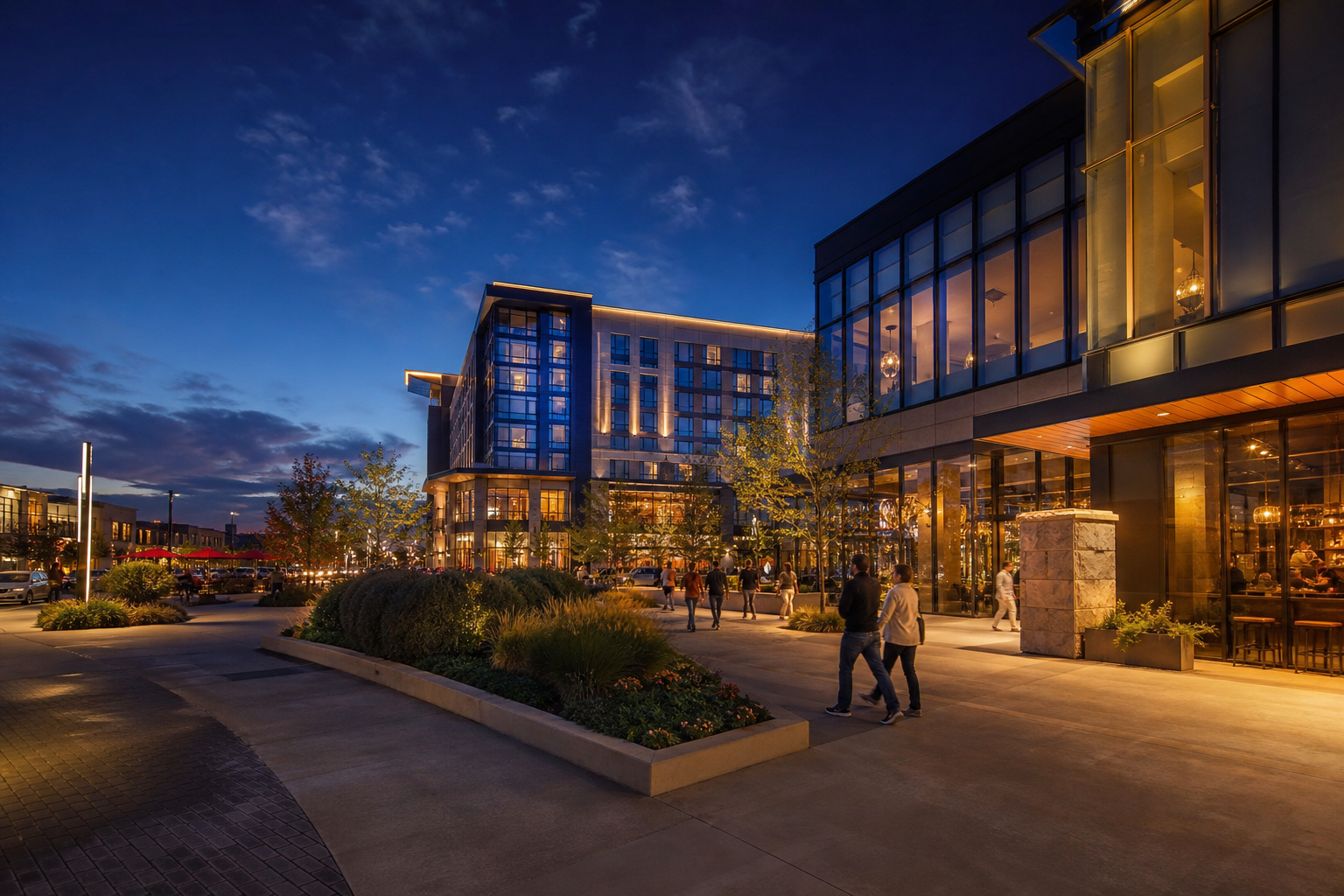
The proposed addition of a 250-room hotel, approximately 15,000 square feet of meeting space, and roughly 30,000 square feet of retail and restaurant space would add walkable dining and entertainment options. That sounds great on paper. But here is what you should also consider:
- Event traffic: The City of Frisco’s own FAQ notes that event traffic for large venues is typically concentrated at specific times of day, with peak arrival patterns that vary by event type.
- Renovation disruptions: The ongoing Toyota Stadium renovation has affected the stadium’s event schedule during the construction period.
- Parking and noise: Large events bring concentrated parking demand and crowd noise during specific windows.
None of these are dealbreakers for every buyer, but they are factors you should weigh against the convenience of nearby restaurants, entertainment, and community events. We recommend visiting the area during an FC Dallas home match or a concert to experience what game-day traffic actually feels like before you commit.
Why Announced Development Does Not Guarantee Higher Frisco Home Values
This is one of the most important points we can make: a growing commercial district does not automatically mean your home’s value will rise. Nearby housing values depend on multiple factors, including property characteristics, supply and demand, overall market conditions, accessibility, and buyer preferences.
The announcement of a major mixed-use development is exciting news for a community, but excitement and measurable resale impact are different things. Any claim about property values requires current comparable sales data, not development press releases. We do not have current Frisco MLS data to cite in this piece, and we would rather give you honest guidance than invented numbers.
What we recommend instead is focusing on the fundamentals: Does the home meet your needs today? Is the school district the right fit? Can you comfortably afford the monthly payment? And if the development materializes as planned, is it something that enhances your daily life or creates friction? Those are the questions that protect you regardless of what happens with any single project.
Frequently Asked Questions
What is currently planned around Toyota Stadium in Frisco?
As of October 2026, the Toyota Stadium campus has a multi-phase master plan that envisions more than $1 billion in anticipated private investment across all phases, according to a September 2024 City of Frisco announcement. The most recent proposal involves a 250-room hotel, convention space, retail, and a parking structure. The broader plan includes hospitality, residential, retail, office, and entertainment components to be developed over many years.
Has Frisco approved the new hotel incentive agreement near Toyota Stadium?
As of October 19, 2026, the Chapter 380 economic development agreement for the D96 Hotel & CC LLC project was scheduled for Frisco City Council consideration on October 20, 2026, per the Dallas Business Journal. The vote outcome was unconfirmed at the time of this writing. You can check the City of Frisco’s posted action summaries on its website to verify the outcome.
How do Chapter 380 economic development agreements work in Frisco?
Chapter 380 agreements are tools Texas municipalities can use to offer incentives for private development. In this case, the proposed terms include 50 percent of the city hotel occupancy tax collected by the new hotel, capped at $5 million over 10 years. These are negotiated terms specific to each agreement, not blanket policies.
Where can I find Frisco City Council development updates?
The City of Frisco posts council agendas, meeting packets, and action summaries on its website. The agenda portal publishes supporting documents, including staff memoranda and agreement drafts. You can also attend meetings in person at the George A. Purefoy Municipal Center at 6101 Frisco Square Blvd.
What should buyers consider when living near a sports stadium in Frisco?
You should evaluate event-day traffic patterns, parking demand, and noise during events. The City of Frisco notes that traffic for large venues is typically concentrated at specific times, with patterns varying by event type. Visit the area during an event to experience conditions firsthand before making an offer.
Can mixed-use development near Toyota Stadium affect nearby home values?
There is no automatic connection between a development announcement and home-price increases. Property values depend on comparable sales, supply and demand, property characteristics, and broader market conditions. Any claim about value effects requires current market data, not projections based on development plans alone.
What is the difference between public incentives and private investment in Frisco?
Public incentives, such as the proposed $5 million hotel-tax rebate cap, are city commitments tied to specific conditions. Private investment refers to the developer’s own capital. The broader Toyota Stadium campus envisions more than $1 billion in anticipated private investment, per the City of Frisco, which is a separate figure from any public incentive.
How do I check the status of a specific development project in Frisco?
Start with the City of Frisco’s council agenda portal for development agreement details, then check the Economic Development Corporation and Community Development Corporation pages for incentive timelines. For zoning changes, review Planning and Zoning Commission records. These are all publicly available.
What phases are included in the Toyota Stadium campus development?
The September 2024 Master Development Agreement, per city documents, established stadium capital improvements due by December 31, 2028, Phase 1A by December 31, 2035, and Phase 1B by December 31, 2037. The stadium lease extends through December 31, 2057. Buyers should confirm whether any amendments have been made since then.
Should I wait to buy in Frisco until development projects are completed?
That depends entirely on your timeline, budget, and priorities. In many cases, waiting for a project that may take a decade to finish means missing out on a home that meets your needs today. We recommend evaluating the home on its current merits and treating planned development as a potential bonus, not a guaranteed outcome.
The Bottom Line
Frisco’s development landscape is active, ambitious, and constantly evolving, from the Toyota Stadium campus to new mixed-use districts across the city. As a buyer, your job is not to predict which projects will succeed but to research each one thoroughly and evaluate how it fits your lifestyle and financial goals.
We have spent 6 years in DFW real estate, closed over 148 transactions, and earned recognition as a D Magazine Best Real Estate Agent and a MetroTex 40 Under 40 honoree because we believe in helping buyers make informed decisions, not emotional ones. If you are researching Frisco neighborhoods and want help separating proposals from reality, the Unlocking DFW Realty team is here for you. Reach out to us at 214-509-8094 or visit us online at unlocking-dfw.com to start your search with the kind of local expertise that makes a real difference.

Leave a Reply