


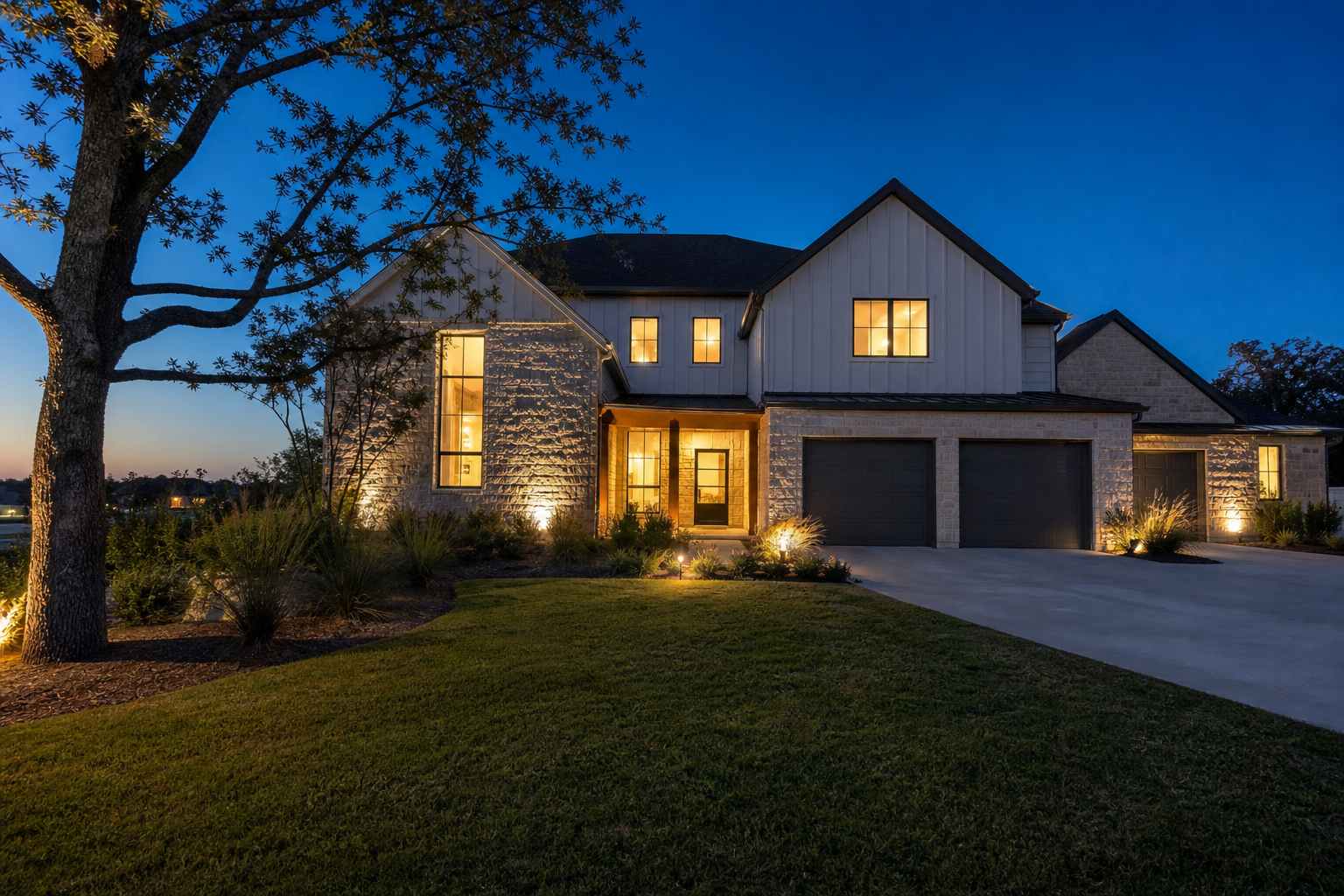
Is the Dallas-Fort Worth housing market slowing down, and what do falling pending sales really mean for buyers and sellers right now?
The DFW market is shifting, not stalling. National pending sales dropped sharply, but North Texas conditions vary by neighborhood, and that difference creates real opportunities for prepared buyers and sellers.
Why This Matters Right Now in Dallas-Fort Worth
If you’ve been scrolling through headlines lately, you’ve probably seen some alarming numbers. Nationally, newly pending listings declined 16.8% year over year in October 2026, according to Zillow’s data. That’s the largest annual drop since August 2023, and it got a lot of people nervous.
But here’s what we want you to understand: a national number is not a DFW number. The Dallas-Fort Worth metroplex has its own supply dynamics, its own demand drivers, and its own pace. In Q1 2026, closed sales in the Dallas metro were down less than 2% year over year, per Texas REALTORS. That’s a very different story than a 16.8% national decline.
So before you hit pause on your plans or panic about your home’s value, let’s dig into what’s actually happening in our Dallas real estate market, what it means for you, and how to make smart moves right now.
What Falling Pending Sales Actually Mean for DFW Real Estate
A pending sale is a signed contract that hasn’t closed yet. Think of it as a leading indicator, a preview of what closings might look like 30 to 60 days from now.
When pending sales fall nationally, it tells us that fewer buyers are going under contract across the country. But the national figure uses methodology that doesn’t map one-to-one onto North Texas MLS data. What we see reported through NTREIS (our local MLS) can tell a very different story than what shows up in national aggregated data.
Why the National Number Looks So Dramatic
A key factor: Mortgage rates climbed above 7% in October 2026, pushing the typical U.S. mortgage payment to an estimated $2,004 per month (assuming 20% down, excluding taxes and insurance), according to Zillow. That’s 12.8% higher than a year earlier and 4.8% higher than just September.
For context, if you’re financing $350,000 at around 7.25% on a 30-year fixed loan, your principal-and-interest payment lands at roughly $2,388 per month before Texas property taxes and insurance. At 6.00%, that same loan would be closer to $2,108. That’s approximately a $280 monthly difference, or about $3,360 per year. (These are illustrative numbers only; your lender will give you exact figures based on your credit, loan type, and down payment.)
What does this mean in practical terms? Some buyers paused. Some adjusted their budgets. But many in DFW, especially relocating buyers and cash buyers, kept moving. Cash buyers represented a meaningful share of Texas home sales in the survey period ending June 2025, per the 2026 Texas Homebuyers and Sellers Report — a portion of the market that isn’t affected by rate fluctuations at all.
How Dallas-Fort Worth Sellers Should Respond to a Shifting Market
If you’re selling homes in Dallas in Plano, Frisco, McKinney, or anywhere in the metroplex, we know what you’re thinking: “Should I wait?”
Here’s what we tell our clients. Waiting assumes the market will improve, and nobody has a crystal ball. What we do know from the data is that Texas sellers were already adjusting prices well before October’s rate spike. According to the 2026 Texas Homebuyers and Sellers Report (covering July 2024 through June 2025), 74% of Texas sellers reduced their asking price two or more times before selling, and another 18% reduced it once.
That’s 92% of sellers who made at least one price adjustment. This isn’t a sign of a crash. It’s a sign that the market rewards realistic pricing.
What Smart Sellers in DFW Are Doing Right Now
- Pricing strategically from day one. In a market where homes are averaging 80 days on market statewide (as of Q1 2026, per Texas REALTORS), overpricing costs you time, which costs you money.
- Investing in presentation. Buyers have more choices now that active listings across Texas rose 7.4% year over year in Q1 2026, according to Texas REALTORS. Your home needs to stand out.
- Understanding their local micro-market. Conditions in Richardson can look completely different from conditions in Mesquite or Fort Worth. What we consistently see is that blanket strategies don’t work when each neighborhood has its own rhythm.
The bottom line for sellers: the sky is not falling, but the days of listing high and hoping for a bidding war are behind us in most DFW neighborhoods.
What DFW Buyers Should Know Before Making a Move
Here’s the encouraging part for buyers. This shift in the market is working in your favor in several important ways.
More Inventory and More Time
Statewide, months of supply in Q1 2026 sat in roughly balanced territory, according to Texas REALTORS. Analysts at the Texas Real Estate Research Center describe that level as roughly balanced between buyers and sellers. Compare that to the frenzy of 2021 and 2022 when inventory was measured in weeks, not months. You have breathing room.
Active listings rose 7.4% year over year in Q1 2026 statewide, per Texas REALTORS. While that rate of increase has actually moderated compared to the 30%-plus gains in prior years, it still means more options on the shelf for you, across many DFW neighborhoods.
More Negotiation Power
With sellers already reducing prices — 74% reduced their asking price two or more times in the survey period ending June 2025, per the 2026 Texas Homebuyers and Sellers Report — you have leverage you haven’t had in years. Sellers are more open to covering closing costs, making repairs, or adjusting timelines.
What we tell our buyers in this market is simple: don’t wait for the “perfect” rate. Wait for the right home, negotiate hard on price, and refinance later if rates improve. The house you buy at a negotiated price today could be worth more than the house you overpay for in a future competitive market.
Why National Headlines Don’t Tell the Full DFW Story
This is probably the most important section in this entire article. We see this constantly: a national headline creates fear, and buyers or sellers in Dallas-Fort Worth make emotional decisions based on data that doesn’t reflect their neighborhood.
The nationally reported figures, like the 16.8% year-over-year drop in newly pending listings in October 2026, capture a country-wide picture that includes cooling markets in the Pacific Northwest, the Northeast, and other regions with very different economic conditions than North Texas.
DFW continues to attract relocating buyers from other states, and a cost of living that many relocating buyers find comparatively attractive. Relocating buyers coming to DFW from other states often have different affordability baselines and may be less deterred by current rates than local move-up buyers.
Does that mean every DFW neighborhood is immune? Absolutely not. Collin County can behave differently from Tarrant County in the same quarter. A condo market in Uptown Dallas has almost nothing in common with single-family homes in McKinney. That’s exactly why a neighborhood-level market analysis matters more than any national statistic.
In our experience, the mistake we watch buyers make most often is treating “the DFW market” as one monolithic thing. It isn’t. It’s dozens of micro-markets, and the one you’re shopping in might be heating up while another is cooling down.
The Rate Lock Dilemma for Move-Up Buyers in Dallas-Fort Worth
If you already own a home in DFW, you’re facing a question that doesn’t get enough honest attention: “Should I sell and give up my current low rate?”
This is real. If you locked in at 3% or 4% a few years ago, the math of taking on a new mortgage at today’s rates is uncomfortable. For illustration, that $280 per month difference between a 6.00% and 7.25% rate on a $350,000 loan adds up. But the math of staying in a home that no longer fits your life has a cost too, whether it’s the commute from Mesquite when you work in Plano, or the three-bedroom house that now needs to be a four.
What we encourage move-up buyers to consider:
- Your equity is real. If your current home has appreciated, that equity becomes a larger down payment on your next home, reducing your loan amount and your monthly payment.
- Rate buydowns exist. Sellers in this market are often willing to contribute toward buying down your rate, especially on homes that have been sitting.
- Rates are not permanent. You marry the house. You date the rate. If rates drop in 2027 or 2028, you can refinance.
The worst thing you can do is let the rate lock dilemma keep you stuck in a home that doesn’t serve your family. Run the actual numbers with a lender, not the hypothetical ones in your head.
Frequently Asked Questions
Is the DFW housing market crashing in 2026?
No. The data points to a market that is softening and rebalancing, not crashing. Dallas metro closed sales were down less than 2% year over year in Q1 2026, per Texas REALTORS. Statewide months of supply indicates a roughly balanced market. A crash would look like spiking foreclosures and collapsing prices, neither of which is happening here.
What factors coincided with the national pending-sales drop in October 2026?
The typical U.S. mortgage payment rose to an estimated $2,004 per month, 12.8% higher than a year earlier, according to Zillow’s October 2026 data. Some buyers may have paused their searches or adjusted their price ranges in response.
Are DFW home prices dropping?
Statewide, the Texas median home price in Q1 2026 saw only a modest year-over-year change, per Texas REALTORS. Prices in DFW vary significantly by neighborhood and price point. Many well-priced homes in desirable areas are still selling near or at asking price, while overpriced listings are sitting.
Should I wait to buy a home in Dallas-Fort Worth?
That depends on your financial situation and timeline, not on headlines. With more inventory, longer days on market, and sellers willing to negotiate, you have advantages now that buyers didn’t have two years ago. Waiting for lower rates could mean competing with more buyers when those rates finally arrive.
How long are homes sitting on the market in Texas right now?
Texas homes averaged 80 days on market in Q1 2026, which was 6 days longer than the same period in 2025, according to Texas REALTORS. In competitive DFW neighborhoods, well-priced homes often move faster than the statewide average. In less competitive areas, homes may sit longer.
Is now a good time to sell my home in DFW?
If your home is priced correctly and well-presented, yes. The data shows that most Texas sellers (74% reducing price two or more times in the July 2024 to June 2025 survey period, per the 2026 Texas Homebuyers and Sellers Report) needed to adjust pricing. Working with an experienced agent to price strategically from day one saves you time and nets you a better outcome.
What does “months of supply” mean, and where does DFW stand?
Months of supply measures how long it would take to sell all current listings at the current sales pace. Statewide in Q1 2026, per Texas REALTORS, the market sits in what analysts call roughly balanced territory. Below 4 months generally favors sellers; above 6 months generally favors buyers.
Are cash buyers taking over the DFW market?
Cash buyers represented a meaningful share of Texas home purchases in the survey period ending June 2025, according to the 2026 Texas Homebuyers and Sellers Report. The majority of buyers are still using financing. Cash buyers do have advantages in speed and certainty, but financed offers remain competitive when structured well.
How do mortgage rates above 7% affect what I can afford in Dallas?
For illustration, the difference between a 6.00% and 7.25% rate on a $350,000 loan is roughly $280 per month in principal and interest alone, before property taxes and insurance. That translates to about $3,360 annually. Talk to a licensed lender for personalized numbers based on your credit score, down payment, and loan type.
Should I trust national housing data when making decisions about DFW real estate?
National data provides useful context, but DFW has its own fundamentals, including demand from relocating buyers and varied neighborhood dynamics. What we always recommend is looking at a hyperlocal market analysis that reflects conditions in your specific city and neighborhood within the metroplex, not broad national averages.
The Bottom Line
The Dallas-Fort Worth housing market is shifting, not collapsing. National headlines about falling pending sales reflect a real trend driven by higher mortgage rates, but the DFW story is more nuanced. Our market’s fundamentals, steady demand from relocating buyers, varied inventory across Collin, Dallas, Denton, and Tarrant counties, and a roughly balanced supply picture, mean that opportunity exists on both sides of the transaction.
Whether you’re buying or selling in Dallas, Plano, Allen, Richardson, Frisco, McKinney, Mesquite, or Fort Worth, the key is making decisions based on your neighborhood’s data, not national averages. We specialize in exactly that kind of hyperlocal guidance. You can call or text Jamie Simpson at 214-509-8094 or visit us online.

Leave a Reply