What does $500K actually buy you in Bishop Arts Dallas in 2026 compared to Uptown or Lower Greenville?
In Bishop Arts, $500K gets you roughly 1,400 to 2,000 square feet of renovated Craftsman bungalow with a yard. In Uptown, that same budget buys a 700 to 1,100 square foot condo. In Lower Greenville, expect 1,200 to 1,600 square feet of updated cottage.
Why This Comparison Matters for Dallas Homebuyers Right Now
If you’re shopping for a walkable, urban lifestyle in Dallas with a $500K budget, you’ve probably noticed something: your dollar stretches very differently depending on which neighborhood you choose. And the differences go far beyond square footage.
Bishop Arts, Uptown, and Lower Greenville are three of Dallas’s most sought-after walkable neighborhoods, but each one delivers a completely different living experience at the half-million-dollar mark. With the Dallas housing market in 2026 seeing a year-over-year home price adjustment of -3.35% as of early 2026 and 30-year fixed mortgage rates hovering near 6.2%, the buying conditions have shifted. Roughly 21% of active Dallas listings now carry a price reduction, which means you may have more room to negotiate than you did two years ago.
We work with buyers navigating this exact decision regularly. Having closed over 148 transactions and spent 6 years focused on Dallas real estate, including a deep specialization in East Dallas neighborhoods and homes around the $500K price point, we can tell you: the neighborhood you pick will shape your daily life more than the house itself.
What $500K Gets You in Bishop Arts in 2026
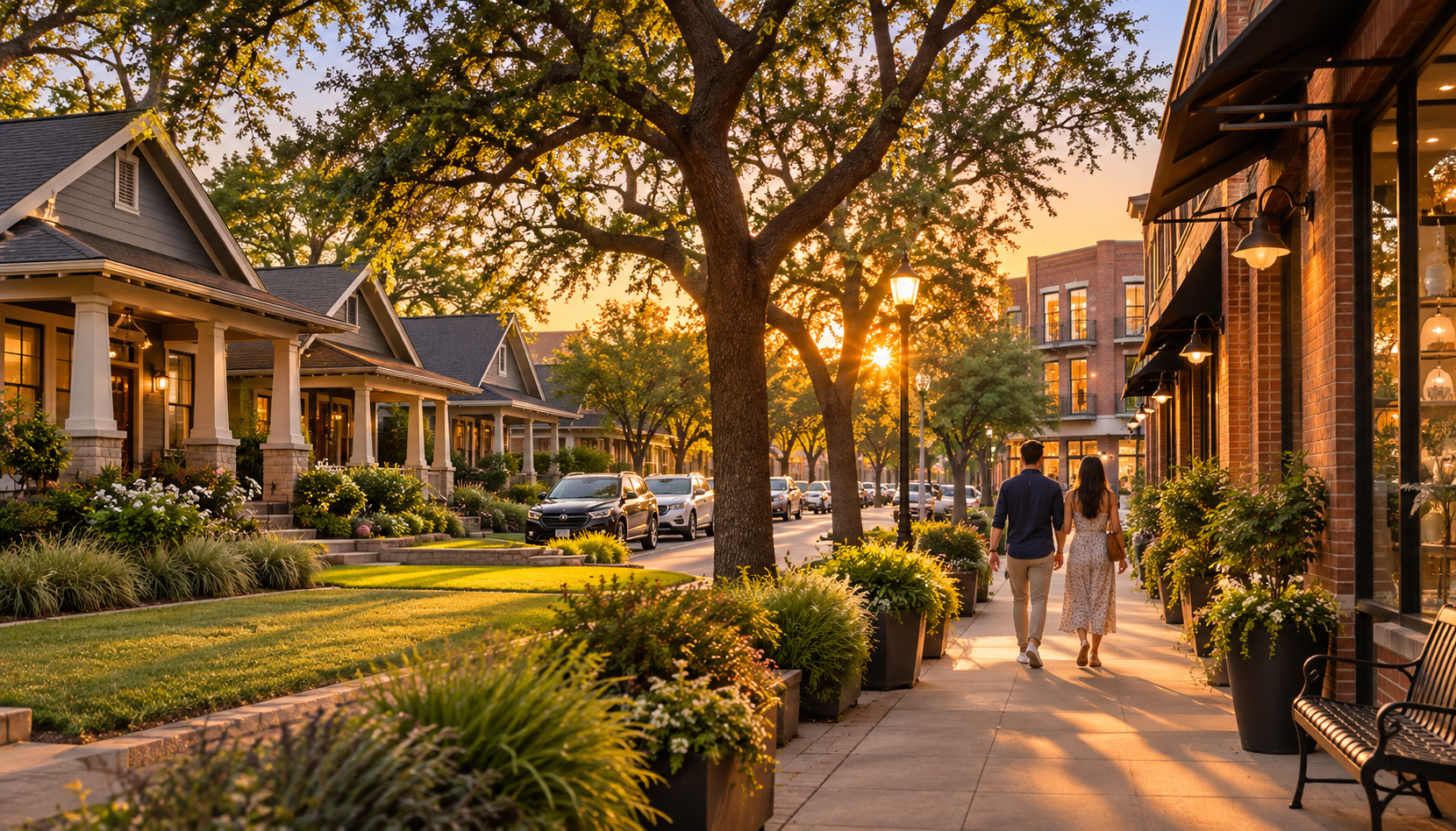
Bishop Arts is where your $500K budget delivers the most character per dollar. The district sits in North Oak Cliff, roughly three miles from downtown Dallas, and it packs more than 60 independently owned restaurants, boutiques, bars, and galleries into approximately 49 square blocks. That concentration of local business is genuinely rare in a city that defaults to wide roads, chain restaurants, and three-car garages.
At $500K, you’re looking at a renovated 1920s or 1930s Craftsman bungalow or foursquare home. Think 2 to 3 bedrooms, a small yard with live oaks lining the sidewalks, and the ability to walk to Lockhart Smokehouse on W. Davis Street, grab a morning coffee at Davis Street Espresso, or pick up dessert from Emporium Pies without starting your car. The price per square foot in the Bishop Arts core ranges from $250 to $350, which is substantially above the broader Dallas metro median of roughly $180 to $200 per square foot.
Here’s what we tell buyers who ask if they’re overpaying: Bishop Arts leads the entire city of Dallas in appreciation rate at 4.6%, followed by Lakewood at 4.2%. That premium is real, but so is the trajectory underneath it. You’re not just buying a house. You’re buying into a walkable commercial corridor along Bishop Avenue and W. Davis Street, proximity to downtown, and a housing stock that spent decades undervalued before this neighborhood found its identity.
The Bishop Arts Trade-Offs You Should Know About
No neighborhood is perfect, and we always want our clients to go in with open eyes. The DISD schools serving Oak Cliff are uneven, so families prioritizing school district strength may face a challenge. The homes run small by Dallas standards, so if a large lot and maximum square footage are priorities, your budget will work harder elsewhere. And Bishop Arts is a destination for all of Dallas on weekends, which means Friday and Saturday evenings bring heavy foot traffic and chaotic parking along N. Bishop Avenue. Some residents love that energy. Others quietly come to resent it.
How Uptown Dallas Compares at the Same $500K Budget
Uptown flips the equation entirely. At $500K, you’re in a fundamentally different housing product: a 1-bedroom or small 2-bedroom condo in a mid-rise or older high-rise building. You’re looking at approximately 700 to 1,100 square feet, no yard, and likely a balcony instead of outdoor space.
The upside? Uptown carries a Walk Score around 87, higher than Bishop Arts. You’re steps from the Katy Trail, the McKinney Avenue Trolley, and dozens of restaurants and bars. The polish here is real. But there’s a catch.
Uptown’s Condo Market Is Softer Right Now
The condominium segment across Dallas saw a 7.49% decrease in sales volume in early 2026. Months of inventory for condos climbed to 8.9 months, and days to sell also rose. That softness means you may have more negotiating leverage in Uptown than in Bishop Arts, but it also signals that the condo market is absorbing supply more slowly.
And then there are HOA fees. In Uptown, you should budget $300 to $800 or more per month for building fees, which are rare or minimal in Bishop Arts. Over a year, that’s $3,600 to $9,600 that doesn’t build equity. When buyers sit down with us and map out the true monthly cost of Uptown versus Bishop Arts, that HOA line item often shifts the calculation.
Lower Greenville: The Middle Ground for Dallas Buyers
Lower Greenville in East Dallas offers something between Bishop Arts’ indie character and Uptown’s nightlife-forward polish. At $500K, you’re typically looking at 1,200 to 1,600 square feet in an updated bungalow or cottage-style home with 2 to 3 bedrooms and a small yard.
The restaurant and bar corridor along Greenville Avenue gives you walkable dining and entertainment. Proximity to Lakewood and White Rock Lake real estate means trail access and a more active outdoor lifestyle. And here’s a meaningful differentiator for families: the nearby Lake Highlands schools are highly rated, which is a significant advantage over the DISD schools serving Bishop Arts.
So why do some buyers still choose Bishop Arts over Lower Greenville? The answer usually comes down to the density and independence of the commercial district. Lower Greenville has great restaurants, but Bishop Arts has that concentration of 60-plus businesses within a few walkable blocks, with no Target, no chain pharmacy, and no strip mall anchor. That’s intentional and protected by the community’s culture. If that matters to you, it’s hard to replicate anywhere else in Dallas.
Side-by-Side: Bishop Arts vs. Uptown vs. Lower Greenville at $500K
Here’s how the three neighborhoods stack up at the same price point:
- Bishop Arts, Square Footage: approximately 1,400 to 2,000 sq ft
- Uptown, Square Footage: approximately 700 to 1,100 sq ft
- Lower Greenville, Square Footage: approximately 1,200 to 1,600 sq ft
- Bishop Arts, Property Type: Renovated Craftsman bungalow with a yard
- Uptown, Property Type: Condo or small townhome with balcony or no outdoor space
- Lower Greenville, Property Type: Updated bungalow or cottage with a small yard
- Bishop Arts, Appreciation Rate: 4.6% year over year, leading Dallas
- Uptown, Appreciation (Condos): Softer; condo sales volume down 7.49%
- Lower Greenville, Appreciation: Falls within the broader Lakewood corridor at approximately 4.2%
- Bishop Arts, HOA Fees: Rare or minimal
- Uptown, HOA Fees: $300 to $800+ per month
- Lower Greenville, HOA Fees: Rare or minimal
- Bishop Arts, Walk Score: Approximately 70 to 75
- Uptown, Walk Score: Approximately 87
- Lower Greenville, Walk Score: Moderate; corridor-dependent
- Bishop Arts, School Strength: DISD Oak Cliff schools are uneven
- Lower Greenville, School Strength: Proximity to highly rated Lake Highlands schools
What does this actually mean for your monthly budget? At current 6.2% mortgage rates, a $500K purchase with 20% down puts your principal and interest around $2,450 per month before taxes and insurance. In Uptown, you add $300 to $800 in HOA on top of that. In Bishop Arts, your property taxes will be among the highest in Texas (Dallas’s effective rates lead the state’s three major metros), but you skip the HOA entirely.
Who Bishop Arts Is Really Built For
The Bishop Arts buyer pool is distinct. This neighborhood attracts a strong concentration of buyers who prioritize walkability and urban lifestyle over square footage: young professionals, remote workers who want to walk to coffee and restaurants, and buyers relocating from more expensive urban markets like Austin or coastal cities where $500K would buy significantly less.
Using the 28% rule, you need to make at least $105K a year to afford the median home price in Bishop Arts. The average household income in the district is $65K, which tells you most buyers are coming in with relocation equity, dual incomes, or substantial down payment capital.
The important question, and one we always walk through with our clients, is whether walkability and neighborhood identity are actually valuable to you on a daily basis. If you work from home and your ideal day includes walking to Eno’s Pizza Tavern at 407 N. Bishop Ave for lunch, browsing Bishop Street Market at 419 N. Bishop Ave in the afternoon, and catching live music drifting out onto the streets in the evening, then paying a premium for that lifestyle can absolutely make sense. If you’d rather have a 2,500-square-foot home with a big backyard and a quiet cul-de-sac, Bishop Arts is the wrong answer, no matter how charming the murals are.
With 84 five-star reviews across multiple platforms and recognition as a D Magazine Best Real Estate Agent since 2020, a MetroTex 40 Under 40 honoree, and part of a Dallas Observer Readers’ Choice best real estate team, we bring a level of local expertise that helps you move past the marketing and into the reality of what each neighborhood delivers.
Frequently Asked Questions About Buying in Bishop Arts, Uptown, and Lower Greenville
Is Bishop Arts overpriced compared to other Dallas neighborhoods in 2026?
Bishop Arts carries a premium, with price per square foot ranging from $250 to $350 versus the Dallas metro median of approximately $180 to $200. But the neighborhood leads Dallas in appreciation at 4.6% year over year. Whether it’s “overpriced” depends on whether walkability, independent local businesses, and proximity to downtown are high priorities for you.
What type of home can I get in Uptown Dallas for $500K?
At $500K in Uptown, you’re typically looking at a 1-bedroom or small 2-bedroom condo in a mid-rise or older high-rise, approximately 700 to 1,100 square feet. Factor in monthly HOA fees of $300 to $800 or more, which significantly increase your carrying costs compared to a single-family home.
How does the condo market in Uptown compare to single-family in Bishop Arts?
The Uptown condo market is notably softer in 2026, with sales volume down 7.49% and months of inventory rising to 8.9 months. Bishop Arts single-family homes are experiencing tighter supply and stronger appreciation. This means more negotiating leverage in Uptown but potentially better long-term equity growth in Bishop Arts.
Are the schools good near Bishop Arts?
This is one of Bishop Arts’ honest trade-offs. The DISD schools serving Oak Cliff are uneven. If school quality is a top priority, Lower Greenville’s proximity to highly rated Lake Highlands schools offers a meaningful advantage at a similar price point.
What are property taxes like in Bishop Arts compared to Uptown?
Dallas’s effective property tax rates are among the highest in the country and lead the three major Texas metros. Both Bishop Arts and Uptown carry this burden, but Uptown adds HOA fees on top, which can total $3,600 to $9,600 per year. Bishop Arts buyers generally avoid HOA costs entirely.
Can I walk to restaurants and shops from my home in Bishop Arts?
Yes, and this is the neighborhood’s defining feature. More than 60 independently owned restaurants, boutiques, bars, and galleries are packed into roughly 49 square blocks. Spots like Lockhart Smokehouse, Lucia, Oddfellows, Davis Street Espresso, Dude Sweet Chocolate, and Emporium Pies are all within walking distance for most Bishop Arts residents.
What is the income needed to buy in Bishop Arts in 2026?
Using the 28% rule, you need to earn at least $105K per year to afford the median home price in Bishop Arts. The average household income in the district is $65K, which means many buyers are relocating with existing equity or bringing dual-income purchasing power.
Is Lower Greenville a better value than Bishop Arts at $500K?
Lower Greenville offers slightly less square footage at $500K (approximately 1,200 to 1,600 sq ft versus Bishop Arts’ 1,400 to 2,000 sq ft), but it offers stronger school access and proximity to White Rock Lake. The value depends on whether you prioritize the density of Bishop Arts’ walkable commercial district or Lower Greenville’s family-friendly amenities.
What new development is happening in Bishop Arts?
Continued mixed-use construction is underway on the corridor’s edges, with new apartment buildings filling in gaps between the historic district and the Trinity River. The JLL-marketed Bishop Arts Portfolio at 200 N. Bishop Ave includes five multifamily assets totaling 638 units plus retail space. The Sylvan Thirty mixed-use development west of Bishop Arts has matured into a real anchor for the area.
How long are homes sitting on the market in Dallas right now?
Across Dallas, homes averaged 49 days on market in early 2026 and closed in 78 total days. Bishop Arts properties in the core tend to move more quickly due to tighter inventory, while Uptown condos are sitting longer as months of inventory reach 8.9 months.
The Bottom Line on Bishop Arts, Uptown, and Lower Greenville
Your $500K works hardest in Bishop Arts if you value character, square footage, a yard, and a walkable independent business district. Uptown gives you the highest walkability score and nightlife access, but you’re trading half your living space and adding hundreds per month in HOA fees. Lower Greenville lands in between, offering stronger schools and proximity to White Rock Lake but less of that concentrated, one-of-a-kind neighborhood identity.
We help buyers make this exact decision every week at Unlocking DFW Realty. If you’re weighing these neighborhoods and want a walkthrough of what’s actually on the market right now at your price point, reach out to us at 214-509-8094. We’ll give you the real numbers, the honest trade-offs, and a plan that fits your life, not just your home-selling costs in Dallas.

Leave a Reply