


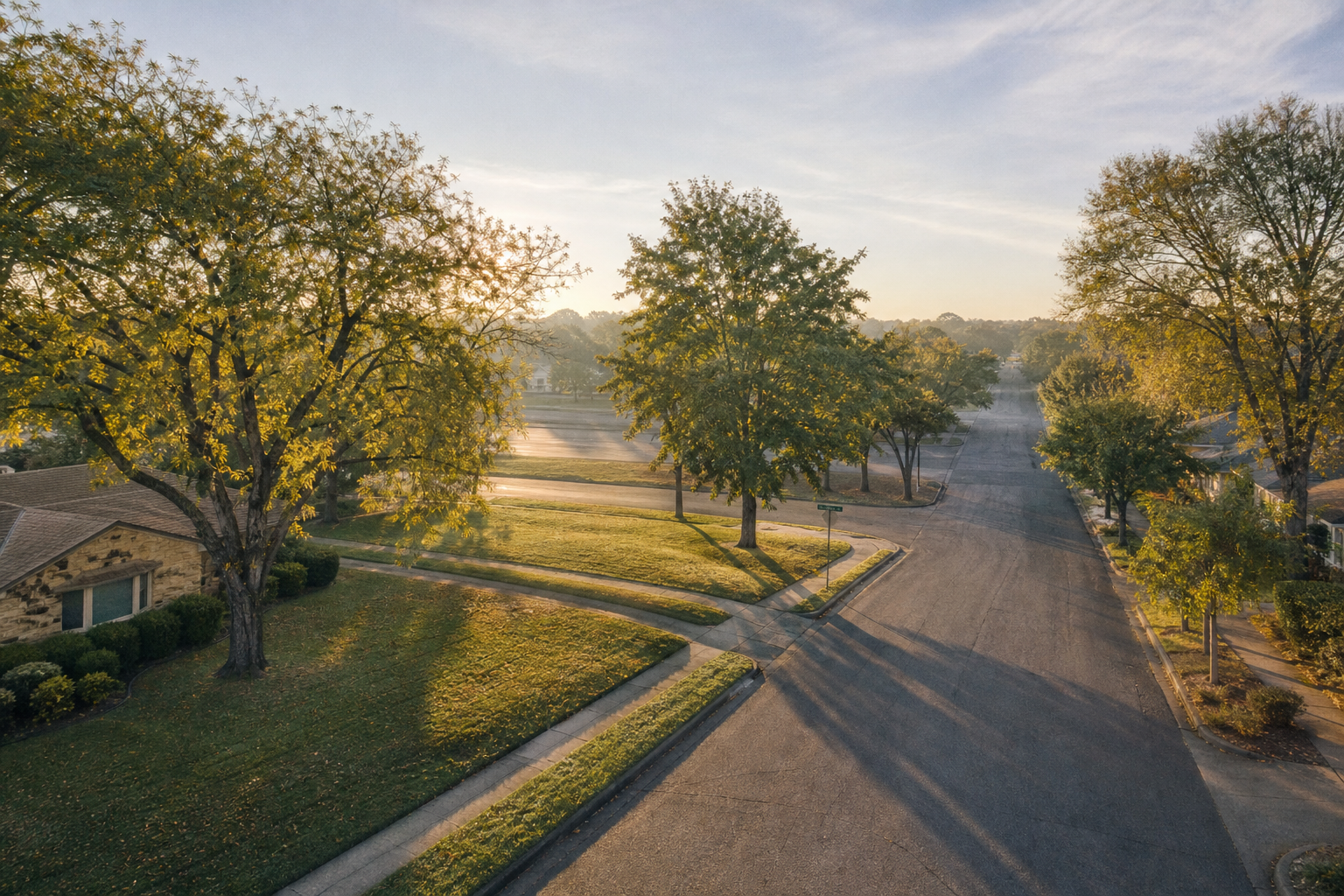
What should you research in a DFW neighborhood before buying a home?
You should research the roads, traffic patterns, pedestrian infrastructure, planned city projects, and time-of-day conditions surrounding any property, not just the house itself. Your neighborhood shapes your daily life more than your floor plan does.
Why This Matters Right Now in Casa Linda
On October 6, 2026, a two-vehicle crash at Garland Road and Magellan Circle in Casa Linda left one person dead and four others hospitalized. As Realtors who know East Dallas deeply, we want to be clear: one traffic incident does not define a neighborhood. Casa Linda remains a character-rich area in East Dallas, with proximity to White Rock Lake, established tree-lined streets, and a genuine sense of community.
But this event is a timely reminder that when you buy a home, you are buying a location. The roads surrounding your property, the design of nearby intersections, and the city’s plans for those corridors all affect your daily experience. Most buyers spend hours evaluating kitchens and closets but give almost no thought to what the drive home feels like at 6:30 p.m. on a Tuesday.
With over 148 closed transactions and six years specializing in East Dallas neighborhoods, we at Unlocking DFW Realty have watched buyers fall in love with a house only to realize later that they never researched the neighborhood around it. This guide is designed to help you avoid that mistake.
How to Research Road Safety Around a Casa Linda Home
Here is the single most overlooked step in Dallas home buying: researching the roads surrounding the property. A listing tells you about the house. It rarely tells you about the intersection 200 feet from the front door.
Check the City of Dallas Vision Zero Dashboard
Dallas operates a publicly accessible crash data dashboard where you can look up crash history by location before purchasing. The City’s Vision Zero program — with a goal, committed to by Dallas City Council in 2019, of eliminating all traffic fatalities and reducing severe-injury crashes by 50 percent by 2030, per the City of Dallas Vision Zero Action Plan.
What makes this data especially useful is the High Injury Network, or HIN. You want to know whether the street near your prospective home is one of those corridors.
Understand Road Classifications
Not all roads are created equal. Is the street adjacent to your target home a local residential road, a collector, or a major arterial like Garland Road? Arterials carry higher traffic volumes by design. That is not inherently bad. Garland Road provides connectivity to employment centers, retail, and White Rock Lake. But it is a tradeoff, and you should understand it before you make an offer.
What we always recommend is visiting the property at multiple times of day, including weekday morning and evening peak hours. A Saturday afternoon showing gives you a completely different picture than a Wednesday at 5:15 p.m.
Why Pedestrian Safety Matters for Casa Linda Buyers
If you have children, walk your dog regularly, or plan to bike to nearby amenities, pedestrian infrastructure deserves its own research category.
According to the City of Dallas Vision Zero Action Plan briefing from January 2022, pedestrian-involved crashes account for 36 percent of severe crashes in Dallas. That is a significant number, and it means sidewalk continuity, crosswalk quality, and pedestrian signal infrastructure around a prospective home matter as much as the property’s curb appeal.
What to Look for on Foot
Walk the route from the home to the nearest park, school, or shopping area. Ask yourself these questions:
- Are sidewalks continuous? Gaps in sidewalk coverage force pedestrians into the street.
- Are crosswalks marked at busy intersections? Painted crosswalks with signals are significantly different from unmarked crossings.
- Is there adequate lighting? Visibility at dusk and after dark directly affects pedestrian safety.
- Are there pedestrian hybrid beacons or rectangular rapid-flashing beacons (RRFBs)? These are features the city has been installing at high-risk crossings.
So what does this mean for you practically? It means that if you are comparing homes in the broader Casa Linda and East Dallas area, the pedestrian infrastructure around each property can vary block by block.
How to Find Planned City Projects Near Your Casa Linda Home
One of the most valuable and underutilized research steps is checking whether the City of Dallas has active or planned transportation projects near the home you are considering. These projects are public record.
Where to Find This Information
The City of Dallas Department of Transportation and Public Works holds public meetings and publishes corridor study documents online. You can search the City’s past public meetings page to find studies affecting streets near any property you are evaluating.
Why does this matter for buyers? Because these planned improvements can change road conditions, potentially for the better, after you close. The City of Dallas has received $25.8 million in federal Highway Safety Improvement Program funds to upgrade signals at high-injury locations, with work continuing through FY25 and FY26, per a City of Dallas FY2024-25 budget memo.
If a corridor near your home is scheduled for safety upgrades, that could be a net positive for your long-term investment. If a street is being widened or reclassified, that could change noise levels and traffic volumes. Either way, you want to know before closing day.
Your Complete Casa Linda Neighborhood Research Checklist
When we work with buyers at Unlocking DFW Realty, we encourage them to evaluate at least six categories beyond the house itself. Here is what that looks like in practice for Casa Linda and the surrounding East Dallas neighborhoods:
- Road classification: Is the adjacent street local, collector, or arterial? Garland Road is a major arterial. Side streets away from major arterials often carry lower traffic volumes — checking the road classification of any specific street near a home you are considering will confirm its designation.
- High Injury Network status: Is the street on the City of Dallas Vision Zero High Injury Network? You can check this on the city’s crash data dashboard.
- Planned projects: Are there active corridor studies or construction projects nearby? Check the Department of Transportation’s public meetings page.
- Pedestrian infrastructure: Are sidewalks continuous? Are crosswalks marked? Are pedestrian signals present at busy intersections?
- Transit access: Does DART serve the area? Does that matter for your commute or lifestyle?
- Time-of-day visits: What does the intersection look, sound, and feel like during morning and evening peak hours? Visit at least twice before making a decision.
None of these steps require specialized expertise. They require intentional research before making an offer.
How Proximity to Major Roads Affects Daily Life in East Dallas
Should you avoid buying a home near a busy road entirely? That is the wrong question. The better question is whether the specific intersection design, traffic volumes, and planned improvements are compatible with your lifestyle.
Living near Garland Road in Casa Linda, for instance, gives you quick access to White Rock Lake, dining, and retail. That is a genuine lifestyle asset. But it also means higher traffic volumes, more road noise, and more complex intersections compared to a home deep inside a residential pocket.
Here is what we tell our clients: you are not just buying a home. You are buying a commute pattern, a noise level, a walking experience, and a view from your front yard. Two homes in Casa Linda that are three blocks apart can feel completely different depending on which direction faces Garland Road versus a quiet interior street.
Relocation buyers, this is especially important for you. If you are moving to DFW from out of state, you may not know which East Dallas arterials carry heavy traffic and which residential streets are genuinely quiet. A single showing cannot give you that context. Visiting at different times of day and checking the city’s publicly available traffic data can.
With 84 five-star reviews and recognition as a D Magazine Best Real Estate Agent since 2020, we have built our practice on exactly this kind of neighborhood-level guidance. The house is only part of the equation.
Frequently Asked Questions About Neighborhood Research in Casa Linda and DFW
Is Casa Linda a good neighborhood to buy a home in?
Casa Linda offers established homes, mature trees, proximity to White Rock Lake, and a strong sense of community in East Dallas. Like any neighborhood, individual streets and blocks vary in their traffic exposure, walkability, and feel. We recommend visiting at multiple times of day and researching the specific roads near any home you are considering rather than judging the entire neighborhood by a single data point.
How can I check traffic safety around a Dallas home before buying?
The City of Dallas operates a Vision Zero crash data dashboard that is publicly accessible. You can look up crash history by location and check whether nearby streets are part of the city’s High Injury Network, which identifies corridors where severe crashes are disproportionately concentrated. This takes just a few minutes and gives you objective data.
Should I avoid buying a house near a busy road in East Dallas?
Not necessarily. Proximity to arterials like Garland Road provides connectivity to employment, retail, and amenities. The question is whether the traffic volume, noise level, and intersection design are compatible with your daily routine. Visiting during peak commute hours gives you a much clearer picture than a weekend showing.
Does traffic near a home affect property values in Dallas?
Traffic patterns can influence buyer perception and desirability, but the relationship is not universal. Homes on quiet interior streets and homes near major arterials can appeal to different buyers depending on their priorities. We recommend evaluating how the specific road conditions affect your quality of life and real estate investment rather than assuming a blanket effect on value.
What is the Dallas Vision Zero program?
In 2019, the Dallas City Council committed to eliminating all traffic fatalities and reducing severe-injury crashes by 50 percent by 2030, per the City of Dallas Vision Zero Action Plan. The city has received $25.8 million in federal Highway Safety Improvement Program funds to upgrade signals at high-injury locations, per a City of Dallas FY2024-25 budget memo. This is an active, funded initiative, not just a policy statement.
How do I find planned road projects near a home I am considering?
The City of Dallas Department of Transportation publishes corridor study documents and holds public meetings that are searchable online. Searching the city’s past public meetings page can reveal projects affecting streets near your target property.
What percentage of Dallas roads account for most severe crashes?
Checking the dashboard will tell you whether any street near a home you are considering appears on the High Injury Network — that is a search worth doing before you make an offer.
What should relocation buyers know about East Dallas neighborhoods?
Relocation buyers often do not know which Dallas streets carry high traffic volumes and which residential areas are quiet. We recommend visiting properties at multiple times of day, checking the city’s crash data dashboard, and researching planned transportation projects. East Dallas neighborhoods like Casa Linda can vary significantly from block to block.
How important is pedestrian safety when choosing a neighborhood?
Very important, especially for families. According to the City of Dallas Vision Zero Action Plan briefing from January 2022, pedestrian-involved crashes account for 36 percent of severe crashes in Dallas. Evaluating sidewalk continuity, crosswalk quality, and pedestrian signals around a prospective home gives you a clearer picture of walkability and safety for your family.
How many times should I visit a property before buying?
We recommend visiting at least twice at different times of day, including a weekday during morning or evening peak hours. A Saturday afternoon showing does not reveal weekday traffic patterns, road noise, or intersection congestion that could affect your daily experience. This is one of the simplest and most effective research steps you can take.
The Bottom Line on Neighborhood Research in Casa Linda
When you buy a home in Casa Linda or anywhere in East Dallas, you are buying more than square footage and countertops. You are buying the intersection outside your window, the commute route you will drive every morning, and the sidewalk your kids will walk to school on.
The October 6, 2026 crash at Garland Road and Magellan Circle is a reminder that these factors deserve your attention before you make an offer, not after. One incident does not define Casa Linda. But it is a prompt to do the kind of intentional, objective research that separates a good purchase from a great one.
At Unlocking DFW Realty, we help DFW home buyers research neighborhoods the right way. With 148 closed transactions, 84 five-star reviews, and recognition as a D Magazine Best Real Estate Agent and MetroTex 40 Under 40 honoree, Jamie Simpson and the Unlocking DFW team are here to walk you through every step. Reach out at 2145098094 or visit Unlocking DFW Realty to start your Casa Linda home search with the local expertise you deserve.

Leave a Reply