What will I actually net after selling my Bishop Arts Dallas home in 2026 once you factor in agent fees, closing costs, and capital gains taxes?
On a typical Bishop Arts home selling at the current median of $515,000, you can expect to net roughly $410,000 to $440,000 after agent commissions, closing costs, and potential capital gains taxes are deducted.
Why This Matters Right Now for Bishop Arts Sellers
Bishop Arts isn’t just holding value in 2026; it’s leading Dallas in appreciation. According to the Knight Frank 2026 US Cities Prime Index, Bishop Arts tops the citywide appreciation rate at 4.6%, outpacing even Lakewood at 4.2%. That means if you bought three or four years ago, you’re likely sitting on meaningful equity.
But here’s the question we hear constantly from the young professionals and creatives who make up this neighborhood’s core buyer pool: how much of that appreciation do you actually get to keep? The answer requires working backward from your sale price through three major cost categories. With 148 closed transactions under our belt and six years helping Bishop Arts homeowners navigate exactly this math, we’ve built a reliable framework. Let’s walk through it line by line so you can make a confident decision about your next move.
Agent Commissions in Bishop Arts: Your Largest Single Cost
This is the biggest line item on your closing statement, and it’s the one that catches most first-time sellers off guard. In Texas, the total real estate commission generally runs 5% to 6% of the sale price, historically split between the listing agent and the buyer’s agent.
Since the NAR settlement took effect in August 2024, the landscape has shifted. Buyer-agent compensation is no longer advertised on the MLS, and buyers now sign a written agreement with their agent before touring homes. Sellers aren’t required to pay the buyer’s agent, but in today’s Bishop Arts market, most still choose to offer compensation to remain competitive with a buyer pool that skews young and often has tight cash reserves.
So what does that look like on a real Bishop Arts sale? Here’s the math:
- At 5% on a $515,000 sale: $25,750
- At 6% on a $515,000 sale: $30,900
- At 5% on a $400,000 condo/smaller home: $20,000
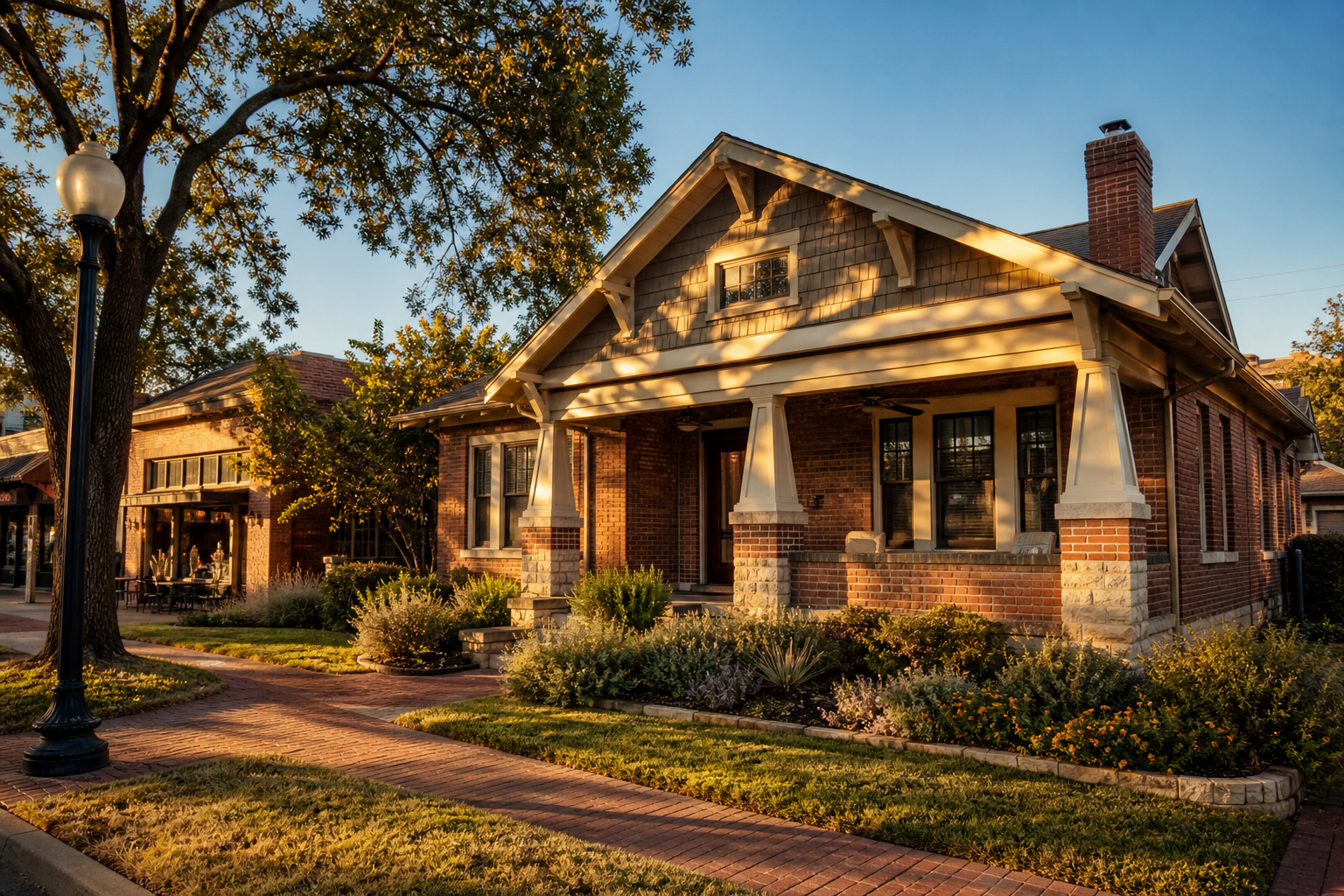
One couple we worked with last year sold their restored Craftsman bungalow just off North Bishop Avenue for $489,000. They initially balked at the commission estimate, but after we negotiated favorable terms and attracted multiple offers within nine days, they netted more than they would have at a lower commission with a slower sale. The takeaway? Commission is a cost, but the return on skilled negotiation tactics in real estate in a neighborhood with a Walk Score of 86 and a median resident age of 35 is real.
Seller Closing Costs Specific to Bishop Arts Dallas Sales
Beyond commissions, Texas sellers typically pay an additional 3% to 4% of the sale price in closing costs. The good news: Texas has no state transfer tax, which saves you compared to sellers in many other states. Here’s what you will pay:
Owner’s Title Insurance
In Texas, it’s customary for the seller to cover the owner’s title insurance policy. On a $515,000 sale, expect this to cost approximately $2,500 to $3,000, calculated from a rate table set by the state.
Property Tax Proration
This one trips up a lot of Bishop Arts sellers. Dallas County’s effective property tax rate sits at roughly 2.1%, meaning a $515,000 home carries approximately $10,815 per year. Texas property taxes are paid in arrears, so if you close in July, you’ll credit the buyer for about seven months of accrued taxes you haven’t yet paid. On that $10,815 annual bill, your prorated credit at a July closing would be roughly $6,309.
Additional Closing Line Items
- Escrow and settlement fees: Typically 1% to 2% of the purchase price, split with the buyer; your half runs $2,575 to $5,150
- HOA transfer fees (if applicable): $200 to $500
- Any buyer concessions you negotiate: Variable, but commonly 1% to 3% in the current market
What does all of this add up to? On a $515,000 Bishop Arts sale, your non-commission closing costs will likely total $12,000 to $18,000.
Capital Gains Taxes on Your Bishop Arts Equity
Here’s where things get interesting, and where a lot of sellers either overestimate or underestimate what they owe. The federal primary residence exclusion allows you to exclude up to $250,000 of gain if you’re single, or $500,000 if you’re married filing jointly, as long as you’ve lived in the home as your primary residence for at least two of the last five years.
Given that homes in Bishop Arts currently range from roughly $289,900 to $529,900 for existing stock, with new construction pushing past $850,000, the exclusion covers most sellers comfortably. But not all.
When You Might Owe Capital Gains
- You bought early in the Bishop Arts appreciation wave: If you purchased for $280,000 in 2018 and sell for $530,000 in 2026, your gain is $250,000. A single filer would be right at the exclusion limit. A married couple would owe nothing.
- You used the home as a rental for part of the ownership period: Depreciation recapture complicates things. We always recommend consulting a CPA before listing if this applies.
- You’re selling new construction you purchased at the top of the market: Your gain may be minimal or even negative, meaning no capital gains liability at all.
One recent Bishop Arts seller we advised, a freelance designer who’d bought a loft-style condo near West Davis Street for $310,000 in 2020, sold for $425,000 in early 2026. Her gain of $115,000 fell well within the $250,000 single-filer exclusion, so she owed zero federal capital gains tax. That was a pleasant surprise she hadn’t expected, and it freed up cash for her next purchase.
Texas charges no state income tax, which means you won’t face any state-level capital gains liability either. That’s a significant advantage over sellers in states like California or New York.
Your Bishop Arts Net Proceeds: A Real-World Walkthrough
Let’s bring everything together with a realistic scenario based on current Bishop Arts data. You’re selling a single-family home at the neighborhood median of $515,000, and you originally purchased for $350,000.
- Sale price: $515,000
- Agent commissions (5.5%): -$28,325
- Owner’s title insurance: -$2,750
- Property tax proration (July close): -$6,309
- Escrow/settlement fees (seller’s half): -$3,500
- Buyer concessions (1.5% negotiated): -$7,725
- Capital gains tax: $0 (gain of $165,000 falls under married filing jointly exclusion)
- Estimated net proceeds: approximately $466,391
That’s roughly 90.6% of your sale price. If you’re single and your gain exceeds $250,000, you’ll need to subtract 15% to 20% on the overage, depending on your income bracket.
How does this compare to the broader DFW market? Bishop Arts’ 4.6% appreciation rate means your equity has grown faster than most Dallas neighborhoods, so even after costs, you’re likely walking away with stronger proceeds than a comparable sale in an outer suburb.
How to Maximize Your Net in Bishop Arts’ 2026 Market
Having closed over 148 transactions and earned a D Magazine Best Real Estate Agent designation since 2020, here’s what we tell every Bishop Arts seller who asks how to keep more of their equity:
- Price it right from day one. Overpricing in a neighborhood with a median resident age of 35 and strong buyer demand means losing the initial surge of interest. Bishop Arts buyers are savvy, and they’re comparing your listing to dinner at Paradiso and a Saturday art walk on North Bishop Avenue. They know the neighborhood’s value already.
- Time your close strategically. A January or February closing means a smaller property tax proration credit to the buyer compared to a late-year close.
- Negotiate commission as a package. As a Real Estate Negotiation Expert (RENE), we structure commission conversations around total value, not just percentages. The goal is maximizing your net, not minimizing one line item.
- Consult a CPA before listing. Capital gains exclusion rules have nuances around rental use, home office deductions, and ownership timelines that can shift your tax liability by thousands.
Frequently Asked Questions
How much are closing costs for a seller in Bishop Arts Dallas?
You can expect to pay approximately 8% to 10% of the sale price in total costs, including agent commissions (5% to 6%) and additional closing costs (3% to 4%). On a $515,000 Bishop Arts home, that means roughly $41,000 to $51,000 in total deductions before capital gains taxes. Texas has no state transfer tax, which keeps your costs lower than many other states. For additional clarity on what are the financial considerations of buying a home, including cost structures, you can consult federal resources.
Do I have to pay the buyer’s agent commission in Bishop Arts?
Since the August 2024 NAR settlement, sellers are not required to pay buyer-agent compensation. However, in Bishop Arts’ competitive market where buyers tend to be young professionals relocating to Dallas, most sellers still offer compensation to attract the widest buyer pool. The amount is negotiated deal by deal.
Will I owe capital gains taxes on my Bishop Arts home sale?
If you’ve lived in the home as your primary residence for at least two of the last five years, you can exclude up to $250,000 of gain (single) or $500,000 (married filing jointly). Given Bishop Arts’ current median sale price of approximately $515,000, most sellers fall within the exclusion. Texas charges no state income tax, so there’s no state-level liability either.
What is the current median home price in Bishop Arts?
As of early 2026, the median sale price in Bishop Arts is approximately $515,000, with year-over-year appreciation of roughly 11%. Existing homes range from about $289,900 to $529,900, while new construction infill can reach $850,000 or higher. This is well above the citywide Dallas median of roughly $315,000.
How long does it take to sell a home in Bishop Arts right now?
Bishop Arts benefits from consistent buyer demand driven by its walkability (Walk Score of 86), streetcar access (Transit Score of 51), and over 60 independent shops and restaurants. Well-priced homes in the district typically attract strong early interest. The broader DFW market has about four months of inventory, but desirable Bishop Arts listings tend to move faster.
What is the property tax rate in Bishop Arts Dallas?
Dallas County’s effective property tax rate is approximately 2.1%. On a $515,000 home, that translates to roughly $10,815 per year. Since Texas property taxes are paid in arrears, you’ll need to credit the buyer for your prorated share at closing, and this amount depends on your closing date.
Should I sell my Bishop Arts home before buying my next one?
This depends on your financial situation and risk tolerance. One couple we recently worked with in Bishop Arts was nervous about listing before locking in their next home. We helped them negotiate a leaseback period after closing, giving them 30 days to move without the pressure of being homeless between transactions. It’s a strategy we use frequently with young professionals making their next move.
How does Bishop Arts appreciation compare to other Dallas neighborhoods?
Bishop Arts leads the citywide appreciation rate at 4.6% according to the Knight Frank 2026 US Cities Prime Index. Lakewood follows at 4.2%. This means your equity position in Bishop Arts has grown faster than most competing neighborhoods in Dallas proper.
What costs can I deduct from my capital gains calculation?
You can add the cost of significant improvements (not routine maintenance) to your original purchase price, which increases your cost basis and reduces your taxable gain. Examples include kitchen renovations, new roofing, or structural additions. Keep all receipts and consult a CPA for guidance specific to your situation.
Is it a good time to sell in Bishop Arts in 2026?
With appreciation outpacing the broader Dallas market, consistent demand from young professionals relocating to Dallas, and mortgage rates projected to settle around 6.15% by year-end 2026, Bishop Arts sellers are in a strong position. The neighborhood’s cultural identity, walkable streets, and proximity to downtown make it one of the most resilient micro-markets in all of DFW.
The Bottom Line
Selling your Bishop Arts home in 2026 means you’ll likely keep 88% to 91% of your sale price after commissions, closing costs, and taxes. On a home selling at the neighborhood median of $515,000, that puts your net proceeds in the range of $410,000 to $470,000, depending on your specific cost structure and tax situation.
The math matters, but so does the strategy behind it. With 84 five-star reviews, a 5/5 average rating, and recognition as a Dallas Observer Readers’ Choice Best Real Estate Team, we at Unlocking DFW Realty help Bishop Arts sellers maximize every dollar of their equity. If you’re thinking about your next chapter, whether that’s relocating within Dallas or moving on to something new, reach out to us at 214-509-8094. We’ll run the numbers on your specific home so you know exactly what you’ll walk away with.

Leave a Reply